Episode XIB.005 - Genesis 4:1-16
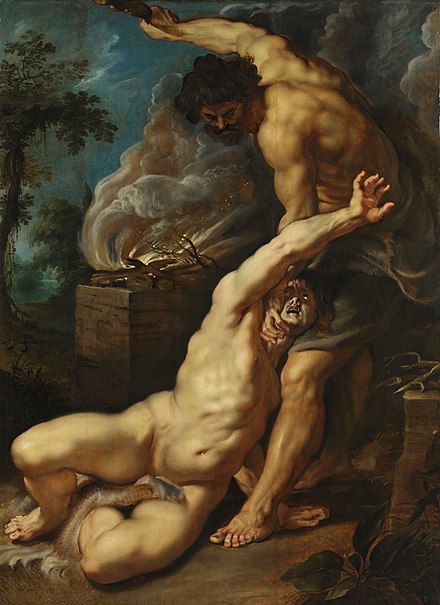


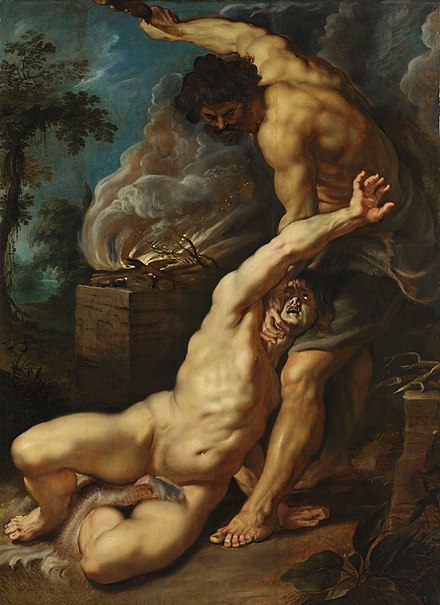
The blood of thy brother cries out to me from the earth! The typology of Abel and Christ.
RECOMMENDED READS - Click Image for Link:

Episode XIB.05 - Genesis 4:1-16
(Music)
Read Genesis 4:1-16
(Music)
Welcome to the Western Traditions Podcast study of the Bible. Today we continue with the first 16 verses of the fourth chapter in the book of Genesis. It is the third and final part of a trilogy that began in chapter two with the creation of Adam and Eve.
There is difficulty with language at many points in the Hebrew text of the Bible. In other words, even Hebrew scholars are not always sure of what is exactly being said at different points, either because the word used is not well-understood or because the text is somewhat corrupt and we are not even sure what word was intended.
Here at the beginning of this fourth chapter in Genesis, it is more a question of the intent involved. In English, we typically translate the first verse to “Adam knew Eve, his wife.” But, we should remember that the word Adam can also simply mean the human, or the soil-being, the one made from earth. If you think that I am overemphasizing this point, or obscuring the obvious intent of the name Adam, you can just skip ahead to chapter 5, where the second verse says:
He created them male and female; and blessed them: and called their name Adam
Their name Adam. He called both of them Adam. In other words, he called both of them human, both of them soil beings. Eve gets her own name, but its almost as if the first man never really gets his own name, because his name is given to all humanity.
Anyway, the two first humans have children, apparently after their expulsion from Paradise. These first two sons, Cain and Abel, grow and work in different industries, so to speak. Abel is a herdsman, a pastoralist, and Cain becomes a farmer.
The two brothers do not get along because God seems to favor the sacrifices of the pastoralist, the herdsman, and not those of the farmer. In response to God’s lack of appreciation, the English translation tells us that Cain’s “Countenance fell.” I’ll elaborate on the meaning of this phrase later.
When God speaks with Cain afterward about this discontent that the brother is experiencing, the Lord makes an interesting remark about something crouching at the door, or being in the doorway. Again, the Hebrew is difficult here.
I will use the text as it is given by biblical scholar and translator Everett Fox. Here’s his translation of the latter portion of verse 7:
“At the entrance is sin, a crouching demon, toward you his lust, but you can rule over him.”
Now, this is the first appearance of the word sin in the Bible. But even more significant than that is an echo of chapter three in the language here. Remember when God punished the Woman in chapter three, verse 16? Your translation probably has something like the Douay-Rheims, God tells the woman:
-thou shalt be under thy husband's power, and he shall have dominion over thee-
But understand that a closer Hebrew translation, from the Everett Fox translation, of that passage in chapter three is as follows,
-Toward you husband will be your lust, yet he will rule over you-
And here, in chapter four, Cain is being told that the sin at the door exerts its lust for him, yet he can rule over it. This relationship between lust, desire and control is worthy of much deeper study. But one thing that we can take away from the passage is that a man is meant to master his relationship with sin, with temptation, with his passions, in the same way that he has dominion over a woman.
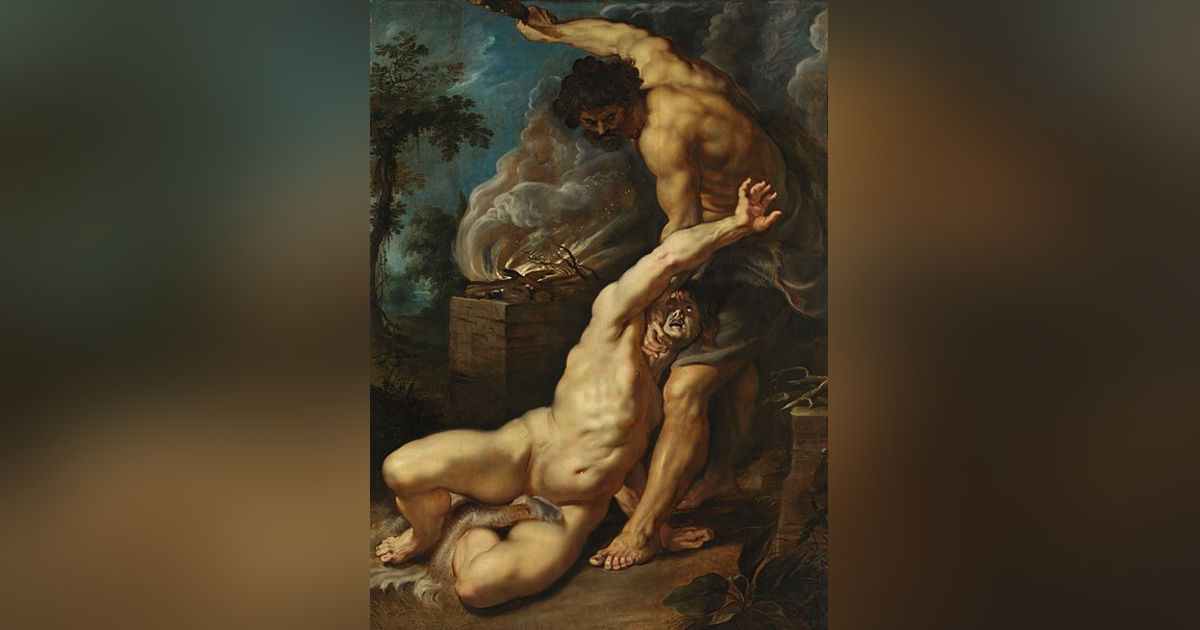
Cain does not master the temptation, though. He takes his brother Abel out into the field and kills him, committing the first murder. And then God asks him, Where is your brother? There is another echo of chapter three here. Remember that same phrasing in chapter 3. The humans eat the fruit, and hide, and God asks, Where are you?
Trouble comes and every time God must go looking for the people.
Another famous line follows, Am I my brother’s keeper? Cain asks. Again, a less direct echo of chapter three, in that Cain tries other evade responsibility, as did the humans in chapter three: Adam blamed it on the woman and she blamed it on the snake.
Here, Cain just plays dumb.
And God’s response here is also well-remembered and repeated in literature: Your brother’s blood cries out to me from the earth!
God does not slay Cain in return, though, he does not pay blood with blood, does not proclaim eye for an eye, tooth for a tooth. And this is not simply because he does not want to wipe out the human race. As we will see later, in the next episode, Adam and Eve go on to have more children. God doesn’t need Cain for any of his plans.
No, while the God of the Old Testament constantly gets bad press for being a bloody, vengeance-seeking monster, we have here in the opening of Genesis a constant theme of mercy. He didn’t “start over” with “better humans” after the debacle in Eden, and he doesn’t kill Cain here. He doesn’t give up. He works with the damage. He tries to make the best of bad situations.
So Cain is exiled, to the east of Eden, which is here used curiously as a landmark, and he is sent to the land of Wandering, where he will be a wanderer. That is the way to translate what some others give here as the Land of Nod. The land of wandering.
Cain fears that he will be killed by other men, but God assures him of his safety, again with incredible mercy God treats him here, setting a mark, or a sign, on Cain that will protect him from harm. Speculation about what this mark or sign might have been is just that, speculation. We have no idea what this really means.
Now, the question has come up time and again, especially among skeptics: what other men does Cain fear? Isn’t it just him and Adam and Eve in the whole world?
In the next episode, we will look at the remaining verses of this chapter and all of chapter five, and discuss the question of the early human population according to the Bible.
For now, let’s say goodbye to Cain as he sets his face towards the East, and turn our faces back to the exegesis of this scriptural tragedy.
(Music)
Allegorically this chapter is simply pregnant with meaning. We have here the first, certain, typing of Christ.
Now, typology refers to the appearance of figures, not always human, in the Old Testament which symbolize or foreshadow figures in the New Testament. Typology’s greatest such example is the prefiguring of Christ. On multiple occasions throughout the Old Testament, Christ is foreshadowed in one way or another and I am not simply speaking of the oracles of the prophets.
We have already, in the previous episode, seen how Christ was foreshadowed in the third chapter when the seed of the woman was discussed.
Here, in chapter four, Abel functions as a type of Christ. The innocent victim. This relationship, between Abel and Christ, is made clear both in the New Testament and frequently in the liturgy of the church. Abel’s sacrifice and blood are recalled in the 11th and 12th chapters of the epistle to the Hebrews, and there they are compared to the sacrifice and blood of Christ.
And there are appearances of Abel in the public prayer of the church, such as the following from the Roman Catholic prayer over the offerings during the mass of the 16th Sunday in Ordinary time:
-Accept, we pray, this sacrifice from your faithful servants
And make it holy, as you blessed the gifts of Abel.-
But “the devil” is also here again, in the text, though in different form. Now, the text draws no direct relationship between the serpent of chapter three and the “sin crouching at the door” in chapter four, but with so much of the language echoing chapter 3, as I explained just a few minutes ago, it is easy to imagine that the tempter of the garden is also intended here.
But I do not want to let this passage in scripture go without bringing up the clear divide between farmers and pastoralists depicted here in this brief passage.
Cain is called a husbandman in the Douay-Rheims text, and this phrasing may mislead the modern reader a little bit. The Hebrew says something closer to “worker of the soil”. Cain is a farmer, then.
Abel, on the other hand, is a herdsman, a pastoralist, like Abraham and his descendants will be in later chapters.
Interestingly, a herdsman is, by nature, something of a wanderer, because a herd cannot stay in one location for too long, because the animals will eat up all the food and then starve if they do not move to a new location. But it is Cain who will end up becoming the wanderer after he kills his brother.
Nevertheless, it is fascinating to see how the development of neolithic man seems to be mirrored here in the biblical text, as if the composers of these earliest tales had some deep, ancestral memory of ages past. You can see how Adam and Eve live as hunter-gatherers in Eden, picking fruit as they wander around, with no city, no camp even, just wandering and eating.
And Cain and Abel seem to represent the first steps in civilization, the first development out of the most rudimentary lifestyle. They become agriculturalists, depending not on hunting and gathering, but on growing food and raising animals.
The conflict between the two, between farmer and nomadic herdsman, is also interesting, since the first Israelites, the family of Abraham to whom we will be introduced in chapter 11, the earliest Israelites were wanderers, herdsmen, just like Abel, who seem to have had an axe to grind, so to speak, with stationary farmers.
(Music)
One moral message of the passage is clear and needs little explanation. This passage certainly prefigures the commandment against murder, which will appear in the book of Exodus. The story of Cain and Abel is recalled even among atheists because of its clear message about murder.
But I do not want to overlook the moral implications of the use of the word face here.
Now, in English and in other modern languages, we tend to dislike the frequent repetition of a single word in speech or text. Even as I write this podcast, I often look for synonyms to avoid using the same word too often, because it is considered harsh on the ears. Even in those last two sentences, I avoided saying the word “frequent”, or some version of it, twice by substituting the word “often” in the second sentence.
Therefore, when we read the Bible in modern translation, we frequently miss how the Hebrew text relies on repetition, because the translators find synonyms for words that are repeated.
Let’s look at chapter four here. English translations, as in the Douay-Rheims and the King James Version, typically state that Cain’s quote-unquote “countenance” fell when he saw that God did not appreciate his gifts. And God later asks him, why has your countenance fallen?
But the Hebrew text actually gives the word “face” here. Cain’s face fell, when he realized that God did not appreciate his sacrifice. And God asks him, why has your face fallen?
Now, the word face is important in scripture, especially in Genesis. Much later, in the 32nd chapter, there will be a heavy and significant repetition of the word face.
But there is significant repetition right here in chapter four. Because later, in verse 14, Cain complains about God’s punishment and says, “You drive me from the face of the earth, and I must hide from your face.”
So face is mentioned not twice but four times in the original Hebrew of this chapter.
Combine this with the repetition of people hiding, like Adam and Eve in chapter three, or being missing, like Abel in this chapter, and God asking where people are, this repetition of face becomes more significant. Cain does not want to be hidden from God’s face. And scripture does seem to be saying something about the value of things being out in the open, of not being secret, not being hidden, the value of things being in front of your face.
Of course, the word face has another value in language. In many modern languages, face is associated with respect and value. One does not want to lose face, in a social situation. We say, or used to say, that someone could not countenance such a thing, and countenance is just a synonym for face, and this means that you will not tolerate or accept such a thing, if you cannot countenance it.
We will come back again to this word and this concept in future episodes.
(Music)
The anagogical, or eschatological impact of the passage is easy to read even if you are only slightly familiar with the Bible. Here, we have humanity perpetrating a wicked crime. You might want to say, the most wicked.
But I think that there is a case to be made here that the biblical writers are presenting sins to us not in an ascending pattern, from least wicked to gravest sin, but rather in descending order.
I mean that the sin of Eden is greater than that of Cain and Abel.
Now, how can just eating some forbidden fruit be worse than murder, you might ask? Indeed, you should ask, because murder is definitely the worst thing that you can do to a fellow human being.
Robert Barron, a Roman Catholic Bishop who has a popular YouTube channel, has stated very eloquently that the entire story of the Bible, when you look at it from beginning to end, is a story of right worship. That the entire purpose of the story is to tell people, to remind people, how to worship God correctly.
Now, when I use this word, worship, you probably think of smoke and incense, altars and sacrifices, and those things are certainly elements of worship. And the idea that the entire scope of the Bible, its thousands of years of smoke, blood, fire and tears, can be reduced to a worship manual may be offensive to you.
But Bishop Barron is not saying that the Bible is simply a manual for celebrating the sacraments correctly. In fact, as the prophets tell us much later, in clear language, God does not give a hoot for all the sacrifices and the religious festivals. It’s not that these things are insignificant, he doe command them, and he is not saying that we should not do such things to honor God, according to the Bible, but everything has to come from a place of humility, and of love, if these sacrifices and sacraments are to have any value. The prophets will come later and harangue their fellow Israelites to first care for the widows and orphans, to respect their brothers and sisters, and then make their sacrifices.
As the apostles will say, do not approach the eucharist if you bear hatred in your heart. First, set your heart straight, then come to God.
Right away, though, in the third chapter of Genesis, the foundation of humility and love was ruined by human disobedience. This stain, this original sin some theologians might say, leads to instability in the character of Cain. Notice that neurotic sort of reaction implied, when Cain notes that God does not respect or regard well his sacrifice. Cain’s countenance, his face, falls.
But God does not punish him for an apparently inadequate sacrifice, only reminds him to do well, and advises him of the danger of temptation lurking to take advantage of him. It is only after Cain murders his brother that God punishes him.
This story of struggle to worship properly continues through the Bible. The commandments, summed up by Christ, are to love God and love your neighbor as yourself. And these are the foundations of right worship. Once you have those things, you can properly direct your attention to God, to right worship, in just about any form.
And this is the culmination of the biblical message in the new testament. The way to right worship being through the human heart.
We will return to this matter many times.
In the next episode, we’ll move on to the rest of chapter four and all of chapter five in the book got Genesis.
Until then, I thank you for listening to the Western Traditions Podcast.