Episode XIB.004 - Genesis 3
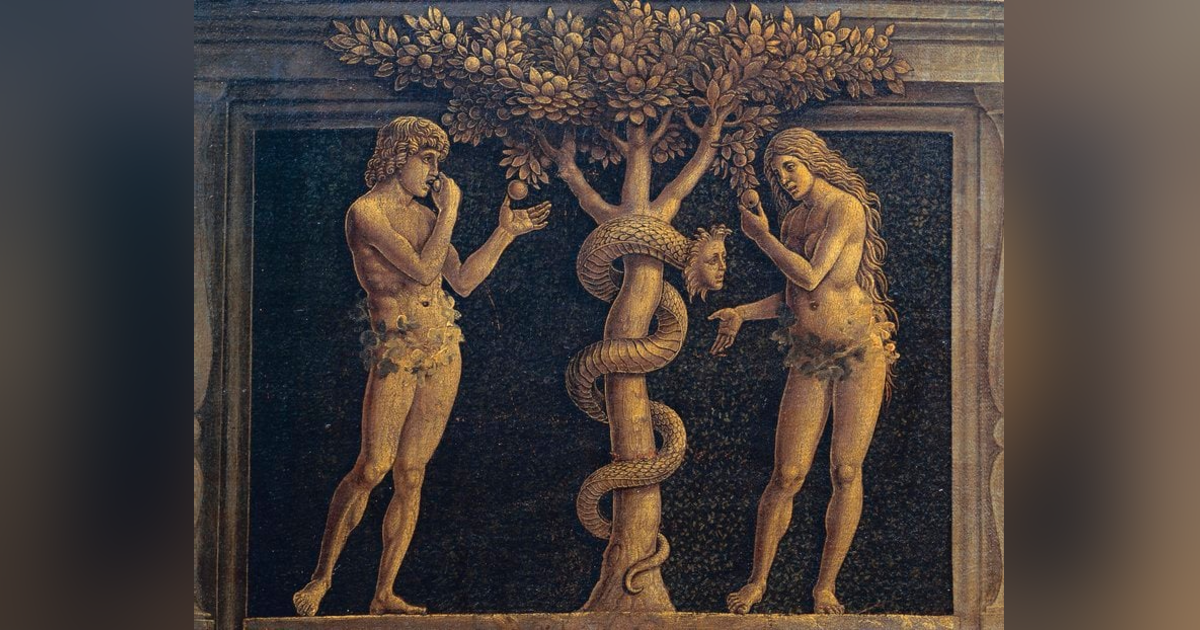
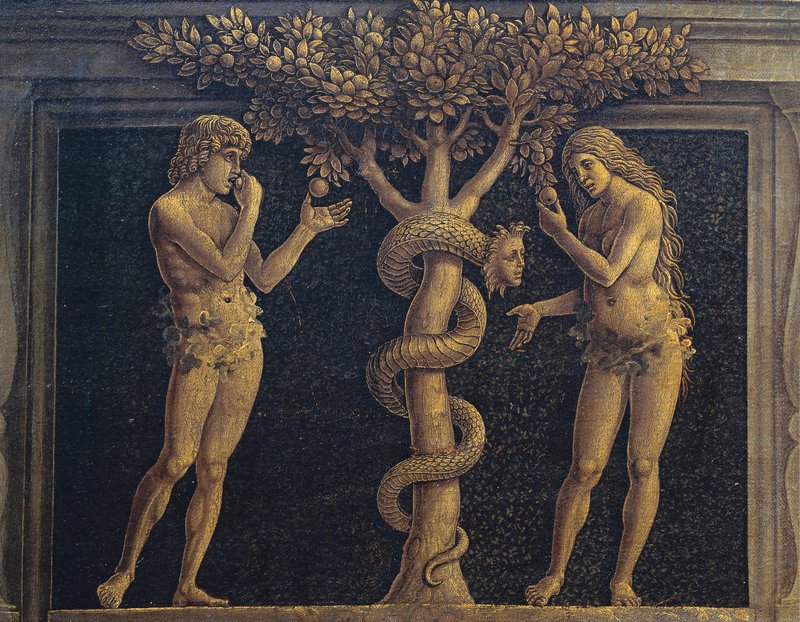


Adam and Eve listen to the serpent, and suffer exile from Paradise as a consequence. Adam, Eve, the tree and the serpent prefigure Christ, Mary, the cross and Satan.
RECOMMENDED READS - Click Image for Link:

Episode XIB.004 - Genesis 3
(Music)
Read Text
(Music)
Welcome to the Western Traditions Podcast study of the Bible. Today we continue with the third chapter from the book of Genesis. It is the second part of a three-part story that begin in chapter two with the creation of Adam and Eve.
The story contained herein is frequently referred to as The Fall, capital T, capital F. The Fall. As in the fall of humanity. It is a highly charged tale and one which people from all backgrounds in the West, even non-religious, have usually heard about and have opinions about.
But, as always, we begin with the literal and historical review of the passage.
This chapter is apparently from the J tradition, according to the Documentary Hypothesis, which I have discussed in previous episodes about the Scriptures. In your Bible, you may notice the words “the Lord God” are used here most frequently, rather than just “God”. That is because, again, in the underlying Hebrew text, the letters YHWH are written here, rather than the word that is usually translated as God: Elohim.
The chapter begins abruptly, with the first verse; Now the serpent was more subtle than any of the beasts of the Earth…
There is no reference to prior content, just an abrupt introduction to the serpent.
And, immediately, the serpent is conversation with the woman from chapter 2. He wants to know WHY God has commanded the humans not to eat from every tree in paradise.
This is the first challenging of God’s supremacy in the Bible. In the first two chapters, God was the unassailable being who crafted the universe with his pure will, out of nothing, who formed man from the earth. Now, His will is being questioned.
After the woman explains the rule about not eating from “the tree which is in the midst of paradise”, and that she and the man might die if they break the rule, the serpent goes one step further. He denies this consequence and reveals another. That their eyes shall be opened, and they shall become like gods, plural, if they eat that forbidden fruit.
So, and we will come back to this later, so here the serpent becomes the first character in the Bible to offer an alternative view of reality. He seems to say that the Lord God is lying to the humans. Almost like paradise is just a simulation set up just to observe their behavior but the stated consequences are not real.
A lot happens in the next verse. The woman “sees” that the tree and its fruit look good. There is a lot of repetition of that verb in this whole passage, to see. And the idea of eyes being opened is repeated throughout the passage.
The woman sees the tree, had she not seen it before? It seems as if her eyes are already being opened in some special way, just through the temptation. Anyway, she eats, and she gives the fruit also to her husband and he ate of it as well.
Now, it seems like, in many people’s perceptions, Eve is alone in this situation with the serpent, and then goes on to deceive her husband. That is how many people relate to the story and how they retell it, in sermons or just in conversation. But the text does not give any indication that she deceived her husband.
In John Milton’s Paradise Lost, a famous 17th century English epic poem about this drama in Paradise, in his version of the tale, Adam is standing right next to the woman as this conversation with the serpent plays out. He is a silent participant. And the text of Genesis actually would seem to indicate that. Look at the transition in verse 6. She ate and then she gave it to her husband and then he ate. There is nothing here that would suggest that Adam was not present and listening to the whole conversation and tacitly complicit. Or that Eve then sought him out and tricked him into eating the apple.
This is not the only passage in the Bible about which people, both believers and nonbelievers, hold inaccurate ideas, ideas that are inaccurate according to the text, that is. As another example right here in chapter 3, I would bet that most people, when God comes looking for the humans after they eat the forbidden fruit, they imagine God looking down for them from heaven, like some aerial being. John Huston’s famous 1966 film about the Bible reinforced that idea. But the text clearly indicates that God walked among the trees of paradise while he looked for the humans.
But back to Adam and Eve eating the fruit.
And their eyes were opened! The text tells us. Now, sometimes, critics will ridicule this passage, the whole third chapter of genesis, as comically childish, the whole idea of a talking serpent. But it is clear from the use of metaphor throughout the text that the ancients were reading this passage differently than our modern brains do, trained as they have been to view the world and reality as digits in a computer simulation.
No, I think the ancients thought about and experienced the world quite differently, poetically, you might say, their own lives were metaphors and they knew very well that serpents did not speak, that the creature was a symbol of some sort, just as they understood that Adam and Eve’s eyes were already opened and that the phrasing here, And their eyes were opened!, speaks to a higher level of perception.
And I think that this is important to remember as you read through the Bible, that the idea of reading it literally is actually very recent and is pushed by people with the least amount of connection to the roots and origin of scripture. And that our ancestors, living under the sky and yet close to the land in a way that we will probably never understand, they experienced life differently, and thought differently than we do, and we should keep this in mind when we read the words that moved their hearts and minds.
Now, the first thing that the man and the woman notice is that they are naked, and they respond immediately by clothing themselves in fig leaves.
Next, they hear the “voice of the Lord God”, that’s YHWH in the actual text, remember that these four letters indicate the unpronounceable name of God. Everett Fox, translator of the five books of Moses, he translates this phrase as the “sound of YHWH”, so we have another sense besides sight being brought in. Their eyes have been opened and now they hear YHWH walking about in the garden, at the breezy time of day, according to some translations.
And they hid among the trees.
Now, this fear is important. Before, the humans did not fear God, not in the cowering sense anyway. We can get into what the traditional biblical phrase, fear God, really means later. The point here is that the humans are terrified suddenly. They used to speak freely and interact freely with God, it seems from previous chapters.
Now, having eaten the fruit, they are frightened. Are they frightened only because they have done wrong or because the fruit has changed their perceptions somehow?
Adam confesses to God that he was afraid due to his nakedness. God, in return, is upset that the man and the woman KNOW that they are naked. And he wants to know who told them. Amusingly, the man immediately blames the woman and she blames the serpent for tricking her. Neither seems to take responsibility for their actions.
When God learns what happened, he hands down sentence on all involved.
And he begins by punishing the serpent, with a life of slithering around on the ground. Which sort of makes you wonder, what did the serpent do before? How did he get around? Did he look different? As for the passage about the serpent's new relationship with the woman, we will come back to that in the allegorical section.
God punishes the woman, telling her her that he will multiply her sorrows. Among them, she will suffer in childbirth, suggesting that originally Eve did not suffer from labor pains.
Note that part of the woman’s punishment is also the dominion of her husband, which, also suggests that the original relationship between man and woman was perhaps not uneven.
As for the man, he is cursed with agriculture. “Thou shalt eat the herbs of the earth”. This is a punishment, remember, having to grow food to eat. It seems as if agriculture, which is the foundation of civilization, is here recognized as a net negative for humanity.
Interestingly, God does not kill the humans, which is what the deities in most other mythologies would be expected to do given such brazen disobedience, but the God of Genesis always seems to stop short of total annihilation. There is always a little room for mercy.
But he does declare that they will die someday, that Adam will return to the dust of the earth, suggesting that perhaps Adam and Eve were immortal, eternal, while they lived in paradise.
Instead of killing the humans right away, though, God makes garments of skins for them. Animal skins, not vegetation, like the fig leaves that they had originally used to cover themselves. And then God says, to whom it is not exactly clear, “Behold, Adam. Is become like one of us, knowing good and evil.” And he says that they must avoid Adam also taking from the tree of life and becoming immortal.
The tree of life makes a sudden reappearance in the text here. It was mentioned in chapter 2, verse 9, but has been omitted since then whenever the contents of the garden were inventoried.
Interjected here, also, is a verse in which Adam names his wife, Eve, because she is the mother of all the living. Havva, her name in Hebrew, means Life-Giver.
God then casts the humans out of paradise, to till the earth, reinforcing the idea that tilling the earth is a punishment, not a form of progress. It is what they do after being expelled from paradise, not while they live there.
And not only is Adam cast out, but there is no way back to Paradise. Cherubim, and a spinning, flaming sword guard the way.
Now, cherubim are not chubby-cheeked infant-like creatures with wings, like the name and representations in renaissance art might make you think. Cherubim are those creatures on top of the ark of the covenant, and they are essentially sphinxes, as we hear of in mythology. Winged, fierce, terrifying creatures.
So the chapter ends. These terrible sphinxes, the flaming sword, and cast-out man, looking to the stubborn, thorny earth for his sustenance.
(Music)
Unpacking this chapter of Genesis, in terms of allegory, morality and anagogy, is a task beyond my capability in this episode. As with many of the topics in my podcast, you could expand this chapter into its own podcast.
Genesis 3, concerning the fall of humanity, is also one of the most controversial texts in the Bible. As someone living in our contemporary period, when I speak of this chapter, you may first consider the content regarding the submission of the female sex toward the end of the chapter, but that is only one of the highly charged moments in this very short story about the parents of humanity.
And virtually every line in this chapter can be interpreted and allegorized in multiple ways. The earliest Jews and Christians have been trying to unravel the meaning of these verses for thousands of years. I have neither the capability nor the time to delve into every possible understanding of this chapter.
Still, you’re listening, so let’s give it a try.
Let’s start with that serpent, introduced in verse one. Immediately, a modern listener, religious or not, will probably identify this serpent with Satan. But that is not stated in the text. That is a later interpretation. Nowhere in the text here, nor anywhere in the Old Testament, is this figure in the story identified in any way with Satan.
There IS a passage in the deuterocanonical book of Wisdom, which may be a reference to this scene, but we will come to that some ways down the road.
When Satan is actually named in the Old Testament, in the book of Job, which, by the way, is probably one of the oldest texts in the Old Testament, when he appears in that book of the Bible, no reference is made to him being involved in this episode in paradise.
Now, that said, I am NOT saying that the serpent here is not Satan. Ultimately, that is a decision made by religious authorities and by you as an individual. I just want to make it clear that the newly introduced character in this story is simply: The serpent.
Right away, the serpent sets himself apart by asking the woman in paradise a confrontational question: Why did God tell you not to eat that fruit?
We have only gotten into Genesis 3 and the spell has been broken. There was a beautiful, majestic unfolding of the universe in chapter one, and a pretty, little, satisfying story about man being formed from the earth and finding a companion in Eve in chapter two.
And now, for the rest of the Bible, for more than a thousand chapters of drama, all that peace and beauty and order is over. Here, the serpent, now that the stage has been set and the actors are in place, he poses the question that makes us doubt what we see, what we think. He challenges the supremacy of God, questions the unquestionable. And his question is one of those that upsets the carefully constructed version of the world that we have in our head.
After the woman tries to defend the arrangement of things, its just this one tree that we can’t eat from…, she starts to say, the serpent is quick to challenge this version of reality. No, you won’t die, your eyes will be opened!
Your eyes will be opened. The serpent said. Now, the ancients certainly did not think that Adam and Eve were wandering around with their eyes shut. They understood this line as it is meant to be understood, in its poetic, metaphorical sense.
Your eyes will be opened. The phrase overflows with meaning, like a cup brimming over with wine, and our ancestors were more than capable, more than ready, to drink the implications. They were a race of poets, even the so-called simple ones. And when they heard the serpent speak in this passage they were more than able to parse the meaning and understand that something much deeper was being expressed here than a snake that could talk.
Your eyes will be opened.
I like to think of the opening chapters of the book of Genesis as a poetic retelling of humanity leaving the Paleolithic. Adam and Eve are our most ancient ancestors. The hunter gatherers. And this is the story of how they left that age of bliss, that hundreds of thousands of years of running under the sun, chasing game and sleeping in the shade and drinking water from cool running streams, its the story of how we left that and, as it says right here in the third chapter of the Bible, how we ended up toiling and sweating, trying to extract a miserable living from the earth, how the age of agriculture and civilization started.
We tend to think of civilization as a boon, as an improvement over what one historian called the short, nasty brutal life of our “uncivilized ancestors”. But it is clear here that our ancestors who wrote this passage, and whether you think it was Moses or somebody else, it still would have been written just a few thousand years ago. So, when this was written down, agriculture, city life, civilization was already many thousands of years old.
Yet, it was clear that even then, after thousands of years of civilization, our ancestors regretted it. Regretted the loss of that simple world, that blissfully simple life of the hunter gatherer, in which we did not know that we were naked, did not know shame, did not know good and evil but only survival.
There is an excellent book by Christopher Ryan, titled Civilized to Death. It gets into this matter in depth, and essentially tries to demonstrate that civilization is a disease, a disease afflicting virtually the entire human species. The biblical authors here appear to be in agreement with him.
After eating the fruit, the humans hear God walking about in paradise and they are afraid. This is another symptom of the illness, the sin, to which they have succumbed. They cower before God, hide from him and presumably their relationship with him was much more natural and friendly before. After all, he walks around paradise just like they do. Now, though, they hide from him.
Is this the result of opening their eyes?
Now, verse 15, concerning God’s punishment of the serpent, has long been a favorite for Christian exegesis. God says that the serpent’s descendants, his seed, shall ever be at war with the woman’s descendants, her seed. Note that Adam is not involved here, this is a matter between the woman and the serpent.
Since the word, seed, could be read as a singular noun rather than a plural, Christians have long read this passage in a typological sense. Typology will be a major issue as we continue through the Old Testament. Typology concerns how certain figures and passages in the Old Testament, called types, can seem to foreshadow, or prefigure, things that happen in the New Testament.
So, Christians, reading this passage allegorically, see the woman here, Eve, as either a type of the Virgin Mary or as a type of the Church or as both. And the serpent is Satan. And so, her seed, Mary’s seed, Christ, will strike at Satan’s head, strike him fatally that is.
This is not the only time that Christ is pre-figured in Genesis. But this is one of the most significant references and it is the subject of a great deal of theological writing. St. Paul, in his epistles in the New Testament, will address the subject as well.
Finally, in terms of allegory, consider verse 22, in which God says that, due to his eating the forbidden fruit, Adam has become one of us. And earlier, the serpent said that Adam and Eve would become like gods. I won’t get into the implications about polytheism and monotheism that might be understood here, the question being to whom is God speaking when he says like us, are there other gods, etc. But that is another subject which could be turned into its own entire podcast.
More important for this podcast is the idea that Adam and Eve have become like God, like deities, have become divine, in a sense, by eating the forbidden fruit.
The opening of their eyes made them more like God. And yet, it also made them miserable, made them afraid. That idea is a lot to chew on, and its one of the reasons that this podcast could never really be long enough to break it down or to do justice in any way to the heavy concepts being thrown around here in this chapter. This is one of those concepts that you just have to sit with and consider, the kind of thing that you might think about on a long drive,
how knowledge elevates us but also makes life more difficult to tolerate.
(Music)
Morally, this passage also speaks to us pretty clearly. You could say that there is a prefiguring of the commandments here because the message is pretty clear.:
Stop fooling around and obey God!
Just as there is typology which prefigures the Christ and the cross throughout the text, the commandments are also frequently prefigured in a way. In the next chapter, we shall see the commandment against murder prefigured, for example, in the story of Cain and Abel.
Here, in the earliest chapters, we can see the 1st commandment being reinforced. To honor God and obey God. Of course, you could also say that the commandment against theft is underlying the text here in some way as well.
But, I would be remiss if I did not bring up Original Sin at this juncture. Yet I would also be a fool if I thought that I could do the topic justice. Essentially, the idea, not expressed openly here in the text, nor anywhere explicitly in the Old Testament, the idea is that this early disobedience of the human parents caused a pre-existing stain to exist in the souls of all people who came after them, that we inherited, almost genetically, their predisposition to sin, to disobedience, to wickedness. This means that all are born sinful, rather than innocent.
Now, strictly considering biblical text, this idea is really only first suggested by St. Paul the Apostle. That Adam’s error here brought doom on all of us in the form not just of a punished world and a miserable life, but that our souls were actually altered. There does seem to be some evidence that earlier Jewish writers had some idea like this. Consider, for example, the psalm which speaks of being born in iniquity.
Yet, some early Christian writers do not appear to share this opinion exactly, that we are born already laden specifically with Adam’s sin. Though, there is general agreement among them that there is some sort of universal sinfulness among men. In the first few centuries after the birth of Christ, though, the Church crafted a well-outlined idea of original sin which remains a doctrine among catholics and mainline protestants today. The Orthodox Church tends to use the phrasing ancestral sin, and the idea there is more that Adam’s sin passed down to us a tendency to sinfulness, rather than an actual mark on the soul.
But I am not a theologian and for more information on the doctrine of Original Sin, you must really consult whichever sect of christianity appeals to you.
The other moral implication of this chapter is the relationship between man and woman. That a woman should obey her husband because of the punishment handed down by God in verse 16.
This idea, the subjugation of woman to man, and her inferiority, was widely accepted as not just as true but as fundamental to Western society until just the last couple centuries. I won’t get bogged down in the war between the sexes here, but it is interesting to consider that the obverse side of this coin is that, in our original state, before the fall, then the man and the woman must have had a different relationship, must have been equals, since only now is God establishing, as punishment, that woman be subject to man.
There is one more important moral issue which is not indicated in the text but which many people, even important figures in church history, have declared in their writings and their thought: that sexual intercourse was not part of human life before the Fall, before our parent’s expulsion from the garden. That sexual intercourse is inherently sinful, something which Adam and Eve only did after they sinned and were cast out, that it is some sort of sordid thing which only broken people do.
Some even suggest that this was the real sin, or its immediate consequence. That eating the forbidden fruit was really a metaphor for sex, or that, immediately following their disobedience they engaged in sex as a demonstration of their new, warped nature. And so sex has been tainted with shame for thousands of years in the west.
And it is not just the misinformed and poorly educated that push this idea. Even some saints of the church at least suggest the idea. For instance, St. John Chrysostom, whom I will quote in the next segment of this episode, he referred to Eve as a virgin, because to make the typology of Mary and Christ work, with regard to verse 15 concerning the seed of the woman and the seed of the serpent, he says that Eve was the virgin who brought sin into the world, and that Mary was the virgin who brought the remedy for sin into the world.
So, it is not just Eve’s femininity which types, or prefigures, Mary, but also her alleged virginity.
But, again, I point out, as many church figures have also pointed out, this is not stated in the text, that Adam and Eve did not engage in sex in paradise. Yet, to support this idea, that Adam and Eve were not sexual in the Garden, they don’t seem to have any children until they are cast out, which does support the idea that they were not engaging in intercourse prior to that.
However, nowhere is it really suggested that there is anything wrong with sex. And the remaining text of the Old Testament certainly does not seem to suggest that, though, of course, cheating and adultery are frowned on, but sex itself does not seem to carry any shame.
Many generations later, in fact, in chapter 38 of Genesis, Judah, one of the sons of the patriarch Jacob, will pay for intercourse with a woman he believes to be a prostitute on the roadside and the text does not seem to judge him at all for the act.
However, this is another issue that is deep and about which entire libraries of books have been written. Each reader must come to the text and walk away with his own opinions regarding the matter.
Finally, there is another result of this first sin, this first disobedience in Paradise, that many people overlook. Part of Eve’s punishment appears to be the affliction of labor pains. In other words, a woman suffers in childbirth due to Eve’s sin.
For this reason, there was some outcry in Catholic circles some years ago when a film about the nativity came out in theaters and the character of Mary in the movie suffered the usual agony of childbirth that we all expect women to have. Catholic critics pointed out the error in this because, in Catholic theology, and Catholic theology rests a great deal on typology, Mary, like Eve, was born without sin. Therefore, she would not have experienced labor pains.
Which just goes to show how scripture is all tied together. The implications of just a few words here in the opening chapters of the Bible have far-reaching impacts not only on the entire remainder of the Bible but also on theological discourse thousands of years later.
(Music)
As I have just stated, these opening chapters of the Bible are tied in to the end of the entire series of books that we call the scripture and to the end of humanity as described in theology. That is, the books of the Bible are catalogued in sequence, yes, but they also all refer to one another in different ways and are stitched together without regard to time and space. Already, we have seen how Christ and Mary are prefigured in the very first chapters of Genesis, though these events are separated by thousands of years and thousands of miles.
In the same way, passages found here at the beginning of the story of humanity point toward not only the end of the text of the bible but toward the very end of the human race. There are eternal impacts of the actions performed here, eternal effects in the the ideas expressed.
I have pilloried agriculture and civilization a bit here, as a disease which has only lessened the beauty of human life. These things are, after all, punishments of God according to Genesis. The world was not meant to be thus, humanity was not designed to toil and suffer but rather to live in the garden of delights.
But notice that God does not turn back the clock here. His original plans for humanity were ruined, apparently, but he doesn’t make a new garden, with new humans. He doesn’t do a do-over. He does not reset things, neither for the human race nor for the world. Instead, he makes clothes for Adam and Eve, makes clothes out of animal skins, so they are no longer running about like primates, but are now man and woman, like ourselves, in need of clothing.
God rolls with the punches here, in a sense. He assists humans to live in their new, punished state, instead of just casting them out and starting over, though cast them out he does.
Yet this merciful act is also connected to the placement of the angel that guards the way back to paradise with that spinning sword of flame.
You see, as I have said before, the Bible begins in a garden and ends in a city, the New Jerusalem that descends from heaven at the end of the book of revelations. At the end of all things, God is not going to take us back to Paradise, to the Garden of delights, to Eden. No, we are committed, in some sense, to the path taken by Adam and Eve, toward civilization.
As much as we might lament civilization, and the way that it warps our better nature, the way that we have gone from being healthy, running, leaping hunters running under the sun and have become instead a bunch of creatures that stare at our phones all day. As much as this dismays us, the Bible tells us that this is going to work out somehow, that God has woven this too into his plan, that human civilization and progress is part of our development that also supports God’s plan, even though it may distress us.
Thus God prepares clothes for Adam and Eve. He doesn’t say, oh how I wish you would go back to being naked and simple in the jungle. No, God is going, as St. Paul tries to explain in his epistles in the New Testament, God turns sin into something good. So, even though that garden was a paradise, and we lost it forever, forever, somehow, there is going to be something even better at the end of it all, and somehow, this civilization, this modern, urban life, with all of its injustices and its oppressions and its abuse and the billion demeaning lives we lead, somehow, it will be our salvation.
And this progress, this evolution, from garden to city, is shown to us again when Christ suffers agony in prayer in a garden, the garden of gethsemane in the gospels, and he is escorted away from there to his execution outside a city. The message is clear: We have lost something good, our innocence, the garden of delight, and can never retrieve it. Never.
But God is going to give us something better, even though we can’t believe that anything could turn our present state into something even tolerable, let alone blissful.
One final, interesting meditation on this chapter.
What about that tree, the tree of the knowledge of Good and evil?
Turns for a moment, to the crucifixion of Christ, in the new testament. Listen to the words of St. John Chrysostom, one of the greatest saints of late antiquity, who lived in the 4th century.
“the devil was defeated by the very instruments of his victory. At the foot of the tree in paradise, the devil had overthrown Adam; on the Cross, Christ had trampled down the devil. The wood of old forced humanity into the abyss; that of the Cross led mankind out from it. Through the first wood, man was thrown, bound and naked, into darkness; by the second, the one that had defeated mankind was conquered, stripped of his weapons and offered as a spectacle for the whole universe. The death of Adam came also to his descendants; the death of Christ gave life even to those that were born before him.”
The idea is that the tree of the knowledge of good and evil prefigured the cross, which is another kind of tree. So, we have Eve and Adam and a tree and the serpent in Genesis 3, and in the gospel we have Mary and Christ and the cross and Satan.
In the Middle Ages, there was even a legend that the wood of the cross was not simply a symbol of the wood of the tree in paradise, but rather it was the actual wood, that the tree had survived somehow, down through the millennia, and that its wood had somehow come to be used in the making of the cross.
(Music)
Typology, this prefiguring, this repetition of images and ideas found throughout the Bible may, sometimes seem quite obvious and easy to unravel. Becoming aware of typology for the first time, it’s like your math teacher giving you the quadratic formula and now you just go around happily solving a bunch of equations that previously mystified you.
Now you may find yourself scrolling through the text of the Bible and seeing types all over the place. It can both comfort you and thrill you to find these things throughout the text. It makes you feel like you understand things a little more. Consider, as we will much later, ways in which the Ark of the Covenant, which carried the words of God inside it, how the ark prefigured Mary, who also carried the word of God inside her.
But these prefiguring can also deepen the mystery, stupefy you even more, without offering any key to their understanding.
For instance, in the book of Numbers, the Israelites are afflicted by poisonous snakes and many of them die. So, following the command of God, Moses takes a bronze serpent and nails it to the top of a pole and erects it among the tribes. All who look up at the crucified serpent survive their snake bites.
What could possibly be the meaning here? What a bizarre conglomeration of images which we might think that we understand by now. This does not fit into the nice mathematical equation we had worked out before, where Adam represents Christ, and Eve represents Mary, and so on. Why is the serpent being crucified in this passage? Why does looking up at it bring salvation?
What is scripture trying to tell us?
I bring this up just to caution you before you go thinking that, with typology, you finally have the key to understanding the Bible’s contents. There is a reason that so many books of Christian theology have been written. This text is a source of both wisdom and pure mystery. There are things here that neither you nor I will ever understand.
Rest assured, though, as we continue on into chapter 4 of Genesis, we should manage to parse some meaning from the text. The family drama that began in chapter 2 will conclude with the probably familiar story of Cain and Abel.
Until then, I thank you for listening to the Western Traditions podcast.