Sept. 10, 2025
Episode III.15 - The Second Punic War I: A Violent Interlude
The player is loading ...
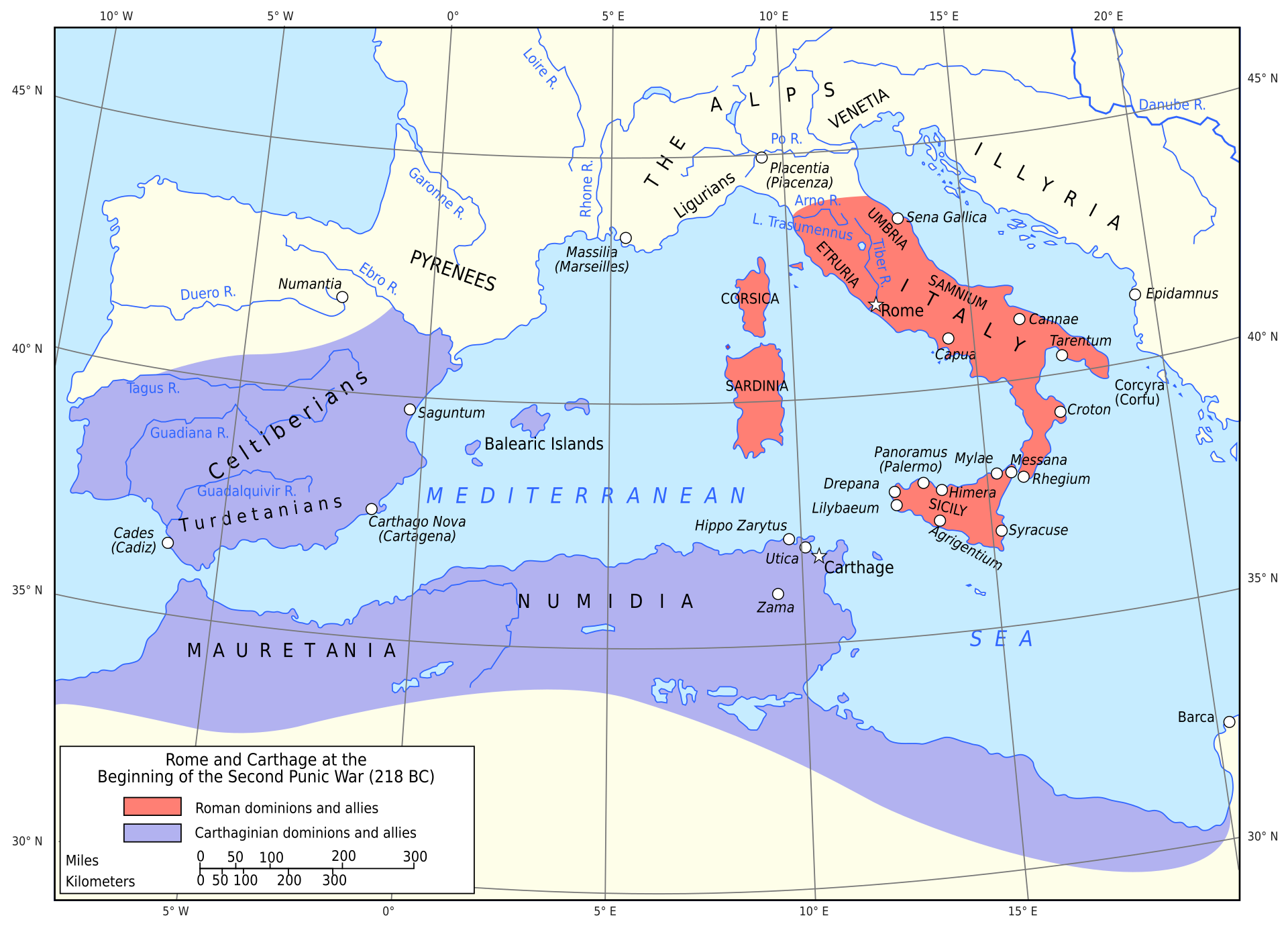


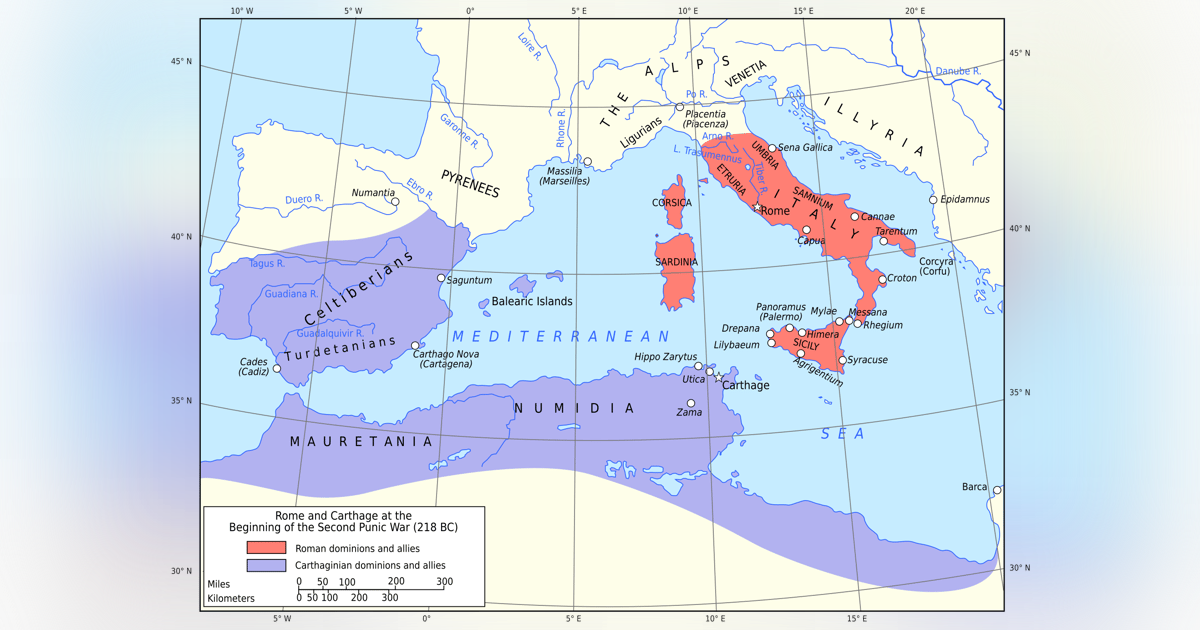
This episode covers the fragile peace after the First Punic War, focusing on Carthage’s internal rebellions, Hamilcar Barca’s campaigns in Spain, and Rome’s expansion in northern Italy.
It introduces key figures like Hamilcar, young Hannibal, Fabius Maximus, and Marcus Claudius Marcellus, and explains how political, military, and social changes set the stage for the Second Punic War.
Chapters
00:25 - The Rise of Rome
00:49 - Fragile Peace Between Wars
03:24 - Hamilcar Barca’s Legacy
09:18 - Carthage’s Dilemma
10:54 - Rome’s Newfound Power
14:41 - Hamilcar’s Ambitions
15:33 - A Vow of Vengeance
15:53 - Rising Roman Leaders
25:28 - Shifting Societal Structures
30:19 - Prelude to the Second Punic War
Transcript
WEBVTT
00:00:00.000 --> 00:00:19.440
Music.
00:00:19.420 --> 00:00:24.780
O Jupiter Ferretrius, be thou witness that I, a general, have slain a general.
00:00:25.120 --> 00:00:29.180
I, a consul, have slain a king with my own hand.
00:00:29.520 --> 00:00:35.740
Thus spoke Marcus Claudius Marcellus, consul of Rome, after slaying a king of
00:00:35.740 --> 00:00:37.580
the Gauls in hand-to-hand combat.
00:00:37.520 --> 00:00:49.840
Music.
00:00:49.600 --> 00:00:53.700
Hello and welcome to the Western Traditions Podcast. My name is Rob Paxton,
00:00:53.940 --> 00:00:58.100
and this is the 15th episode in the Roman Empire Podcast series.
00:00:58.520 --> 00:01:03.680
In the last episode of this series, I concluded the history of the First Punic
00:01:03.680 --> 00:01:08.680
War, in which the upstart Romans, a regional power at best until that time,
00:01:09.160 --> 00:01:13.800
managed to fight their way through a 20-year conflict and found themselves recognized
00:01:13.800 --> 00:01:16.340
on the international stage at the end of it.
00:01:16.340 --> 00:01:23.880
So, in 241 BC, these Latin speakers from central Italy were now the up-and-coming
00:01:23.880 --> 00:01:29.860
power in the West, vying with ancient Carthage for control over the raw wealth of the West.
00:01:29.860 --> 00:01:35.480
In the east, the great cities and their civilizations continued on as before.
00:01:36.080 --> 00:01:42.420
Many of them under Greek rulers, for at this time Alexander's conquests were less than a century old,
00:01:42.560 --> 00:01:47.760
and his successors warred among themselves for power and glory in the immortal
00:01:47.760 --> 00:01:52.380
lands once ruled by the likes of Gilgamesh, Sargon, Hammurabi,
00:01:52.780 --> 00:01:54.240
Ramses, and Xerxes.
00:01:54.600 --> 00:02:00.200
But peace had come in the west, and the conflict with Carthage abated for a time.
00:02:00.460 --> 00:02:03.020
For a little more than two decades, actually.
00:02:03.460 --> 00:02:07.000
In the meantime, both Rome and Carthage remained busy.
00:02:07.300 --> 00:02:12.200
Rome, as always, engaged in one war or another with their neighbors during each year.
00:02:12.380 --> 00:02:16.540
The consuls were elected, the legions were formed, and they marched away to
00:02:16.540 --> 00:02:18.780
the frontiers to expand their dominion.
00:02:19.220 --> 00:02:23.700
And Carthage, whose interior had erupted with sedition and incursions during
00:02:23.700 --> 00:02:27.740
the war with Rome, now found itself quelling uprisings in Africa.
00:02:28.801 --> 00:02:32.981
This episode will address the violent interlude between the First and Second
00:02:32.981 --> 00:02:38.501
Punic Wars and the rise of the men who would fight to decide whose culture would
00:02:38.501 --> 00:02:40.241
achieve supremacy in the West.
00:02:40.781 --> 00:02:45.081
Now, before we dive into this fragile peace between Rome and Carthage,
00:02:45.261 --> 00:02:50.121
let me remind you to head over to the website at western-traditions.org.
00:02:50.141 --> 00:02:52.181
That's western-traditions.org.
00:02:52.401 --> 00:02:56.261
There you can find all the episodes from every series of the podcast.
00:02:56.261 --> 00:03:00.881
You can also purchase some Western Traditions merchandise, like a t-shirt or a hat.
00:03:01.221 --> 00:03:05.821
You can directly support the podcast through the PayPal or Patreon options found
00:03:05.821 --> 00:03:07.041
at the bottom of the homepage.
00:03:07.681 --> 00:03:12.621
Patreon supporters get access to the Patreon page where I post updates and some
00:03:12.621 --> 00:03:16.201
behind-the-scenes material, as well as the occasional essay,
00:03:16.441 --> 00:03:18.521
resource, link, or personal rant.
00:03:18.981 --> 00:03:24.541
Now that I've plugged the website again, let's return to the Mediterranean in 241 BC.
00:03:24.541 --> 00:03:30.121
As Rome and Carthage retire from overseas warfare to focus on their own local
00:03:30.121 --> 00:03:34.121
issues with neighbors and to plot quietly against one another.
00:03:36.240 --> 00:03:48.560
Music.
00:03:48.921 --> 00:03:53.081
Hemilcar Barca was not your stereotypical Carthaginian.
00:03:53.781 --> 00:03:58.081
The Romans, especially in post-war propaganda, often depicted their Semitic
00:03:58.081 --> 00:03:59.881
opponents as money-grubbing,
00:04:00.081 --> 00:04:04.281
dishonorable merchants, but they would not have been able to characterize Hamilcar
00:04:04.281 --> 00:04:09.061
that way, nor would they ever speak thus of his even more famous son, Hannibal.
00:04:09.841 --> 00:04:13.641
No, while Carthage's armies were mostly made up of foreign mercenaries,
00:04:13.761 --> 00:04:16.121
they were led by loyal men of the city.
00:04:16.861 --> 00:04:22.521
Hamilcar was one of those chosen men. He had led his army, virtually unaided
00:04:22.521 --> 00:04:26.241
by his home city, for six years in the field against Rome,
00:04:26.861 --> 00:04:31.221
Disgusted by the failure of his political leadership, the Chofetes and the city
00:04:31.221 --> 00:04:37.221
council to support his army in Sicily and to counter the Roman threat He had
00:04:37.221 --> 00:04:41.721
refused to sign the peace treaty that concluded the war leaving it to a subordinate
00:04:41.721 --> 00:04:45.161
to do while he sailed home and retired to private life.
00:04:45.897 --> 00:04:50.097
Meanwhile, his masters made arrangements for the mercenaries to come back to
00:04:50.097 --> 00:04:55.157
Carthage, but they had no intention of doling out all those years of back pay.
00:04:55.337 --> 00:04:59.717
They removed the fighting men to a location 100 miles from the capital,
00:04:59.937 --> 00:05:04.057
and there they informed the army that Carthage was in no position to pay them
00:05:04.057 --> 00:05:07.957
their well-earned wages for years of warfare.
00:05:08.597 --> 00:05:13.297
The enraged soldiers rebelled and marched on Tunis, the second city of Carthage,
00:05:13.457 --> 00:05:17.417
and they were only briefly deterred there by an offer of arbitration.
00:05:17.757 --> 00:05:23.657
And thus began the Libyan War, which was not handled well by the man that Carthage
00:05:23.657 --> 00:05:26.597
initially placed as general over their local forces.
00:05:26.817 --> 00:05:30.997
And now it should not be forgotten either that the army called together to defend
00:05:30.997 --> 00:05:36.077
the city and its empire was also simply another army of costly mercenaries.
00:05:36.077 --> 00:05:40.897
So Carthage's military budget increased significantly, even though the bean
00:05:40.897 --> 00:05:46.117
counters in their assembly had hoped to save money by not paying wages justly earned.
00:05:46.397 --> 00:05:50.577
And this at a time when the city was also expected to begin paying the heavy
00:05:50.577 --> 00:05:54.517
yearly indemnities to Rome, to which they had agreed in the treaty.
00:05:54.997 --> 00:05:58.077
And since there were not enough loyal mercenary soldiers available,
00:05:58.257 --> 00:06:01.457
and we can only speculate how reluctant such forces might have been to fight
00:06:01.457 --> 00:06:05.017
for paymasters who had already publicly reneged on a contract,
00:06:05.017 --> 00:06:08.437
but native Carthaginians, completely unused to warfare,
00:06:08.777 --> 00:06:10.697
most likely had to be conscripted in
00:06:10.697 --> 00:06:14.657
order to stand a chance against the war-hardened veterans of the mutiny.
00:06:15.077 --> 00:06:19.717
To make matters worse, the entire countryside of Libya joined the cause of the
00:06:19.717 --> 00:06:22.137
mutinous mercenaries and gave them support.
00:06:22.397 --> 00:06:28.497
To the 20,000 rebel mercenaries were now added perhaps as many as 70,000 combatants
00:06:28.497 --> 00:06:30.657
from all of Carthage's subject lands.
00:06:30.657 --> 00:06:37.237
In 239 BC, the desperate city leaders reluctantly placed Hamilcar Barca in supreme
00:06:37.237 --> 00:06:39.937
command of the forces still loyal to Carthage.
00:06:40.137 --> 00:06:45.217
In two years' time, this master of battlefield strategy completely quelled the
00:06:45.217 --> 00:06:48.517
rebellion, and Carthage was again at peace in Africa.
00:06:49.457 --> 00:06:54.537
Overseas, it was another matter altogether. The Romans honored their treaty
00:06:54.537 --> 00:06:58.437
with the Carthaginians, but in hindsight, it certainly could be argued that
00:06:58.437 --> 00:07:01.617
they honored the letter rather than the spirit of the agreement.
00:07:01.897 --> 00:07:07.597
While the Libyan war raged, Carthage's mercenary force on Sardinia also rebelled
00:07:07.597 --> 00:07:08.937
and took over the island.
00:07:09.197 --> 00:07:14.057
These rebels immediately sent envoys to the Romans, offering them control of
00:07:14.057 --> 00:07:16.537
another island possession of Carthage.
00:07:16.997 --> 00:07:22.577
Rome nobly refused to accept. The senators would not violate the treaty simply
00:07:22.577 --> 00:07:24.957
because Carthage was weakened and distracted.
00:07:25.517 --> 00:07:31.117
As the Libyan War wound down, however, the populace of Sardinia rose up and
00:07:31.117 --> 00:07:34.417
expelled the mercenary army that had taken over the island.
00:07:34.677 --> 00:07:41.797
These mutineers, escaping, sailed to Rome and again suggested that Rome should take over Sardinia.
00:07:42.494 --> 00:07:46.494
Now, the Roman senators pondered the matter from a whole different angle.
00:07:46.774 --> 00:07:53.114
The populace having rebelled, the island of Sardinia seemed to them to be a whole new creature.
00:07:53.434 --> 00:07:56.754
This was no longer a territorial possession of Carthage.
00:07:56.914 --> 00:08:01.794
This was a new and independent power, and it was located just off the coast
00:08:01.794 --> 00:08:06.934
of Rome, at a critical strategic point which left Rome vulnerable to sea attack.
00:08:07.194 --> 00:08:09.054
And there was no time to lose.
00:08:09.554 --> 00:08:15.114
Carthage was, at this point in 237 BC, mopping up the remnants of the insurrection
00:08:15.114 --> 00:08:19.074
in Africa and would soon be able to reach out and reclaim Sardinia.
00:08:19.294 --> 00:08:24.434
So the Roman Senate decided, on the spot, to forego being magnanimous anymore.
00:08:24.734 --> 00:08:31.734
They sent over Tiberius Sempronius Gracchus with a suitable force and assumed control of the island.
00:08:31.974 --> 00:08:36.774
This Gracchus was from another Roman family about whom we will hear much more
00:08:36.774 --> 00:08:39.294
in the coming episodes when the Punic Wars have passed.
00:08:39.694 --> 00:08:44.254
Now Carthage, enraged, prepared an expedition to retake the island.
00:08:44.554 --> 00:08:49.574
Rome considered this an act tantamount to war and immediately sent ambassadors
00:08:49.574 --> 00:08:52.174
to Carthage with their own angry terms.
00:08:52.434 --> 00:08:57.494
They expected Carthage to stand down, to surrender the island of Sardinia formally
00:08:57.494 --> 00:09:01.454
to them, and to pay an additional 1,200 talents in indemnity,
00:09:01.694 --> 00:09:06.234
basically a bribe to keep the Romans from declaring an all-out offensive on Carthage again.
00:09:06.974 --> 00:09:11.914
Carthage accepted. She was in no shape to take Rome on head-to-head again.
00:09:12.254 --> 00:09:16.174
Not everyone on the African side of the matter, though, was willing to accept
00:09:16.174 --> 00:09:17.634
this ignominious result.
00:09:18.294 --> 00:09:23.054
Certainly not Hamilcar Barca, and certainly not his young son, Hannibal.
00:09:23.920 --> 00:09:38.320
Music.
00:09:38.164 --> 00:09:41.144
It is not surprising, though, that Carthage had to back down.
00:09:41.884 --> 00:09:47.164
Monetarily strapped for cash, as we would say today, and morally exhausted by
00:09:47.164 --> 00:09:50.644
more than two decades of mostly disappointing military results,
00:09:50.904 --> 00:09:54.744
she was in no place to produce another full-scale war effort.
00:09:54.964 --> 00:09:58.704
She needed time to recover, to reinvigorate her trade network,
00:09:58.884 --> 00:10:00.604
and to defend herself at home.
00:10:00.904 --> 00:10:05.484
When the Treasury was as exhausted as the populace, sending an army overseas
00:10:05.484 --> 00:10:07.364
seemed like a bad idea all around.
00:10:08.164 --> 00:10:12.524
Now, Rome herself was not inactive. After the conclusion of the First Punic
00:10:12.524 --> 00:10:16.604
War, she was soon back to warring with the Cisalpine Gauls, that is,
00:10:16.844 --> 00:10:20.144
the Gauls who lived on the near side of the Alps in northern Italy.
00:10:20.424 --> 00:10:25.144
And as the years passed, Rome began to exert her newfound strength at sea by
00:10:25.144 --> 00:10:27.464
venturing with her navy into the Adriatic.
00:10:27.744 --> 00:10:31.964
She sent a consular army against the aggressive Illyrians, who lived in the
00:10:31.964 --> 00:10:35.784
northwest of the Greek cultural sphere, essentially where Albania is now.
00:10:36.404 --> 00:10:41.024
Here, Rome assumed a protectorate over the coastline, denying the kingdom of
00:10:41.024 --> 00:10:45.804
Macedon access to the sea, and therefore winning favor with Macedonia's Greek
00:10:45.804 --> 00:10:47.744
enemies, such as Sparta and others.
00:10:48.301 --> 00:10:54.341
Rome was becoming recognized as a civilized power and a valuable potential ally in the East.
00:10:54.541 --> 00:11:01.901
So it was that the interwar years found Rome acclimating herself to a new international stage,
00:11:02.301 --> 00:11:06.701
flexing her diplomatic and her military muscles, while Carthage,
00:11:06.901 --> 00:11:11.261
feeling herself suddenly jilted from her usual place of honor among the nations,
00:11:11.701 --> 00:11:16.021
sought merely to survive, recuperate, and rise again.
00:11:16.661 --> 00:11:20.261
At least some Carthaginians looked at it that way. Most of the ruling merchant
00:11:20.261 --> 00:11:24.521
class had its eye always on income rather than prestige or honor.
00:11:24.921 --> 00:11:29.321
There was a party in the government, though, remembered now as the Barkid party,
00:11:29.461 --> 00:11:34.601
or those that followed Hamilcar Barka, who desired to regain Carthage's public pride.
00:11:35.241 --> 00:11:39.241
Hamilcar, in the interwar years, after he overcame the Libyan rebellion and
00:11:39.241 --> 00:11:43.941
the Numidians and others, was sent away to Spain with his victorious veterans.
00:11:44.601 --> 00:11:50.321
Was this always his plan, or was it a scheme of his superiors to get rid of troublemakers at home?
00:11:50.641 --> 00:11:55.041
This move certainly served two important purposes for Carthage.
00:11:55.441 --> 00:11:57.261
Hamilcar and his blooded army
00:11:57.261 --> 00:12:01.741
could secure and expand Carthaginian control in the Iberian peninsula.
00:12:02.321 --> 00:12:06.921
Here, through the old Phoenician and Greek port cities, they profited from trade
00:12:06.921 --> 00:12:12.081
and, very importantly, acquired silver from the various mines in the Spanish interior.
00:12:12.921 --> 00:12:18.041
Now, militarily as well as financially present, they could ensure control over
00:12:18.041 --> 00:12:23.061
this resource, this silver, which they needed primarily to manage all the payments
00:12:23.061 --> 00:12:26.421
that they now owed to Rome, under the protocols of the treaty.
00:12:26.981 --> 00:12:32.481
But also, without a doubt, Carthaginian powers that be were elated to get Hamilcar
00:12:32.481 --> 00:12:36.421
out of their hair and to remove the aggressive Libyans from their mist.
00:12:36.761 --> 00:12:40.401
Even those that had fought for the city were not entirely to be trusted.
00:12:41.041 --> 00:12:45.061
Thus, dangerous elements were removed from the homeland, and the merchant class
00:12:45.061 --> 00:12:46.481
could get back to making money.
00:12:47.014 --> 00:12:51.454
And the occupying force sent to Spain had to be a mercenary army.
00:12:51.674 --> 00:12:55.694
For many listeners, it might occur to them that Carthage could have utilized
00:12:55.694 --> 00:12:59.114
its native population, like the Romans did, to man its army.
00:12:59.414 --> 00:13:03.594
In emergencies, some native Carthaginians appear to have been conscripted,
00:13:03.654 --> 00:13:07.794
but we're not really sure about that or to what extent this measure may have been taken.
00:13:08.394 --> 00:13:12.254
No, the merchant government of Carthage was an exploiter.
00:13:12.854 --> 00:13:15.534
The same could be said of many or most governments, perhaps,
00:13:15.694 --> 00:13:18.034
but Carthage was an extreme case.
00:13:18.294 --> 00:13:23.934
The ruling class, like a parasite, sucked its nutritious wealth from the blood of trade and commerce.
00:13:24.174 --> 00:13:28.854
It oversaw the operations of a native population which helped it to garner this
00:13:28.854 --> 00:13:34.894
wealth, and only paid from its profits when absolutely necessary for the muscle to protect it.
00:13:35.314 --> 00:13:40.534
During times of peace, unlike Rome, Carthage maintained no standing army.
00:13:40.534 --> 00:13:44.834
They did not want to keep the lower classes trained and drilling because that
00:13:44.834 --> 00:13:49.054
would lead to a greater pride and unity among commoners and increase the power
00:13:49.054 --> 00:13:51.974
of the popular assembly, as we've already seen happen in Rome.
00:13:52.314 --> 00:13:56.314
See, the lower house of the government functioned merely as a way to placate
00:13:56.314 --> 00:13:59.094
the population with the idea that it had representation.
00:13:59.554 --> 00:14:04.614
And to keep and maintain a mercenary army during peacetime would also be very expensive.
00:14:05.174 --> 00:14:09.414
So, truly, the empire of Carthage had entered into a strange period,
00:14:09.674 --> 00:14:11.614
coming off of the First Punic War.
00:14:12.054 --> 00:14:16.554
Never had they had to field an army for so long or spend so much on it.
00:14:16.654 --> 00:14:20.354
And now, after the suppression of internal rebellions and the acquisition of
00:14:20.354 --> 00:14:21.634
much territory in Libya,
00:14:21.914 --> 00:14:25.394
which had previously just been sort of closely associated with Carthage,
00:14:25.554 --> 00:14:29.354
there were many in the government who wanted to focus future efforts and energy
00:14:29.354 --> 00:14:34.694
on maintaining and expanding their African dominions, on continuing the transition
00:14:34.694 --> 00:14:40.234
to become a landed aristocracy, rather than looking across the waves for some ambitious purpose.
00:14:41.099 --> 00:14:45.259
But there were others among the ruling classes of Carthage, like Hamilcar Barca,
00:14:45.499 --> 00:14:49.559
who insisted on pursuing a future for their nation on the ocean,
00:14:49.819 --> 00:14:51.699
as Carthage had done for centuries.
00:14:52.459 --> 00:14:57.099
Hamilcar, you see, was that rare thing among politicians. He was a patriot.
00:14:57.679 --> 00:15:01.779
Naturally, he wanted personal power as well, but he was also oriented toward
00:15:01.779 --> 00:15:03.699
regaining the glory of Carthage.
00:15:03.819 --> 00:15:08.159
And he was not the only one. To Spain, he took with him Hasdrubal,
00:15:08.379 --> 00:15:11.319
his son-in-law and a high-ranking member of the government.
00:15:11.899 --> 00:15:17.259
Hasdrubal would become Hamilcar's admiral. And the warlord also brought his
00:15:17.259 --> 00:15:19.879
son with him, nine-year-old Hannibal.
00:15:20.459 --> 00:15:25.759
Hamilcar had taken his son, young as he was, to the altar of Baal-Hammond,
00:15:26.399 --> 00:15:33.019
god-king of Carthage, and there he had the young boy swear undying vengeance against Rome.
00:15:33.639 --> 00:15:39.759
Hannibal would grow up and be true to his word, and Rome would never forget his terror.
00:15:53.239 --> 00:15:56.299
On the Roman side, there were up-and-comers as well.
00:15:57.061 --> 00:16:01.901
Fabius Maximus, who would become famously known as Fabius the Delayer in the
00:16:01.901 --> 00:16:05.941
war to come with Carthage, and as a controversial savior of Rome,
00:16:06.161 --> 00:16:10.481
probably had his first experiences as a soldier in the First Punic War.
00:16:10.781 --> 00:16:14.221
During the long interlude between the First and Second Punic Wars,
00:16:14.381 --> 00:16:18.781
he would be elected consul for the first time, and the army he led would drive
00:16:18.781 --> 00:16:24.321
the Cisalpine Gauls into the Alps and help secure Rome's control over northern Italy.
00:16:24.961 --> 00:16:28.761
Now, a little younger than Fabius was Marcus Claudius Marcellus.
00:16:29.021 --> 00:16:34.441
From his earliest days as a soldier in the First Punic War, he had been praised for his bravery.
00:16:35.021 --> 00:16:40.641
Like Fabius, he was one of the men about whom Plutarch would come to say the following, quote,
00:16:41.041 --> 00:16:45.801
The chief Romans, who in their youth had war with the Carthaginians in Sicily,
00:16:46.141 --> 00:16:50.341
in their middle age with the Gauls in the defense of Italy itself,
00:16:50.341 --> 00:16:52.901
and at last, when now grown old,
00:16:53.261 --> 00:16:56.701
struggled again with Hannibal and the Carthaginians.
00:16:57.341 --> 00:17:01.181
As stated previously, the Romans had always engaged in conflicts,
00:17:01.461 --> 00:17:05.281
small or large scale, virtually every year since the founding of their city,
00:17:05.341 --> 00:17:10.241
and when the First Punic War came to an end, they did not hesitate to return to this habit.
00:17:10.481 --> 00:17:14.301
They had much work to do in quelling rebellion on their newfound possession,
00:17:14.501 --> 00:17:19.781
the island of Sardinia, whose inhabitants were notoriously unruly and prone to revolt.
00:17:20.021 --> 00:17:24.961
Later, Rome would add the island of Corsica to her dominions as well and face
00:17:24.961 --> 00:17:26.901
the same challenges on that island.
00:17:27.061 --> 00:17:30.361
But the Romans seemingly relished such labor.
00:17:30.581 --> 00:17:36.361
Indeed, nothing seemed to tire them, neither massive and costly overseas expeditions
00:17:36.361 --> 00:17:40.541
nor drawn-out, low-intensity anti-insurgency conflicts.
00:17:40.941 --> 00:17:44.501
While they were keeping this up, they were also mopping up the last bits of
00:17:44.501 --> 00:17:48.681
resistance to Roman rule in central and southern Italy and moving against the
00:17:48.681 --> 00:17:50.401
Gauls in the north of the peninsula.
00:17:50.841 --> 00:17:55.821
And it was with the Gauls that the interwar years find their most critical juncture.
00:17:56.301 --> 00:18:03.301
By 232 BC, the Romans had pushed their way farther into northern Italy and seized much Gallic land.
00:18:03.561 --> 00:18:08.881
They had expelled the former owners and permitted their citizens to colonize
00:18:08.881 --> 00:18:10.621
and farm this newfound land.
00:18:11.261 --> 00:18:15.221
To underline the significance of this conquest, I turn to Polybius,
00:18:15.341 --> 00:18:20.301
who details how incredibly inexpensive the wheat from that land was because
00:18:20.301 --> 00:18:23.841
it was produced in such abundance, as were other grains.
00:18:24.201 --> 00:18:29.461
And furthermore, forests of oak trees dotted the region, and here farmers pastured
00:18:29.461 --> 00:18:36.081
their pigs to eat the fallen acorns and grow fat to later be slaughtered to feed the army.
00:18:36.941 --> 00:18:41.941
Much of Italy was fertile, but the north was truly an agricultural cornucopia.
00:18:42.401 --> 00:18:46.261
Seen in this light, it becomes clear why there was a war between the Romans
00:18:46.261 --> 00:18:48.841
and the Gauls for possession of this territory.
00:18:49.441 --> 00:18:54.741
By 226 BC, therefore, a massive invasion from the north was looming,
00:18:54.901 --> 00:19:00.281
and Rome was gearing up for another major conflict that would absorb all its efforts and focus.
00:19:01.321 --> 00:19:05.421
Naturally, this could be seen as a moment of opportunity for the Carthaginians
00:19:05.421 --> 00:19:10.301
like Hamilcar Barca, but a few things prevented Carthage from acting against
00:19:10.301 --> 00:19:12.521
the Romans while they were distracted by the Gauls.
00:19:12.801 --> 00:19:18.001
For one, Helmucar was dead by then. He had spent the remaining years of his
00:19:18.001 --> 00:19:19.641
life very industriously.
00:19:19.941 --> 00:19:25.281
By the time of his death in 228 BC, he had expanded Carthaginian power in the
00:19:25.281 --> 00:19:27.701
Iberian Peninsula, renewed his
00:19:27.701 --> 00:19:31.881
people's fame, and secured a stream of life-giving wealth for his city.
00:19:32.401 --> 00:19:37.001
Accounts differ as to how he died, but it was likely in some petty engagement
00:19:37.001 --> 00:19:40.221
aimed at seizing another piece of real estate in Spain.
00:19:40.581 --> 00:19:45.101
And in this way, his death reminds me very much of those deaths suffered by
00:19:45.101 --> 00:19:50.961
so many Greek heroes, who fought and won glorious battles only later to die
00:19:50.961 --> 00:19:54.761
in accidents or during minor ignominious scuffles.
00:19:55.201 --> 00:19:59.541
The best-attested stories about the death of Hamilcar say that he fell from
00:19:59.541 --> 00:20:03.201
his horse while crossing a river during a retreat and drowned.
00:20:03.981 --> 00:20:08.641
Hamilcar left behind him a son, Hannibal, still too young to command,
00:20:08.921 --> 00:20:12.621
and his son-in-law, Hasdrubal, who took the reins in Spain.
00:20:13.526 --> 00:20:19.746
Now, Hasdrubal, while thoroughly a follower of Hamilcar, was not as aggressive as his father-in-law.
00:20:19.926 --> 00:20:25.286
He was more of a statesman and eager to solidify Carthaginian power in the Iberian
00:20:25.286 --> 00:20:27.146
Peninsula before thinking beyond that.
00:20:27.446 --> 00:20:32.026
So when Rome approached Hasdrubal, seeking an assurance of neutrality during
00:20:32.026 --> 00:20:36.286
the coming engagement with Gaul, he happily signed an agreement which stated
00:20:36.286 --> 00:20:39.086
that he would not cross the River Ebro in arms.
00:20:39.766 --> 00:20:44.246
This was an easy proclamation to make, since his forces were still nowhere near that river.
00:20:44.666 --> 00:20:49.306
But this diplomatic accord was not the only thing that kept Carthage from acting
00:20:49.306 --> 00:20:54.946
against Rome in 226 BC, when the Gauls seemed poised to invade their mutual enemy.
00:20:55.206 --> 00:20:59.206
There was also the simple deterrent of geographical reality.
00:20:59.566 --> 00:21:04.426
While Carthaginian power had grown in Spain, it was still located mostly in
00:21:04.426 --> 00:21:06.586
the southeast of the Iberian Peninsula.
00:21:06.586 --> 00:21:10.146
An alliance between Carthage and Gaul might have sounded good,
00:21:10.306 --> 00:21:14.446
but there were many miles separating any possible conjunction of their forces,
00:21:14.686 --> 00:21:18.366
and a pretty serious mountain range known today as the Pyrenees.
00:21:18.746 --> 00:21:22.306
After that, there was a march across southern France and another march over
00:21:22.306 --> 00:21:26.806
the Alps before any such army from Carthaginian Spain could threaten Italy.
00:21:27.426 --> 00:21:30.366
As for a seaborne invasion, that was out of the question.
00:21:30.726 --> 00:21:33.886
The rulers of Carthage would not make that venture at this time.
00:21:33.886 --> 00:21:38.366
Rome had proved too capable an enemy at sea, and regardless,
00:21:38.766 --> 00:21:40.326
the expense was just too much.
00:21:40.946 --> 00:21:45.286
Hannibal, when he came of age, would have to find his own way around all these
00:21:45.286 --> 00:21:48.186
obstacles and impediments. And he would.
00:21:48.400 --> 00:22:01.680
Music.
00:22:01.146 --> 00:22:07.306
The Gauls of northern Italy formally declared war on Rome in 225 B.C.
00:22:07.646 --> 00:22:11.926
There had been conflict between these two opponents for many years off and on,
00:22:12.106 --> 00:22:13.646
even before the Punic Wars.
00:22:14.166 --> 00:22:18.986
Recall that the Gauls had invaded and even sacked Rome as far back as 390 BC.
00:22:19.426 --> 00:22:23.446
And at first, they threatened to do just that, sack Rome again.
00:22:23.766 --> 00:22:27.126
The invading army, composed of several different tribes of Gauls,
00:22:27.466 --> 00:22:30.726
quickly came within just a few days' march of the city itself.
00:22:30.946 --> 00:22:35.006
These invaders even pushed aside the Roman army sent to stop them.
00:22:35.206 --> 00:22:39.466
But fortune and Roman fortitude saved the day for Rome.
00:22:40.346 --> 00:22:45.846
Aemilius Paulus, in command of the other Roman army, which was stationed closer to the Adriatic,
00:22:46.066 --> 00:22:50.786
was by then already on the move He arrived on the battlefield without knowledge
00:22:50.786 --> 00:22:54.166
of the whereabouts of the other army, which had already been defeated and pushed
00:22:54.166 --> 00:23:00.306
back once By chance, these two Roman armies came into contact with the Gauls at the same time,
00:23:00.932 --> 00:23:06.172
The invaders were forced to face in two opposite directions to meet the simultaneous
00:23:06.172 --> 00:23:09.992
attacks of the Romans, who only appeared to have coordinated the assault.
00:23:10.652 --> 00:23:16.272
Memory of this battle was burned into Roman memory. One of the tribes of Gauls, the Gassete,
00:23:16.632 --> 00:23:20.112
were so eager to demonstrate their valor against the hated Romans,
00:23:20.312 --> 00:23:24.672
they stripped off all their clothes and went into battle bearing only their
00:23:24.672 --> 00:23:30.192
weapons and their courage, and thus bringing to life one of the great images of ancient warfare,
00:23:30.472 --> 00:23:36.672
the naked, fanatically screaming Gauls throwing themselves against the stolid Roman ranks.
00:23:36.672 --> 00:23:40.972
But the sturdy Romans overcame Gallic ferocity.
00:23:41.572 --> 00:23:45.492
Polybius tells us that some 40,000 Gauls were killed in the battle.
00:23:45.792 --> 00:23:50.072
Another 10,000 were taken prisoner, he says, as well as one of their kings.
00:23:50.732 --> 00:23:54.592
In the next few years, the Gauls would be pushed back farther than ever.
00:23:54.912 --> 00:23:59.612
Roman legions crossed over into the lands of modern-day France for the first time.
00:23:59.792 --> 00:24:05.052
They drove the Gauls into the Alps as well, and there were pleas for peace from
00:24:05.052 --> 00:24:06.492
them, but these were ignored.
00:24:06.672 --> 00:24:11.752
One of the Romans urging continuation of the war was Marcus Claudius Marcellus,
00:24:11.932 --> 00:24:14.512
whom we will see more of in the Second Punic War to come.
00:24:14.652 --> 00:24:19.032
And it was during one of the following engagements that this Marcellus led a
00:24:19.032 --> 00:24:23.292
small force of cavalry and light foot against the Gallic army which happened
00:24:23.292 --> 00:24:25.912
to be led by one of their kings in person.
00:24:26.292 --> 00:24:31.972
During this savage battle, the Gallic king, Viridomarus, spotted Marcellus amid
00:24:31.972 --> 00:24:35.792
the fighting and shouted a challenge to meet him in single combat.
00:24:36.332 --> 00:24:40.652
The challenge was accepted, and Marcellus slayed the king of the Gauls right
00:24:40.652 --> 00:24:42.352
there on the field of battle.
00:24:42.712 --> 00:24:47.892
After this victory, Marcellus became only the third and the last Roman to ever
00:24:47.892 --> 00:24:53.872
be rewarded with the Spolia Opima, the triumph awarded to a Roman general who
00:24:53.872 --> 00:24:56.152
kills an enemy general in single combat.
00:24:56.792 --> 00:25:02.672
The war with the Gauls came to an end not long after this. It was now 221 BC.
00:25:03.352 --> 00:25:08.372
The Romans had survived another cataclysmic confrontation. And all this time,
00:25:08.492 --> 00:25:12.932
the tyrant in Syracuse, Hierro, about whom we heard so much at the beginning
00:25:12.932 --> 00:25:16.972
of the First Punic War, he had remained quietly loyal to Rome.
00:25:17.192 --> 00:25:21.412
He resisted any ideas of treachery as he guarded the backdoor to Italy.
00:25:21.672 --> 00:25:26.472
And for this, Rome was not ungrateful and sent him many of the treasures taken
00:25:26.472 --> 00:25:28.092
in the war against the Gauls.
00:25:28.552 --> 00:25:33.432
Once the Second Punic War started a few years later, Hierro's loyalty to Rome
00:25:33.432 --> 00:25:37.792
would be remembered less than favorably by his political enemies.
00:25:38.160 --> 00:25:49.520
Music.
00:25:49.572 --> 00:25:54.452
Also striking in this segue to the Second Punic War, though perhaps not as dramatic
00:25:54.452 --> 00:26:01.312
as the tales of battle, is the societal transformations underway on both sides of the Mediterranean.
00:26:01.732 --> 00:26:05.552
The Carthaginians, once a Phoenician city of traders and merchants,
00:26:05.912 --> 00:26:10.712
was accelerating its conversion into a realm ruled by a landed aristocracy,
00:26:10.832 --> 00:26:14.452
and they were producing men of war like Hamilcar and his son Hannibal,
00:26:14.452 --> 00:26:18.152
who thought less of finance and more of conquest and glory.
00:26:18.572 --> 00:26:22.952
Roman society was also changing. I mentioned the colonization of northern Italy
00:26:22.952 --> 00:26:24.632
after the expulsion of the Gauls.
00:26:24.912 --> 00:26:29.292
The opening of that land to the common people of Rome was not the idea of the
00:26:29.292 --> 00:26:34.352
aristocracy in Rome, which would have surely rather divided the land up between themselves.
00:26:34.752 --> 00:26:40.472
Instead, this was brought about through the rising class of the Novus Homo, the new man.
00:26:40.772 --> 00:26:45.292
These were men whose closest ancestors had probably been from the middle classes,
00:26:45.512 --> 00:26:50.192
maybe from the knights, the equites, but whom fortune and intelligence had elevated
00:26:50.192 --> 00:26:51.972
to high power in the state.
00:26:52.912 --> 00:26:57.192
Gaius Flaminius was one of these new men. He was the first in his family to
00:26:57.192 --> 00:27:01.872
hold high office in Rome, a newcomer to the sainted ranks of senators who had
00:27:01.872 --> 00:27:03.852
held such offices now for centuries.
00:27:04.212 --> 00:27:09.952
In 232 BC, he had been the tribune who had moved the government to make land
00:27:09.952 --> 00:27:14.432
grants in northern Italy. He would go on to become consul in future years,
00:27:14.572 --> 00:27:16.692
in particular during the Second Punic War.
00:27:17.326 --> 00:27:20.866
Not everyone would appreciate this societal change.
00:27:21.046 --> 00:27:26.186
The historian Polybius, among others, sides with the patricians and labels this
00:27:26.186 --> 00:27:30.446
moment in Roman history, in which men from lower classes were granted access
00:27:30.446 --> 00:27:35.206
to the high offices of Rome, as a demoralization of the body politic.
00:27:35.666 --> 00:27:40.126
Even as their societies transformed, however, the Romans and the Carthaginians
00:27:40.126 --> 00:27:42.286
retained significant distinctions.
00:27:43.066 --> 00:27:46.826
Whether the Romans were forming an army to carry out aristocratic schemes or
00:27:46.826 --> 00:27:50.866
sharing conquered lands with the plebeian class, they were doing these things
00:27:50.866 --> 00:27:54.546
either with or for their own people, their own citizens.
00:27:55.006 --> 00:28:00.466
A Carthaginian hero, like Hamilcar or Hannibal, accomplished what he accomplished
00:28:00.466 --> 00:28:02.806
with mercenaries, with foreigners.
00:28:03.146 --> 00:28:06.626
When Hamilcar began to subdue Spain, he did so with mercenaries,
00:28:06.626 --> 00:28:10.606
and the conquered lands would become sources of trade for the merchant class,
00:28:10.826 --> 00:28:15.306
not locations to which needy Carthaginians would come to settle and farm.
00:28:15.526 --> 00:28:20.386
And it would not really be a Carthaginian army that crossed the Alps with Hannibal
00:28:20.386 --> 00:28:22.366
and invaded Italy in the years to come.
00:28:22.386 --> 00:28:27.426
It would be an army of foreigners, of Greeks and Gauls and Libyans and Iberian
00:28:27.426 --> 00:28:31.546
Celts and many more cultures, all led by a Carthaginian.
00:28:31.906 --> 00:28:37.106
The classes of Roman society, high and low, contentious as they were,
00:28:37.366 --> 00:28:41.846
worked together on the battlefield, the patricians risking their necks just
00:28:41.846 --> 00:28:43.526
as the plebs did, though,
00:28:43.826 --> 00:28:48.346
yes, the potential rewards for victory were certainly greater for those captains of war.
00:28:48.706 --> 00:28:53.226
And though there was division in Roman society regarding the status and opportunities
00:28:53.226 --> 00:28:57.626
for those of the lower classes, there was at least debate and change.
00:28:57.806 --> 00:29:03.226
The new men did rise up, even against the wishes of some dissatisfied patricians.
00:29:04.012 --> 00:29:08.612
I have tried my hardest throughout this Roman series to be fair to the Carthaginians
00:29:08.612 --> 00:29:12.672
to refrain from the name-calling and the slurs that are typically hurled at
00:29:12.672 --> 00:29:14.512
these transplanted Phoenicians.
00:29:14.752 --> 00:29:20.452
But I have also averred that I am a proud Westerner and a proud descendant of Roman culture,
00:29:20.472 --> 00:29:24.952
and I think that this is where I can drop the even-handedness a little bit with
00:29:24.952 --> 00:29:31.232
regard to culture and state again without hesitation that history makes me glad
00:29:31.232 --> 00:29:33.532
that the Romans came out supreme in this conflict.
00:29:33.532 --> 00:29:38.032
Whatever faults ancient Roman society may have had, it was a society in which
00:29:38.032 --> 00:29:42.192
common people had some sort of chance, in which there was a stratification of
00:29:42.192 --> 00:29:46.972
the classes certainly, but not a class divide which required worship or groveling.
00:29:47.272 --> 00:29:51.972
So there is something to admire here, even if I deplore the frequent manipulation
00:29:51.972 --> 00:29:55.412
of the lower classes into wars that were not always to their benefit.
00:29:55.592 --> 00:29:59.292
At least in that far-off age and civilization of Rome,
00:29:59.552 --> 00:30:03.192
the upper classes risked their lives alongside the rest of us,
00:30:03.192 --> 00:30:07.852
and shared many burdens of life with commoners when compared to the upper classes
00:30:07.852 --> 00:30:10.872
of societies like those in Carthage or the Near East.
00:30:11.352 --> 00:30:16.652
Those Roman senators also just don't seem so bad when you compare them to the
00:30:16.652 --> 00:30:18.772
leadership we possess today in the West.
00:30:19.552 --> 00:30:23.752
The next episode will describe the beginning of the Second Punic War and the
00:30:23.752 --> 00:30:27.872
early reversals that shook the very foundations of the Roman Republic.
00:30:28.272 --> 00:30:32.092
Until then, I thank you for listening to the Western Traditions Podcast.
00:30:33.040 --> 00:30:49.031
Music.
00:00:00.000 --> 00:00:19.440
Music.
00:00:19.420 --> 00:00:24.780
O Jupiter Ferretrius, be thou witness that I, a general, have slain a general.
00:00:25.120 --> 00:00:29.180
I, a consul, have slain a king with my own hand.
00:00:29.520 --> 00:00:35.740
Thus spoke Marcus Claudius Marcellus, consul of Rome, after slaying a king of
00:00:35.740 --> 00:00:37.580
the Gauls in hand-to-hand combat.
00:00:37.520 --> 00:00:49.840
Music.
00:00:49.600 --> 00:00:53.700
Hello and welcome to the Western Traditions Podcast. My name is Rob Paxton,
00:00:53.940 --> 00:00:58.100
and this is the 15th episode in the Roman Empire Podcast series.
00:00:58.520 --> 00:01:03.680
In the last episode of this series, I concluded the history of the First Punic
00:01:03.680 --> 00:01:08.680
War, in which the upstart Romans, a regional power at best until that time,
00:01:09.160 --> 00:01:13.800
managed to fight their way through a 20-year conflict and found themselves recognized
00:01:13.800 --> 00:01:16.340
on the international stage at the end of it.
00:01:16.340 --> 00:01:23.880
So, in 241 BC, these Latin speakers from central Italy were now the up-and-coming
00:01:23.880 --> 00:01:29.860
power in the West, vying with ancient Carthage for control over the raw wealth of the West.
00:01:29.860 --> 00:01:35.480
In the east, the great cities and their civilizations continued on as before.
00:01:36.080 --> 00:01:42.420
Many of them under Greek rulers, for at this time Alexander's conquests were less than a century old,
00:01:42.560 --> 00:01:47.760
and his successors warred among themselves for power and glory in the immortal
00:01:47.760 --> 00:01:52.380
lands once ruled by the likes of Gilgamesh, Sargon, Hammurabi,
00:01:52.780 --> 00:01:54.240
Ramses, and Xerxes.
00:01:54.600 --> 00:02:00.200
But peace had come in the west, and the conflict with Carthage abated for a time.
00:02:00.460 --> 00:02:03.020
For a little more than two decades, actually.
00:02:03.460 --> 00:02:07.000
In the meantime, both Rome and Carthage remained busy.
00:02:07.300 --> 00:02:12.200
Rome, as always, engaged in one war or another with their neighbors during each year.
00:02:12.380 --> 00:02:16.540
The consuls were elected, the legions were formed, and they marched away to
00:02:16.540 --> 00:02:18.780
the frontiers to expand their dominion.
00:02:19.220 --> 00:02:23.700
And Carthage, whose interior had erupted with sedition and incursions during
00:02:23.700 --> 00:02:27.740
the war with Rome, now found itself quelling uprisings in Africa.
00:02:28.801 --> 00:02:32.981
This episode will address the violent interlude between the First and Second
00:02:32.981 --> 00:02:38.501
Punic Wars and the rise of the men who would fight to decide whose culture would
00:02:38.501 --> 00:02:40.241
achieve supremacy in the West.
00:02:40.781 --> 00:02:45.081
Now, before we dive into this fragile peace between Rome and Carthage,
00:02:45.261 --> 00:02:50.121
let me remind you to head over to the website at western-traditions.org.
00:02:50.141 --> 00:02:52.181
That's western-traditions.org.
00:02:52.401 --> 00:02:56.261
There you can find all the episodes from every series of the podcast.
00:02:56.261 --> 00:03:00.881
You can also purchase some Western Traditions merchandise, like a t-shirt or a hat.
00:03:01.221 --> 00:03:05.821
You can directly support the podcast through the PayPal or Patreon options found
00:03:05.821 --> 00:03:07.041
at the bottom of the homepage.
00:03:07.681 --> 00:03:12.621
Patreon supporters get access to the Patreon page where I post updates and some
00:03:12.621 --> 00:03:16.201
behind-the-scenes material, as well as the occasional essay,
00:03:16.441 --> 00:03:18.521
resource, link, or personal rant.
00:03:18.981 --> 00:03:24.541
Now that I've plugged the website again, let's return to the Mediterranean in 241 BC.
00:03:24.541 --> 00:03:30.121
As Rome and Carthage retire from overseas warfare to focus on their own local
00:03:30.121 --> 00:03:34.121
issues with neighbors and to plot quietly against one another.
00:03:36.240 --> 00:03:48.560
Music.
00:03:48.921 --> 00:03:53.081
Hemilcar Barca was not your stereotypical Carthaginian.
00:03:53.781 --> 00:03:58.081
The Romans, especially in post-war propaganda, often depicted their Semitic
00:03:58.081 --> 00:03:59.881
opponents as money-grubbing,
00:04:00.081 --> 00:04:04.281
dishonorable merchants, but they would not have been able to characterize Hamilcar
00:04:04.281 --> 00:04:09.061
that way, nor would they ever speak thus of his even more famous son, Hannibal.
00:04:09.841 --> 00:04:13.641
No, while Carthage's armies were mostly made up of foreign mercenaries,
00:04:13.761 --> 00:04:16.121
they were led by loyal men of the city.
00:04:16.861 --> 00:04:22.521
Hamilcar was one of those chosen men. He had led his army, virtually unaided
00:04:22.521 --> 00:04:26.241
by his home city, for six years in the field against Rome,
00:04:26.861 --> 00:04:31.221
Disgusted by the failure of his political leadership, the Chofetes and the city
00:04:31.221 --> 00:04:37.221
council to support his army in Sicily and to counter the Roman threat He had
00:04:37.221 --> 00:04:41.721
refused to sign the peace treaty that concluded the war leaving it to a subordinate
00:04:41.721 --> 00:04:45.161
to do while he sailed home and retired to private life.
00:04:45.897 --> 00:04:50.097
Meanwhile, his masters made arrangements for the mercenaries to come back to
00:04:50.097 --> 00:04:55.157
Carthage, but they had no intention of doling out all those years of back pay.
00:04:55.337 --> 00:04:59.717
They removed the fighting men to a location 100 miles from the capital,
00:04:59.937 --> 00:05:04.057
and there they informed the army that Carthage was in no position to pay them
00:05:04.057 --> 00:05:07.957
their well-earned wages for years of warfare.
00:05:08.597 --> 00:05:13.297
The enraged soldiers rebelled and marched on Tunis, the second city of Carthage,
00:05:13.457 --> 00:05:17.417
and they were only briefly deterred there by an offer of arbitration.
00:05:17.757 --> 00:05:23.657
And thus began the Libyan War, which was not handled well by the man that Carthage
00:05:23.657 --> 00:05:26.597
initially placed as general over their local forces.
00:05:26.817 --> 00:05:30.997
And now it should not be forgotten either that the army called together to defend
00:05:30.997 --> 00:05:36.077
the city and its empire was also simply another army of costly mercenaries.
00:05:36.077 --> 00:05:40.897
So Carthage's military budget increased significantly, even though the bean
00:05:40.897 --> 00:05:46.117
counters in their assembly had hoped to save money by not paying wages justly earned.
00:05:46.397 --> 00:05:50.577
And this at a time when the city was also expected to begin paying the heavy
00:05:50.577 --> 00:05:54.517
yearly indemnities to Rome, to which they had agreed in the treaty.
00:05:54.997 --> 00:05:58.077
And since there were not enough loyal mercenary soldiers available,
00:05:58.257 --> 00:06:01.457
and we can only speculate how reluctant such forces might have been to fight
00:06:01.457 --> 00:06:05.017
for paymasters who had already publicly reneged on a contract,
00:06:05.017 --> 00:06:08.437
but native Carthaginians, completely unused to warfare,
00:06:08.777 --> 00:06:10.697
most likely had to be conscripted in
00:06:10.697 --> 00:06:14.657
order to stand a chance against the war-hardened veterans of the mutiny.
00:06:15.077 --> 00:06:19.717
To make matters worse, the entire countryside of Libya joined the cause of the
00:06:19.717 --> 00:06:22.137
mutinous mercenaries and gave them support.
00:06:22.397 --> 00:06:28.497
To the 20,000 rebel mercenaries were now added perhaps as many as 70,000 combatants
00:06:28.497 --> 00:06:30.657
from all of Carthage's subject lands.
00:06:30.657 --> 00:06:37.237
In 239 BC, the desperate city leaders reluctantly placed Hamilcar Barca in supreme
00:06:37.237 --> 00:06:39.937
command of the forces still loyal to Carthage.
00:06:40.137 --> 00:06:45.217
In two years' time, this master of battlefield strategy completely quelled the
00:06:45.217 --> 00:06:48.517
rebellion, and Carthage was again at peace in Africa.
00:06:49.457 --> 00:06:54.537
Overseas, it was another matter altogether. The Romans honored their treaty
00:06:54.537 --> 00:06:58.437
with the Carthaginians, but in hindsight, it certainly could be argued that
00:06:58.437 --> 00:07:01.617
they honored the letter rather than the spirit of the agreement.
00:07:01.897 --> 00:07:07.597
While the Libyan war raged, Carthage's mercenary force on Sardinia also rebelled
00:07:07.597 --> 00:07:08.937
and took over the island.
00:07:09.197 --> 00:07:14.057
These rebels immediately sent envoys to the Romans, offering them control of
00:07:14.057 --> 00:07:16.537
another island possession of Carthage.
00:07:16.997 --> 00:07:22.577
Rome nobly refused to accept. The senators would not violate the treaty simply
00:07:22.577 --> 00:07:24.957
because Carthage was weakened and distracted.
00:07:25.517 --> 00:07:31.117
As the Libyan War wound down, however, the populace of Sardinia rose up and
00:07:31.117 --> 00:07:34.417
expelled the mercenary army that had taken over the island.
00:07:34.677 --> 00:07:41.797
These mutineers, escaping, sailed to Rome and again suggested that Rome should take over Sardinia.
00:07:42.494 --> 00:07:46.494
Now, the Roman senators pondered the matter from a whole different angle.
00:07:46.774 --> 00:07:53.114
The populace having rebelled, the island of Sardinia seemed to them to be a whole new creature.
00:07:53.434 --> 00:07:56.754
This was no longer a territorial possession of Carthage.
00:07:56.914 --> 00:08:01.794
This was a new and independent power, and it was located just off the coast
00:08:01.794 --> 00:08:06.934
of Rome, at a critical strategic point which left Rome vulnerable to sea attack.
00:08:07.194 --> 00:08:09.054
And there was no time to lose.
00:08:09.554 --> 00:08:15.114
Carthage was, at this point in 237 BC, mopping up the remnants of the insurrection
00:08:15.114 --> 00:08:19.074
in Africa and would soon be able to reach out and reclaim Sardinia.
00:08:19.294 --> 00:08:24.434
So the Roman Senate decided, on the spot, to forego being magnanimous anymore.
00:08:24.734 --> 00:08:31.734
They sent over Tiberius Sempronius Gracchus with a suitable force and assumed control of the island.
00:08:31.974 --> 00:08:36.774
This Gracchus was from another Roman family about whom we will hear much more
00:08:36.774 --> 00:08:39.294
in the coming episodes when the Punic Wars have passed.
00:08:39.694 --> 00:08:44.254
Now Carthage, enraged, prepared an expedition to retake the island.
00:08:44.554 --> 00:08:49.574
Rome considered this an act tantamount to war and immediately sent ambassadors
00:08:49.574 --> 00:08:52.174
to Carthage with their own angry terms.
00:08:52.434 --> 00:08:57.494
They expected Carthage to stand down, to surrender the island of Sardinia formally
00:08:57.494 --> 00:09:01.454
to them, and to pay an additional 1,200 talents in indemnity,
00:09:01.694 --> 00:09:06.234
basically a bribe to keep the Romans from declaring an all-out offensive on Carthage again.
00:09:06.974 --> 00:09:11.914
Carthage accepted. She was in no shape to take Rome on head-to-head again.
00:09:12.254 --> 00:09:16.174
Not everyone on the African side of the matter, though, was willing to accept
00:09:16.174 --> 00:09:17.634
this ignominious result.
00:09:18.294 --> 00:09:23.054
Certainly not Hamilcar Barca, and certainly not his young son, Hannibal.
00:09:23.920 --> 00:09:38.320
Music.
00:09:38.164 --> 00:09:41.144
It is not surprising, though, that Carthage had to back down.
00:09:41.884 --> 00:09:47.164
Monetarily strapped for cash, as we would say today, and morally exhausted by
00:09:47.164 --> 00:09:50.644
more than two decades of mostly disappointing military results,
00:09:50.904 --> 00:09:54.744
she was in no place to produce another full-scale war effort.
00:09:54.964 --> 00:09:58.704
She needed time to recover, to reinvigorate her trade network,
00:09:58.884 --> 00:10:00.604
and to defend herself at home.
00:10:00.904 --> 00:10:05.484
When the Treasury was as exhausted as the populace, sending an army overseas
00:10:05.484 --> 00:10:07.364
seemed like a bad idea all around.
00:10:08.164 --> 00:10:12.524
Now, Rome herself was not inactive. After the conclusion of the First Punic
00:10:12.524 --> 00:10:16.604
War, she was soon back to warring with the Cisalpine Gauls, that is,
00:10:16.844 --> 00:10:20.144
the Gauls who lived on the near side of the Alps in northern Italy.
00:10:20.424 --> 00:10:25.144
And as the years passed, Rome began to exert her newfound strength at sea by
00:10:25.144 --> 00:10:27.464
venturing with her navy into the Adriatic.
00:10:27.744 --> 00:10:31.964
She sent a consular army against the aggressive Illyrians, who lived in the
00:10:31.964 --> 00:10:35.784
northwest of the Greek cultural sphere, essentially where Albania is now.
00:10:36.404 --> 00:10:41.024
Here, Rome assumed a protectorate over the coastline, denying the kingdom of
00:10:41.024 --> 00:10:45.804
Macedon access to the sea, and therefore winning favor with Macedonia's Greek
00:10:45.804 --> 00:10:47.744
enemies, such as Sparta and others.
00:10:48.301 --> 00:10:54.341
Rome was becoming recognized as a civilized power and a valuable potential ally in the East.
00:10:54.541 --> 00:11:01.901
So it was that the interwar years found Rome acclimating herself to a new international stage,
00:11:02.301 --> 00:11:06.701
flexing her diplomatic and her military muscles, while Carthage,
00:11:06.901 --> 00:11:11.261
feeling herself suddenly jilted from her usual place of honor among the nations,
00:11:11.701 --> 00:11:16.021
sought merely to survive, recuperate, and rise again.
00:11:16.661 --> 00:11:20.261
At least some Carthaginians looked at it that way. Most of the ruling merchant
00:11:20.261 --> 00:11:24.521
class had its eye always on income rather than prestige or honor.
00:11:24.921 --> 00:11:29.321
There was a party in the government, though, remembered now as the Barkid party,
00:11:29.461 --> 00:11:34.601
or those that followed Hamilcar Barka, who desired to regain Carthage's public pride.
00:11:35.241 --> 00:11:39.241
Hamilcar, in the interwar years, after he overcame the Libyan rebellion and
00:11:39.241 --> 00:11:43.941
the Numidians and others, was sent away to Spain with his victorious veterans.
00:11:44.601 --> 00:11:50.321
Was this always his plan, or was it a scheme of his superiors to get rid of troublemakers at home?
00:11:50.641 --> 00:11:55.041
This move certainly served two important purposes for Carthage.
00:11:55.441 --> 00:11:57.261
Hamilcar and his blooded army
00:11:57.261 --> 00:12:01.741
could secure and expand Carthaginian control in the Iberian peninsula.
00:12:02.321 --> 00:12:06.921
Here, through the old Phoenician and Greek port cities, they profited from trade
00:12:06.921 --> 00:12:12.081
and, very importantly, acquired silver from the various mines in the Spanish interior.
00:12:12.921 --> 00:12:18.041
Now, militarily as well as financially present, they could ensure control over
00:12:18.041 --> 00:12:23.061
this resource, this silver, which they needed primarily to manage all the payments
00:12:23.061 --> 00:12:26.421
that they now owed to Rome, under the protocols of the treaty.
00:12:26.981 --> 00:12:32.481
But also, without a doubt, Carthaginian powers that be were elated to get Hamilcar
00:12:32.481 --> 00:12:36.421
out of their hair and to remove the aggressive Libyans from their mist.
00:12:36.761 --> 00:12:40.401
Even those that had fought for the city were not entirely to be trusted.
00:12:41.041 --> 00:12:45.061
Thus, dangerous elements were removed from the homeland, and the merchant class
00:12:45.061 --> 00:12:46.481
could get back to making money.
00:12:47.014 --> 00:12:51.454
And the occupying force sent to Spain had to be a mercenary army.
00:12:51.674 --> 00:12:55.694
For many listeners, it might occur to them that Carthage could have utilized
00:12:55.694 --> 00:12:59.114
its native population, like the Romans did, to man its army.
00:12:59.414 --> 00:13:03.594
In emergencies, some native Carthaginians appear to have been conscripted,
00:13:03.654 --> 00:13:07.794
but we're not really sure about that or to what extent this measure may have been taken.
00:13:08.394 --> 00:13:12.254
No, the merchant government of Carthage was an exploiter.
00:13:12.854 --> 00:13:15.534
The same could be said of many or most governments, perhaps,
00:13:15.694 --> 00:13:18.034
but Carthage was an extreme case.
00:13:18.294 --> 00:13:23.934
The ruling class, like a parasite, sucked its nutritious wealth from the blood of trade and commerce.
00:13:24.174 --> 00:13:28.854
It oversaw the operations of a native population which helped it to garner this
00:13:28.854 --> 00:13:34.894
wealth, and only paid from its profits when absolutely necessary for the muscle to protect it.
00:13:35.314 --> 00:13:40.534
During times of peace, unlike Rome, Carthage maintained no standing army.
00:13:40.534 --> 00:13:44.834
They did not want to keep the lower classes trained and drilling because that
00:13:44.834 --> 00:13:49.054
would lead to a greater pride and unity among commoners and increase the power
00:13:49.054 --> 00:13:51.974
of the popular assembly, as we've already seen happen in Rome.
00:13:52.314 --> 00:13:56.314
See, the lower house of the government functioned merely as a way to placate
00:13:56.314 --> 00:13:59.094
the population with the idea that it had representation.
00:13:59.554 --> 00:14:04.614
And to keep and maintain a mercenary army during peacetime would also be very expensive.
00:14:05.174 --> 00:14:09.414
So, truly, the empire of Carthage had entered into a strange period,
00:14:09.674 --> 00:14:11.614
coming off of the First Punic War.
00:14:12.054 --> 00:14:16.554
Never had they had to field an army for so long or spend so much on it.
00:14:16.654 --> 00:14:20.354
And now, after the suppression of internal rebellions and the acquisition of
00:14:20.354 --> 00:14:21.634
much territory in Libya,
00:14:21.914 --> 00:14:25.394
which had previously just been sort of closely associated with Carthage,
00:14:25.554 --> 00:14:29.354
there were many in the government who wanted to focus future efforts and energy
00:14:29.354 --> 00:14:34.694
on maintaining and expanding their African dominions, on continuing the transition
00:14:34.694 --> 00:14:40.234
to become a landed aristocracy, rather than looking across the waves for some ambitious purpose.
00:14:41.099 --> 00:14:45.259
But there were others among the ruling classes of Carthage, like Hamilcar Barca,
00:14:45.499 --> 00:14:49.559
who insisted on pursuing a future for their nation on the ocean,
00:14:49.819 --> 00:14:51.699
as Carthage had done for centuries.
00:14:52.459 --> 00:14:57.099
Hamilcar, you see, was that rare thing among politicians. He was a patriot.
00:14:57.679 --> 00:15:01.779
Naturally, he wanted personal power as well, but he was also oriented toward
00:15:01.779 --> 00:15:03.699
regaining the glory of Carthage.
00:15:03.819 --> 00:15:08.159
And he was not the only one. To Spain, he took with him Hasdrubal,
00:15:08.379 --> 00:15:11.319
his son-in-law and a high-ranking member of the government.
00:15:11.899 --> 00:15:17.259
Hasdrubal would become Hamilcar's admiral. And the warlord also brought his
00:15:17.259 --> 00:15:19.879
son with him, nine-year-old Hannibal.
00:15:20.459 --> 00:15:25.759
Hamilcar had taken his son, young as he was, to the altar of Baal-Hammond,
00:15:26.399 --> 00:15:33.019
god-king of Carthage, and there he had the young boy swear undying vengeance against Rome.
00:15:33.639 --> 00:15:39.759
Hannibal would grow up and be true to his word, and Rome would never forget his terror.
00:15:53.239 --> 00:15:56.299
On the Roman side, there were up-and-comers as well.
00:15:57.061 --> 00:16:01.901
Fabius Maximus, who would become famously known as Fabius the Delayer in the
00:16:01.901 --> 00:16:05.941
war to come with Carthage, and as a controversial savior of Rome,
00:16:06.161 --> 00:16:10.481
probably had his first experiences as a soldier in the First Punic War.
00:16:10.781 --> 00:16:14.221
During the long interlude between the First and Second Punic Wars,
00:16:14.381 --> 00:16:18.781
he would be elected consul for the first time, and the army he led would drive
00:16:18.781 --> 00:16:24.321
the Cisalpine Gauls into the Alps and help secure Rome's control over northern Italy.
00:16:24.961 --> 00:16:28.761
Now, a little younger than Fabius was Marcus Claudius Marcellus.
00:16:29.021 --> 00:16:34.441
From his earliest days as a soldier in the First Punic War, he had been praised for his bravery.
00:16:35.021 --> 00:16:40.641
Like Fabius, he was one of the men about whom Plutarch would come to say the following, quote,
00:16:41.041 --> 00:16:45.801
The chief Romans, who in their youth had war with the Carthaginians in Sicily,
00:16:46.141 --> 00:16:50.341
in their middle age with the Gauls in the defense of Italy itself,
00:16:50.341 --> 00:16:52.901
and at last, when now grown old,
00:16:53.261 --> 00:16:56.701
struggled again with Hannibal and the Carthaginians.
00:16:57.341 --> 00:17:01.181
As stated previously, the Romans had always engaged in conflicts,
00:17:01.461 --> 00:17:05.281
small or large scale, virtually every year since the founding of their city,
00:17:05.341 --> 00:17:10.241
and when the First Punic War came to an end, they did not hesitate to return to this habit.
00:17:10.481 --> 00:17:14.301
They had much work to do in quelling rebellion on their newfound possession,
00:17:14.501 --> 00:17:19.781
the island of Sardinia, whose inhabitants were notoriously unruly and prone to revolt.
00:17:20.021 --> 00:17:24.961
Later, Rome would add the island of Corsica to her dominions as well and face
00:17:24.961 --> 00:17:26.901
the same challenges on that island.
00:17:27.061 --> 00:17:30.361
But the Romans seemingly relished such labor.
00:17:30.581 --> 00:17:36.361
Indeed, nothing seemed to tire them, neither massive and costly overseas expeditions
00:17:36.361 --> 00:17:40.541
nor drawn-out, low-intensity anti-insurgency conflicts.
00:17:40.941 --> 00:17:44.501
While they were keeping this up, they were also mopping up the last bits of
00:17:44.501 --> 00:17:48.681
resistance to Roman rule in central and southern Italy and moving against the
00:17:48.681 --> 00:17:50.401
Gauls in the north of the peninsula.
00:17:50.841 --> 00:17:55.821
And it was with the Gauls that the interwar years find their most critical juncture.
00:17:56.301 --> 00:18:03.301
By 232 BC, the Romans had pushed their way farther into northern Italy and seized much Gallic land.
00:18:03.561 --> 00:18:08.881
They had expelled the former owners and permitted their citizens to colonize
00:18:08.881 --> 00:18:10.621
and farm this newfound land.
00:18:11.261 --> 00:18:15.221
To underline the significance of this conquest, I turn to Polybius,
00:18:15.341 --> 00:18:20.301
who details how incredibly inexpensive the wheat from that land was because
00:18:20.301 --> 00:18:23.841
it was produced in such abundance, as were other grains.
00:18:24.201 --> 00:18:29.461
And furthermore, forests of oak trees dotted the region, and here farmers pastured
00:18:29.461 --> 00:18:36.081
their pigs to eat the fallen acorns and grow fat to later be slaughtered to feed the army.
00:18:36.941 --> 00:18:41.941
Much of Italy was fertile, but the north was truly an agricultural cornucopia.
00:18:42.401 --> 00:18:46.261
Seen in this light, it becomes clear why there was a war between the Romans
00:18:46.261 --> 00:18:48.841
and the Gauls for possession of this territory.
00:18:49.441 --> 00:18:54.741
By 226 BC, therefore, a massive invasion from the north was looming,
00:18:54.901 --> 00:19:00.281
and Rome was gearing up for another major conflict that would absorb all its efforts and focus.
00:19:01.321 --> 00:19:05.421
Naturally, this could be seen as a moment of opportunity for the Carthaginians
00:19:05.421 --> 00:19:10.301
like Hamilcar Barca, but a few things prevented Carthage from acting against
00:19:10.301 --> 00:19:12.521
the Romans while they were distracted by the Gauls.
00:19:12.801 --> 00:19:18.001
For one, Helmucar was dead by then. He had spent the remaining years of his
00:19:18.001 --> 00:19:19.641
life very industriously.
00:19:19.941 --> 00:19:25.281
By the time of his death in 228 BC, he had expanded Carthaginian power in the
00:19:25.281 --> 00:19:27.701
Iberian Peninsula, renewed his
00:19:27.701 --> 00:19:31.881
people's fame, and secured a stream of life-giving wealth for his city.
00:19:32.401 --> 00:19:37.001
Accounts differ as to how he died, but it was likely in some petty engagement
00:19:37.001 --> 00:19:40.221
aimed at seizing another piece of real estate in Spain.
00:19:40.581 --> 00:19:45.101
And in this way, his death reminds me very much of those deaths suffered by
00:19:45.101 --> 00:19:50.961
so many Greek heroes, who fought and won glorious battles only later to die
00:19:50.961 --> 00:19:54.761
in accidents or during minor ignominious scuffles.
00:19:55.201 --> 00:19:59.541
The best-attested stories about the death of Hamilcar say that he fell from
00:19:59.541 --> 00:20:03.201
his horse while crossing a river during a retreat and drowned.
00:20:03.981 --> 00:20:08.641
Hamilcar left behind him a son, Hannibal, still too young to command,
00:20:08.921 --> 00:20:12.621
and his son-in-law, Hasdrubal, who took the reins in Spain.
00:20:13.526 --> 00:20:19.746
Now, Hasdrubal, while thoroughly a follower of Hamilcar, was not as aggressive as his father-in-law.
00:20:19.926 --> 00:20:25.286
He was more of a statesman and eager to solidify Carthaginian power in the Iberian
00:20:25.286 --> 00:20:27.146
Peninsula before thinking beyond that.
00:20:27.446 --> 00:20:32.026
So when Rome approached Hasdrubal, seeking an assurance of neutrality during
00:20:32.026 --> 00:20:36.286
the coming engagement with Gaul, he happily signed an agreement which stated
00:20:36.286 --> 00:20:39.086
that he would not cross the River Ebro in arms.
00:20:39.766 --> 00:20:44.246
This was an easy proclamation to make, since his forces were still nowhere near that river.
00:20:44.666 --> 00:20:49.306
But this diplomatic accord was not the only thing that kept Carthage from acting
00:20:49.306 --> 00:20:54.946
against Rome in 226 BC, when the Gauls seemed poised to invade their mutual enemy.
00:20:55.206 --> 00:20:59.206
There was also the simple deterrent of geographical reality.
00:20:59.566 --> 00:21:04.426
While Carthaginian power had grown in Spain, it was still located mostly in
00:21:04.426 --> 00:21:06.586
the southeast of the Iberian Peninsula.
00:21:06.586 --> 00:21:10.146
An alliance between Carthage and Gaul might have sounded good,
00:21:10.306 --> 00:21:14.446
but there were many miles separating any possible conjunction of their forces,
00:21:14.686 --> 00:21:18.366
and a pretty serious mountain range known today as the Pyrenees.
00:21:18.746 --> 00:21:22.306
After that, there was a march across southern France and another march over
00:21:22.306 --> 00:21:26.806
the Alps before any such army from Carthaginian Spain could threaten Italy.
00:21:27.426 --> 00:21:30.366
As for a seaborne invasion, that was out of the question.
00:21:30.726 --> 00:21:33.886
The rulers of Carthage would not make that venture at this time.
00:21:33.886 --> 00:21:38.366
Rome had proved too capable an enemy at sea, and regardless,
00:21:38.766 --> 00:21:40.326
the expense was just too much.
00:21:40.946 --> 00:21:45.286
Hannibal, when he came of age, would have to find his own way around all these
00:21:45.286 --> 00:21:48.186
obstacles and impediments. And he would.
00:21:48.400 --> 00:22:01.680
Music.
00:22:01.146 --> 00:22:07.306
The Gauls of northern Italy formally declared war on Rome in 225 B.C.
00:22:07.646 --> 00:22:11.926
There had been conflict between these two opponents for many years off and on,
00:22:12.106 --> 00:22:13.646
even before the Punic Wars.
00:22:14.166 --> 00:22:18.986
Recall that the Gauls had invaded and even sacked Rome as far back as 390 BC.
00:22:19.426 --> 00:22:23.446
And at first, they threatened to do just that, sack Rome again.
00:22:23.766 --> 00:22:27.126
The invading army, composed of several different tribes of Gauls,
00:22:27.466 --> 00:22:30.726
quickly came within just a few days' march of the city itself.
00:22:30.946 --> 00:22:35.006
These invaders even pushed aside the Roman army sent to stop them.
00:22:35.206 --> 00:22:39.466
But fortune and Roman fortitude saved the day for Rome.
00:22:40.346 --> 00:22:45.846
Aemilius Paulus, in command of the other Roman army, which was stationed closer to the Adriatic,
00:22:46.066 --> 00:22:50.786
was by then already on the move He arrived on the battlefield without knowledge
00:22:50.786 --> 00:22:54.166
of the whereabouts of the other army, which had already been defeated and pushed
00:22:54.166 --> 00:23:00.306
back once By chance, these two Roman armies came into contact with the Gauls at the same time,
00:23:00.932 --> 00:23:06.172
The invaders were forced to face in two opposite directions to meet the simultaneous
00:23:06.172 --> 00:23:09.992
attacks of the Romans, who only appeared to have coordinated the assault.
00:23:10.652 --> 00:23:16.272
Memory of this battle was burned into Roman memory. One of the tribes of Gauls, the Gassete,
00:23:16.632 --> 00:23:20.112
were so eager to demonstrate their valor against the hated Romans,
00:23:20.312 --> 00:23:24.672
they stripped off all their clothes and went into battle bearing only their
00:23:24.672 --> 00:23:30.192
weapons and their courage, and thus bringing to life one of the great images of ancient warfare,
00:23:30.472 --> 00:23:36.672
the naked, fanatically screaming Gauls throwing themselves against the stolid Roman ranks.
00:23:36.672 --> 00:23:40.972
But the sturdy Romans overcame Gallic ferocity.
00:23:41.572 --> 00:23:45.492
Polybius tells us that some 40,000 Gauls were killed in the battle.
00:23:45.792 --> 00:23:50.072
Another 10,000 were taken prisoner, he says, as well as one of their kings.
00:23:50.732 --> 00:23:54.592
In the next few years, the Gauls would be pushed back farther than ever.
00:23:54.912 --> 00:23:59.612
Roman legions crossed over into the lands of modern-day France for the first time.
00:23:59.792 --> 00:24:05.052
They drove the Gauls into the Alps as well, and there were pleas for peace from
00:24:05.052 --> 00:24:06.492
them, but these were ignored.
00:24:06.672 --> 00:24:11.752
One of the Romans urging continuation of the war was Marcus Claudius Marcellus,
00:24:11.932 --> 00:24:14.512
whom we will see more of in the Second Punic War to come.
00:24:14.652 --> 00:24:19.032
And it was during one of the following engagements that this Marcellus led a
00:24:19.032 --> 00:24:23.292
small force of cavalry and light foot against the Gallic army which happened
00:24:23.292 --> 00:24:25.912
to be led by one of their kings in person.
00:24:26.292 --> 00:24:31.972
During this savage battle, the Gallic king, Viridomarus, spotted Marcellus amid
00:24:31.972 --> 00:24:35.792
the fighting and shouted a challenge to meet him in single combat.
00:24:36.332 --> 00:24:40.652
The challenge was accepted, and Marcellus slayed the king of the Gauls right
00:24:40.652 --> 00:24:42.352
there on the field of battle.
00:24:42.712 --> 00:24:47.892
After this victory, Marcellus became only the third and the last Roman to ever
00:24:47.892 --> 00:24:53.872
be rewarded with the Spolia Opima, the triumph awarded to a Roman general who
00:24:53.872 --> 00:24:56.152
kills an enemy general in single combat.
00:24:56.792 --> 00:25:02.672
The war with the Gauls came to an end not long after this. It was now 221 BC.
00:25:03.352 --> 00:25:08.372
The Romans had survived another cataclysmic confrontation. And all this time,
00:25:08.492 --> 00:25:12.932
the tyrant in Syracuse, Hierro, about whom we heard so much at the beginning
00:25:12.932 --> 00:25:16.972
of the First Punic War, he had remained quietly loyal to Rome.
00:25:17.192 --> 00:25:21.412
He resisted any ideas of treachery as he guarded the backdoor to Italy.
00:25:21.672 --> 00:25:26.472
And for this, Rome was not ungrateful and sent him many of the treasures taken
00:25:26.472 --> 00:25:28.092
in the war against the Gauls.
00:25:28.552 --> 00:25:33.432
Once the Second Punic War started a few years later, Hierro's loyalty to Rome
00:25:33.432 --> 00:25:37.792
would be remembered less than favorably by his political enemies.
00:25:38.160 --> 00:25:49.520
Music.
00:25:49.572 --> 00:25:54.452
Also striking in this segue to the Second Punic War, though perhaps not as dramatic
00:25:54.452 --> 00:26:01.312
as the tales of battle, is the societal transformations underway on both sides of the Mediterranean.
00:26:01.732 --> 00:26:05.552
The Carthaginians, once a Phoenician city of traders and merchants,
00:26:05.912 --> 00:26:10.712
was accelerating its conversion into a realm ruled by a landed aristocracy,
00:26:10.832 --> 00:26:14.452
and they were producing men of war like Hamilcar and his son Hannibal,
00:26:14.452 --> 00:26:18.152
who thought less of finance and more of conquest and glory.
00:26:18.572 --> 00:26:22.952
Roman society was also changing. I mentioned the colonization of northern Italy
00:26:22.952 --> 00:26:24.632
after the expulsion of the Gauls.
00:26:24.912 --> 00:26:29.292
The opening of that land to the common people of Rome was not the idea of the
00:26:29.292 --> 00:26:34.352
aristocracy in Rome, which would have surely rather divided the land up between themselves.
00:26:34.752 --> 00:26:40.472
Instead, this was brought about through the rising class of the Novus Homo, the new man.
00:26:40.772 --> 00:26:45.292
These were men whose closest ancestors had probably been from the middle classes,
00:26:45.512 --> 00:26:50.192
maybe from the knights, the equites, but whom fortune and intelligence had elevated
00:26:50.192 --> 00:26:51.972
to high power in the state.
00:26:52.912 --> 00:26:57.192
Gaius Flaminius was one of these new men. He was the first in his family to
00:26:57.192 --> 00:27:01.872
hold high office in Rome, a newcomer to the sainted ranks of senators who had
00:27:01.872 --> 00:27:03.852
held such offices now for centuries.
00:27:04.212 --> 00:27:09.952
In 232 BC, he had been the tribune who had moved the government to make land
00:27:09.952 --> 00:27:14.432
grants in northern Italy. He would go on to become consul in future years,
00:27:14.572 --> 00:27:16.692
in particular during the Second Punic War.
00:27:17.326 --> 00:27:20.866
Not everyone would appreciate this societal change.
00:27:21.046 --> 00:27:26.186
The historian Polybius, among others, sides with the patricians and labels this
00:27:26.186 --> 00:27:30.446
moment in Roman history, in which men from lower classes were granted access
00:27:30.446 --> 00:27:35.206
to the high offices of Rome, as a demoralization of the body politic.
00:27:35.666 --> 00:27:40.126
Even as their societies transformed, however, the Romans and the Carthaginians
00:27:40.126 --> 00:27:42.286
retained significant distinctions.
00:27:43.066 --> 00:27:46.826
Whether the Romans were forming an army to carry out aristocratic schemes or
00:27:46.826 --> 00:27:50.866
sharing conquered lands with the plebeian class, they were doing these things
00:27:50.866 --> 00:27:54.546
either with or for their own people, their own citizens.
00:27:55.006 --> 00:28:00.466
A Carthaginian hero, like Hamilcar or Hannibal, accomplished what he accomplished
00:28:00.466 --> 00:28:02.806
with mercenaries, with foreigners.
00:28:03.146 --> 00:28:06.626
When Hamilcar began to subdue Spain, he did so with mercenaries,
00:28:06.626 --> 00:28:10.606
and the conquered lands would become sources of trade for the merchant class,
00:28:10.826 --> 00:28:15.306
not locations to which needy Carthaginians would come to settle and farm.
00:28:15.526 --> 00:28:20.386
And it would not really be a Carthaginian army that crossed the Alps with Hannibal
00:28:20.386 --> 00:28:22.366
and invaded Italy in the years to come.
00:28:22.386 --> 00:28:27.426
It would be an army of foreigners, of Greeks and Gauls and Libyans and Iberian
00:28:27.426 --> 00:28:31.546
Celts and many more cultures, all led by a Carthaginian.
00:28:31.906 --> 00:28:37.106
The classes of Roman society, high and low, contentious as they were,
00:28:37.366 --> 00:28:41.846
worked together on the battlefield, the patricians risking their necks just
00:28:41.846 --> 00:28:43.526
as the plebs did, though,
00:28:43.826 --> 00:28:48.346
yes, the potential rewards for victory were certainly greater for those captains of war.
00:28:48.706 --> 00:28:53.226
And though there was division in Roman society regarding the status and opportunities
00:28:53.226 --> 00:28:57.626
for those of the lower classes, there was at least debate and change.
00:28:57.806 --> 00:29:03.226
The new men did rise up, even against the wishes of some dissatisfied patricians.
00:29:04.012 --> 00:29:08.612
I have tried my hardest throughout this Roman series to be fair to the Carthaginians
00:29:08.612 --> 00:29:12.672
to refrain from the name-calling and the slurs that are typically hurled at
00:29:12.672 --> 00:29:14.512
these transplanted Phoenicians.
00:29:14.752 --> 00:29:20.452
But I have also averred that I am a proud Westerner and a proud descendant of Roman culture,
00:29:20.472 --> 00:29:24.952
and I think that this is where I can drop the even-handedness a little bit with
00:29:24.952 --> 00:29:31.232
regard to culture and state again without hesitation that history makes me glad
00:29:31.232 --> 00:29:33.532
that the Romans came out supreme in this conflict.
00:29:33.532 --> 00:29:38.032
Whatever faults ancient Roman society may have had, it was a society in which
00:29:38.032 --> 00:29:42.192
common people had some sort of chance, in which there was a stratification of
00:29:42.192 --> 00:29:46.972
the classes certainly, but not a class divide which required worship or groveling.
00:29:47.272 --> 00:29:51.972
So there is something to admire here, even if I deplore the frequent manipulation
00:29:51.972 --> 00:29:55.412
of the lower classes into wars that were not always to their benefit.
00:29:55.592 --> 00:29:59.292
At least in that far-off age and civilization of Rome,
00:29:59.552 --> 00:30:03.192
the upper classes risked their lives alongside the rest of us,
00:30:03.192 --> 00:30:07.852
and shared many burdens of life with commoners when compared to the upper classes
00:30:07.852 --> 00:30:10.872
of societies like those in Carthage or the Near East.
00:30:11.352 --> 00:30:16.652
Those Roman senators also just don't seem so bad when you compare them to the
00:30:16.652 --> 00:30:18.772
leadership we possess today in the West.
00:30:19.552 --> 00:30:23.752
The next episode will describe the beginning of the Second Punic War and the
00:30:23.752 --> 00:30:27.872
early reversals that shook the very foundations of the Roman Republic.
00:30:28.272 --> 00:30:32.092
Until then, I thank you for listening to the Western Traditions Podcast.
00:30:33.040 --> 00:30:49.031
Music.