Episode III.10 - The Conquest of Italy


The Romans expand beyond their central Italian limits. In the 4th and 3rd century BC, they conquer their enemies and allies in central and southern Italy. They are led by consuls like Publius Decius Mus, who sacrificed his own life to give Rome victory. But every Roman soldier shows himself to be both valiant and indomitable.
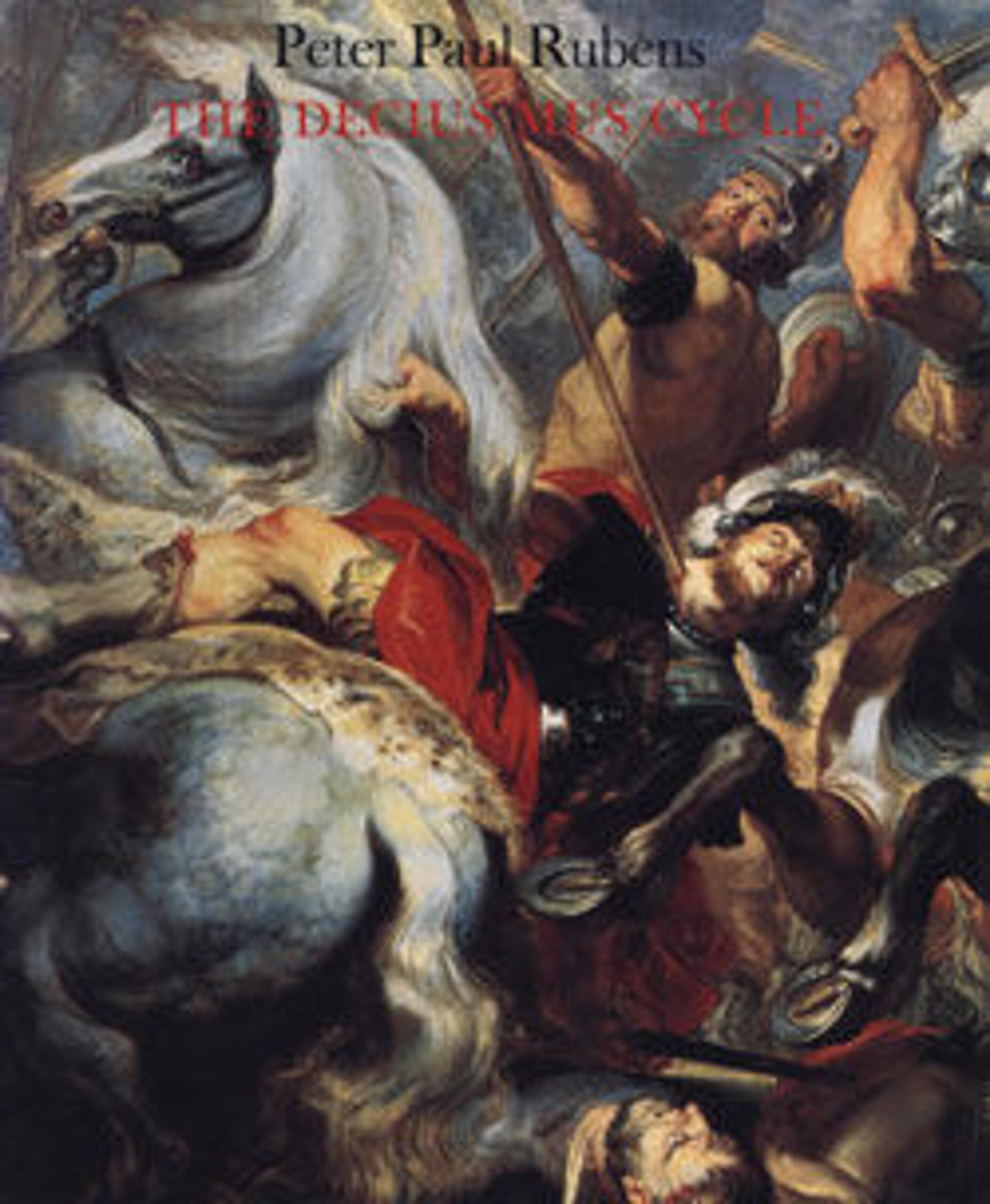
RECOMMENDED READS - Click Image for Link:
(Music)
-I carry before me terror, rout, carnage, blood and the wrath of all the gods, those above and
below. I will infect the standards, the armor, the weapons of the enemy with dire and manifold
death. The place of my destruction shall also witness that of the Gauls and the Samnites.-
The words of Publius Decius Mus, in 295 BC, during the third Samnite War, just before he
imitated his father and rode alone into the enemy ranks where he was slaughtered like a
sacrifice to the gods. The Romans, inspired and perhaps aided by those called-upon gods,
went on to win the battle and the war, and to assert control over most of central Italy.
(Music)
Hello and welcome to the Western Traditions Podcast. This is the tenth episode in the podcast
series called the Roman Empire.
At present, we have left behind the era of the Roman monarchy and are now studying the
Roman republic, many centuries before Rome became known as an Empire.
However, the conquering Rome that most people remember when they think of this era of
history, well, it was actually a Republican Rome. That is to say, it was technically a democracy
that did most of the conquering of Italy and the lands of the Mediterranean and beyond.
For instance, when we read the Bible, we hear of the Roman Empire during the time of Jesus
and the apostles, but Palestine was actually conquered by Pompey, a Roman general who
lived during the late stage of that Roman democracy. Lands like Spain, Sicily, Greece and
more were also conquered by the Roman Republic. Even Egypt was conquered in 30 BC by
Octavian, the adopted son of Julius Caesar, who was still three years away from becoming the
official autocrat over the Roman domains.
But an empire does not need an emperor. For example, we refer freely to the British empire.
That empire was mostly conquered by an England which was primarily lead not by its monarch
but by its Parliament. British Parliament, at the time, bore many resemblances, actually, to the
Roman Senate but more about that later. And the United States definitely came to possess an
empire in the wake of the Second World War, even though it has never officially had an
emperor.
Nevertheless, long before Rome became an empire, before it became the overlord of so many
lands and peoples, it had to expand beyond the mere four or five hundred square miles that it
ruled after it deposed its last king in 509 BC.
Today’s episode, then, will discuss events of most of the 4th and the early part of the 3rd
centuries before Christ. During this time Rome, which was initially just the junior member of a
league of Latin-speaking city-states, grew in power and conquered most of the Italian
peninsula.
Yes, it was a long, grueling journey to world domination for Rome, with many setbacks and
disasters to accompany its many great successes.
Now, if you would like to help me get down the long road to completing an ambitious project
that includes the entire history of the West as well as a few side projects, such as exegesis of
the entire Bible and a full school curriculum, then please visit my website at western-traditions.org. (repeat) There you can leave a comment, buy some merchandise, or contribute
directly to my efforts with a one-time PayPal donation or become a Patreon member.
Patreon members get access to my patreon page, where I share updates on the podcast,
historic links and essays, and occasionally rant about current affairs.
The Western Traditions podcast can also be heard on Spotify, Youtube, Amazon Music and a
number of other platforms.
Wherever you listen, please remember to like, share, subscribe and comment. These are free
ways to support my work and I greatly appreciate it.
And now, let us return to northwest Italy, about 24 centuries ago, not long after the Gauls had
sacked Rome and turned the people of a once powerful, upstart city-state, into paupers
begging for assistance to rebuild their ruined homes.
(Music)
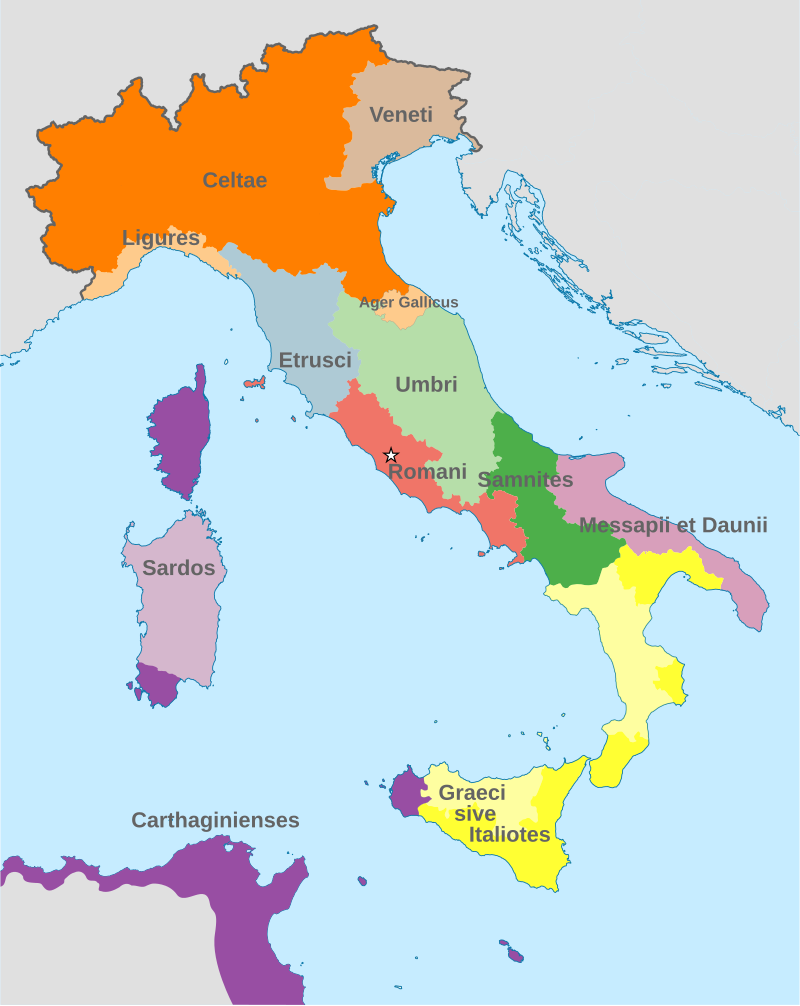
First, let’s begin with the cultural and geographic layout of Italy in the 4th century BC, after the
Gauls sacked Rome.
Now, the Romans managed to drive off the Gauls at this time but that Celtic people continued
to occupy most of northern Italy. This northern portion of the peninsula is dominated by the Po
river valley, between the alps to the north and the Apennine mountain range to the south. It is a
rich and fertile land in Italy which the Romans would actually not come to possess for many
years.
Now, the Apennine mountains are a character in this drama whom I have not really described
much yet. This mountain range runs down the center of the boot of Italy, separating the West
Coast of the peninsula from its East coast. Thus the interior of the country down the length of
the boot tends to be mountainous and rugged, though there are numerous valleys and plains
rich in volcanic soil, enabling the inhabitants to live well from the fruits of the land.
This mountain range runs right into the toe of Italy’s boot. And here, in the southernmost
locales, were a variety of tribes and peoples, among them the citizens of many Greek colonies.
If you listened to the Greek Sun, my series of podcasts about ancient Greek history, particularly
the 13th episode in that series, then you know that the Greeks began to colonize this region
centuries before the Romans began expanding their control of the area.
Rome itself was located near the Italian West Coast, somewhat centrally located in terms of the
north-south length of the peninsula. To the north of the city was the old Etruscan homeland,
Etruria, amid fertile plains and lakes that lay in a bow-shaped cradle of mountains. Here had
been the real power of ancient Italy, thousands of years before Rome, nourished by the grain
and game and livestock of that productive land.
Closer to Rome were other tribes, presumably with similar cultural and genetic backgrounds.
Rome, throughout the years of the kingdom and afterward, was in a closer relationship with
these tribes and cities. They were often the nameless allies of whom I spoke in previous
episodes, when the Romans were in contention with the Sabines, the Etruscans, the Volsicians
and others.
What we know about these “allies” is that Rome did not really get along great with them, either.
Yet, if we are going to explain Rome’s survival after 390 BC, when it was sacked and burned,then it seems likely they must have received some assistance from these allies to avoid being
overrun by Etruscans, Sabines and others who were surely eager to kick Rome when it was
down.
Indeed, it may have been the threat of continued invasion by the Gauls in the north that
allowed Rome to survive. The Latin league, and other Italian alliances, may have become more
strongly united in the face of this foreign threat. In other words, all Italians may have focused
on their similarities rather than their minor differences in the face of this invasion by strangers
from the north.
None of this kept the Romans from their usual power-hungry moves, though. Already by 381
BC, Rome is recorded to have annexed the nearby town of Tusculum, to the southeast of
Rome, near the volcanic crater lake known as Lake Albano. Castel Gandalfo, where the Pope
often resides, overlooks this lake.
Now, this annexation of another town is part of the Roman way of conquest, just as important
as their military prowess. Rome would frequently, but not always, after conquest offer
citizenship to the defeated, and simply turn them into more Romans. It was one way to grow
your population. Sometimes, these new Romans would receive full citizenship with voting
rights, sometimes they would be citizens without a vote.
And then, just a single generation after Rome was destroyed, in 358 BC, we see the Romans
not just renewing the treaty with the other tribes and villages in this Latin league, but asserting
their leadership of the alliance.
However, I should say here, the truth is that we really do not know much about this era. As I
said in the last episode, this period of time is very much a legendary period for Rome, in the
sense that there just are not good records available. Yes, the Roman historian Livy writes
extensively about the Latin League, but Livy wrote centuries after this era, in the 1st century
AD, and he based much of his writing on the works of chroniclers who themselves had also
lived more than two centuries after this league was dissolved.
And the theme of copying, or being inspired by previous accounts, is significant here. Many
things that Livy and others write about this time period in Roman history would appear to be
modeled either on better-recorded events that happened later in Roman history, such as the
Social Wars of the 1st century BC, or modeled on the Peloponnesian War by Thucydides,
perhaps to emphasize the resemblance between Greek and Roman history. So we have to take
everything that we hear about the Latin War, and the Samnite Wars that followed it, with a grain
of salt.
What we do learn from Livy, though, is that Roman leadership led to friction with the Latin
allies. And, as I suggested, this should bring to mind the way that Athenian dominance of their
own league led to internal conflict as well, although the circumstances between those two
situations are substantially different. Athens led a far more powerful alliance. The eventual war
which broke out between the members of this Latin league, in 340 BC, would have essentially
involved what we would identify as nothing more than a few dozen villages and small towns in
the mountains and on the coast of west-central Italy.
Regardless, in 340 BC, full-blown war broke out among the members of the League. The
Romans had, by then, only just wrapped up their first war with the Samnites, and I will describe
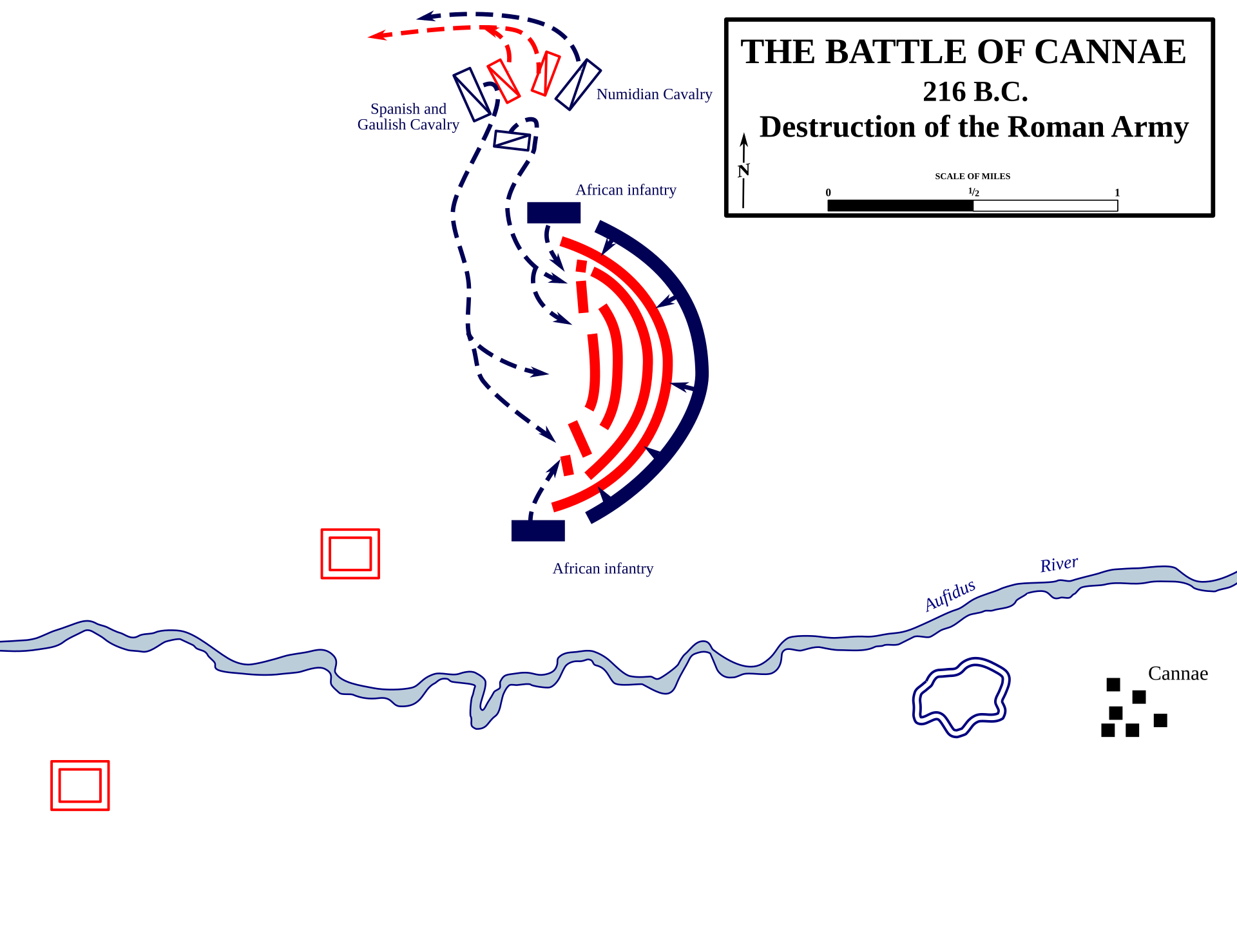
the Samnite wars in the next segment because they go on for quite some time.The Latin War is particularly famous for a few reasons. Primarily, it is remembered because, by
the end of it, Rome was transformed from a single city-state into a burgeoning empire, ruling
directly over a vast swath of land on the Italian Coast in a way that even Athens had never
really achieved in its own mastery over much of Greece.
And the Latin war is also remembered for two fabled sacrifices, made by Rome’s two consuls,
Titus Manlius Torquatus and Publius Decius Mus, at the battle of Vesuvius.
(Music)
The Battle of Vesuvius, in 340 B.C., was officially the first battle of the Latin War. The war had
been brought on, if we believe our sources, by complications with the various treaties to which
Rome had become party. The Romans had concluded an armistice of sorts with the Samnites
at the end of the First Samnite War in 341 BC. But other Latin towns had made raids against
the Samnites in the meantime.
The Samnites had complained to Rome about this, especially since one of the Latin towns
involved had already “surrendered” itself to Rome and become more than an ally, had really, in
Samnite eyes, become just another arm of Rome. Rome, suddenly willing to engage in
diplomatic sophistry, disputed this suggestion.
Somehow, perhaps because Rome failed to support military efforts against the Samnites, or
because the Latins just continued to be eager to diminish the Roman threat, the remaining
Latin allies turned on Rome. Perhaps the Latins saw that, between the expansionist Romans
and the Samnites, they would soon lose all hope of autonomy.
Regardless, the Latins initially organized and stationed their army down the coast near Capua.
And the Romans now paradoxically found themselves fighting on the side of the Samnites, or
at least with Samnite blessing, against their own allies, the Latins. Nevertheless, they sent an
army southward to Capua, led by that year’s two consuls, Manlius Torquatus and Publius
Decius.
Near Mt. Vesuvius, the famous volcano that would explode cataclysmically a few centuries
later, the Roman army encountered the gathered forces of the Latins and others.
And here occurred two events that would forever guide and inspire the decisions of future
Roman soldiers.
First, once the Roman army had made camp but not yet engaged the enemy, the consul
Manlius ordered that no troops would engage with the enemy until the consuls commanded
them to do so. Not long after, though, Manlius’ own son, bearing the same name, led a group
of friends away from the war camp to skirmish with the Latin enemies. During this escapade,
the son of the consul engaged in single combat with one of the Latin champions and killed him.
He returned victoriously, then, to the Roman camp. Here, he was met by his father, who had
given himself the orders that no one was to leave camp or seek combat without consular
permission. Manlius ordered his son to be arrested. The young man was then tried, and
beheaded while his father watched.
This dramatic and compelling story sounds, however, quite a bit like other Roman stories that
inspired obedience and discipline, such as the time when Marcus Brutus allowed his own sons
to be executed when found guilty of conspiracy. Nevertheless, true or not, the story about this
event was a source of inspiration for Roman soldiers and leaders for many centuries.However, even more enthralling, perhaps, is the devotio of Publius Decius Mus, the other
consul leading the Roman army.
The devotio means the devotion or dedication. You can hear the resemblance to the English
word devotion. As there story goes, the consuls, Manlius and Decius, before the actual battle,
each had the same dream. In the dream, it was revealed that the battle would be won for Rome
if one of the consuls pledged or offered up, as a sacrifice, his own self and the enemy army,
together.
Now, the plan was always for the consuls to each command one wing of the army in battle. So,
after the dream, they decided that the general for whichever side the battle began on would
make this personal sacrifice to the gods.
To be clear, this was a religious offering of the highest sort. The man making the devotio would
be announcing essentially his own sacrificial death in battle. He would be surrendering both
himself and his enemies, together, into the arms of the gods. By killing him, the enemy soldiers
would be essentially dooming themselves, or dooming their cause, and surrendering their souls
as a bloody, macabre gift to the underworld.
The battle began on the side of the wing commanded by the consul Publius Decius Mus. So,
this man then prayed to the gods, making the Devotio of his life official, and then plunged into
battle, where he is said to have fought with a divine wrath before being unhorsed and killed.
Inspired by this bravery, and spurred on by their gods, the Roman soldiers crushed the enemy
between the two wings of their army. It is said that only a fourth of the Latin forces escaped
destruction that day.
Publius Decius was survived by a son of the same name, who would continue fighting in the
Samnite wars to come, and make his own glorious devotio in another battle.
By 338 BC, just two years later, the Latin War was over, and the Romans, who had been on
their knees just 50 years before after being overrun by the Gauls, were now the undisputed
rulers of much more than just their little realm in west-central Italy. I have provided a map on
the website to give an idea of how Italy looked once the war was over. The Romans now ruled
a considerable strip of land running a hundred miles up and down the west coast of Italy.
To the north were Etruscans and the Celtic peoples who had arrived sometime during the
previous century. To the East, the Umbrians. In the south, the Greek colonies.
But south and east of Rome, mostly in the rugged lands of the Apennine mountains but also
along the Adriatic coast, were a group of peoples known as the Samnites. Even before the
Latin War had come to an end, Rome had already fought one war with these people. In total,
though, there would be three Samnite Wars before Rome finally took possession of this
substantial portion of Italy as well. These wars would last for generations, and provide more
great heroes to populate the legends that would inspire Roman bravery in future generations.
(Music)
The first Samnite war broke out, to the extent that we can trust records of the time, sometime
around 343 BC, even before Rome had achieved mastery over their fellow Latin-League allies.
The background of the war is not hard to imagine at this point. The Samnites were neighbors of
Rome and Rome was growing. Also, they were neighbors who were not in the Latin Leagueand this made conflict with them even less complicated, though Rome, as we have seen, was
not averse to starting wars even with its own allies.
If the end of the Latin War was the finalization of the first step in Rome’s growth, the Samnite
Wars were the second step.
The First Samnite War did not result in a lot of territorial growth for Rome. It did end with a
treaty that, in some ways, moved Rome up in the world diplomatically. Yes, in 341 BC, Rome
did have to accept that the Samnites had a “sphere of influence”, and they surrendered, for the
time being, specific territories, which didn’t belong to Rome in the first place, to the Samnites.
But the Samnites also recognized Rome’s own sphere of influence, and this allowed the
Romans to begin enlarging in the direction of the Campani, a tribe living near present-day
Capua.
In effect, this first Samnite War allowed the Romans to carve out their own territory for a few
years while the Samnites attended to their particular interests. But, as you can imagine, it
would only take time for the two forces to get organized and eventually turn on each other.
And this they did in the second Samnite War, which opened in 326 BC.
Like the Peloponnesian War in Greece a century earlier, this second war would last for
decades. But you should not be under the impression that there was peace anywhere or
anytime between the first two Samnite Wars. As in Greece, there was a remarkable consistency
of conflict in Italy nearly every year. The Romans were not always at war, but a year without war
was really just an opportunity to rest and rearm for the next conflict. The Second Samnite War
stands out from Rome’s other multiple wars up to this time only because it went on for so long
and because it involved two large blocs of allies.
I will avoid most details about this long war. But I do want to note things that appear in the
records here and become commonplace in the later Roman republican era. Such as, for
instance, the regular election of two consuls who each command a consular army. Such an
army would have, at its core, two legions, each with some four to six thousand legionaries in
their various maniples, three to six hundred cavalry, and then an unspecified number of
auxiliary troops. The total for each army, including support personnel, would have certainly
reached beyond 10,000 troops, and maybe as much as 20,000.
The maniple was a tactical unit, typically composed of about 120 soldiers. They would
function, in some sense, like a rifle company in today’s military forces. The legion or army was
made up of dozens of such maniples. As time passed, the maniple would be replaced as the
basic unit of army formation with the cohort, a large unit of more than 400 soldiers made up of
six “centuries” of troops, but more about that later.
Other perennial characteristics of the Roman military organization appear. During the war, at
critical junctures, a dictator would be appointed to lead the army and the consuls. There were
also tribunes elected to assist the consuls and the dictator, perhaps functioning as general staff
officers even as they politically represented the lower classes.
At this time, it would be rare for more than two consular armies to be fielded at the same time.
Rome had not acquired enough population to put more men in combat and simultaneously
continue to plow their fields and man their other industries. But, in a pinch, Rome could
organize more troops as reinforcements, as we saw in the story of Cincinnatus.Something else notable in the accounts of the war are the names. Samnite officers and
generals named in Livy’s accounts have names such as Gaius Pontius, which sounds pretty
Roman. This Pontius was commander of the Samnite forces and he was also the Meddix of
the Samnites. This Meddix was a political and military position almost identical to that of
consul in Rome. What little details like this tell us is that there was probably a great deal of
cultural and genetic relationship between the peoples of Italy, that the Romans were distinct
politically but probably not culturally from these other peoples, of whom there is now very little
evidence, due to their having been absorbed so completely into Roman society very long ago.
The Second Samnite War was not all Roman victory. Otherwise it would probably not have
been so long. And like the Peloponnesian War, this long conflict was interrupted by truces.
After one such truce, the Romans moved against the Samnites with their two consular armies.
These armies came to a place known as the Caudine Forks, in southern Italy, and they were
trapped by the Samnites in a defile out of which it was impossible for the Romans to escape
since the Samnites controlled all exits with superior forces and blocked them with fallen trees
and other debris. So the Romans built one of their camps in the valley and waited.
Now, these Roman camps are an important part of the Roman armies’ effectiveness in
conquering the world and they testify to Roman ingenuity, organization and discipline.
Most armies, even those as busy as a Roman army, spend most of their time in non-combat
situations. That it, most of an army’s time is spent resting, traveling, eating, training, watching,
patrolling. And, right up until the 20th century, whenever you read about the casualties of war
and the total numbers of troops lost on each side, you should understand that most soldier
deaths in the past came about due to disease and accidents, not due to combat. Yes, even as
late as World War One, most so-called war casualties were due to illness, not bullets, swords
or spears.
The camp was a dangerous place to be. More dangerous than the battlefield.
So the condition of an army’s war camp was critical to its long-term viability. Poor sanitation
and malnourishment killed most soldiers, before they could even engage the enemy.
But Roman war camps were a wonder of the ancient world. Roman legions could march
dozens of miles per day and, at the end of that day, in a matter of hours, construct a camp to
sleep in that was unbelievably defensible, secure and clean, and complete with street plans.
This kind of camp was known as a castra, or a castrum, meaning fort or camp in English.
The army actually had to build such a castra according to written regulations, and one
suspects that this may have been due to pressure from the lower classes of soldiers, who
would be reluctant to do, as many other armies did, and go out into the field and just sleep, as
they may, in the field or in tents with little or no defense and poorly coordinated feedings, rest,
sanitation and so on. Inadvertently, perhaps, this kind of camp, and the capacity to build such
a camp again and again, became one of the greatest weapons the Roman armies had. Other
armies were known to suffer greatly in their camps, and to end up dispersing, even after just a
few days, unless they were resupplied through raids or kept constantly on the move. But a
Roman legion could essentially build a small town wherever it went, and do so quickly.
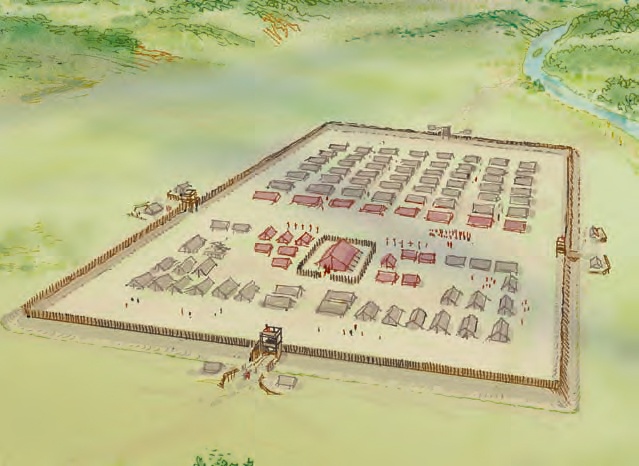
The walls of the castra, the Roman fort, would be made from whatever was available, earth,
wood, rock. Often, a ditch would be dug in a square shape and the removed earth thrown up
on the interior of this square, to act as walls. Towers were built at the corners and at other
strategic points, such as the entrance.Inside the square, there were pre-designated areas for the officers, barracks for the regular
soldiers, the cavalry, the kitchen and so on, where tents could be erected quickly to house
everyone. They even marked out streets between the various blocks of tents. Sometimes a
market would be built within the camp for local natives to come in and trade with the soldiers.
In peacetime, the soldiers might even build amphitheaters or other extraneous buildings
outside the castra for interaction with locals and entertainment for the soldiers.
And all this was done within a matter of hours.
If the camp was going to be used for a long time, the soldiers would gradually replace the
quickly-built earthen walls with wood or stone, add wooden palisades atop the walls,
strengthen defenses, replace tents with more permanent shelters, etc.
The Roman legionary spent more time laboring than he did fighting.
Just such a camp did the Roman army build at Caudine Forks. It made them impervious to
attack, but they were still trapped in the defile, with diminishing supplies.
Gaius Pontius, the Samnite commander, did not know what to do. Attack and kill the Romans,
or let them go? He sent a messenger to his father, a retired Samnite politician named
Herennius, to ask his advice on the situation. His father returned the messenger with this reply:
Free the Roman soldiers immediately.
Pontius didn’t like that answer. He was hoping for something more assertive, so he sent the
messenger back to ask again. This time his father Herennius returned the messenger with this
reply:
Kill all the Roman soldiers.
Now Pontius feared that perhaps his father had lost his mind with these polar opposite ideas,
and sent for him to come personally to his war camp.
On arriving, Herennius explained himself to his son:
If you set the legions free, the Romans will feel more friendly toward you and you can make
terms for peace. If you kill them all, Rome will be unable to replace all those soldiers so quickly
and they will not be able to make war on you for a long time.
What about something in between? Pontius asked his father. What if I negotiate terms for their
surrender?
This, said Herennius, neither wins you friends nor defeats your enemies. The Romans would
then only desire revenge for the perceived and public humiliation.
In the end, though, Pontius did demand terms of surrender. Then he made the Roman soldiers
exit their camp and walk out beneath a symbolic yoke, like the yoke put on a draft animal, as a
humiliating sign of their subjugation.
There actually aren’t good records of how this turned out. Some say that the Senate rejected
the truce offered and resumed war. Others say that the Romans heeded the call for cessation
of hostilities for some years. Regardless, we know that the war was back on by at least 316
BC.The conflict would go on, in battle after bloody battle, until 304 BC, when the second Samnite
War officially came to an end. Both Rome and the Samnites continued to exist, but Rome had
grown stronger, having annexed numerous territories that were not Samnite in the process. The
people of the annexed areas mostly became citizens of Rome.
Of course, we tend to look back on Rome favorably and we see this offering of citizenship to
the conquered as a very enlightened approach to war. But the conquered peoples probably did
not always see it that way.
And you might ask yourself, if the United States or some other country that you live in were
taken over by China or Russia or by some alien invasion force, how grateful would you feel,
standing in the ruins, to know that you were now a citizen of the country that had taken away
your independence?
(Music)
The Gauls were the real elephant in the room.
They were the most recent arrivals to the peninsula, they were numerous, they had taken
possession of a vast and fertile northern portion of Italy, and they were foreigners, when
compared to the rest of the Italians, Romans included. We have already seen how the names of
the Samnites were similar to the Romans, how they had similar customs, governance and so
on. And we know of the ethnic congruence with the Etruscans just up the coast from the
Romans, and with whom the Romans shared some kind of cultural heritage.
Yes, the Greeks in the south were also invaders, but they had arrived centuries before, and by
now, the end of the 4th century, they had somewhat successfully integrated their presence into
Italian life. Rome would eventually see the Greeks of southern Italy as a thorn in their side, but,
at this moment, they were not an imminent threat like the Gauls, who had already sacked
Rome once. And the more Rome saw the Gauls as a threat, Rome’s enemies saw them as
possible allies.
The Third and final Samnite war, then, officially began in 298 BC, only six years after the end of
the second Samnite war. Not that the intervening years were all that peaceful. Just as we saw
with Greek history, there was always conniving and maneuvering and politics going on between
the city-states of Italy. But in 298 BC, things broke out into full-scale war again.
This third war began, ostensibly, as just another war between the central Italian cities, but,
according to Roman history anyway, this one targeted Rome in particular, with Samnites,
Umbrians, Etrurians, Gauls and others all being drawn into the conflict versus the Roman
forces.
Yes, the other Italian realms had finally become so concerned about power-hungry Rome, that
they were willing to ally with the strange Gauls of the north.
Like the rest of the Samnite wars, we rely on Livy and, as with all early Roman history, the
modern consensus essentially mistrusts many details of the story. But this war, and the two
that preceded it, are notable for a few reasons.
First, we see many names begin to appear in the histories that we will see later on. The
nomens of Decius, Cornelius, Fabius and so on, are family names that will recur throughout
Roman history as members of the ruling and leading classes of Romans. Here, for example, inthese wars we hear of multiple consuls and other officers bearing the nomen and cognomen of
Cornelius Scipio.
Second, there is the famous devotio of Publius Decius Mus, who was the son of the earlier
Publius Decius Mus, who had made his devotio in the Latin War and essentially turned himself
and his enemies into a battle sacrifice to the gods.
His son, here in the third Samnite War, would do the same, and even more dramatically at the
battle of Sentinum in 295 BC. I recited his words in the opening to this episode. The idea of the
devotio was powerful because it was not simply a self-sacrifice to the gods, but it condemned
the very soldiers who killed him the man making the sacrifice, turned them all into one general
offering to the heavens, and then brought unavoidable destruction upon the enemy army.
Here, in the devotio, we see how the idea of Christ’s self-sacrifice, and his defeat of Satan,
suffering and mortality itself through his own death, three centuries later, might appeal to the
Roman mind.
Finally, the Third Samnite War ended in 290 BC, and by then Rome had become much more
than just a city-state. After the battle of Sentinum, in which the Romans defeated both
Samnites and Gauls in the open field, they went on to defeat their multiple enemies again and
again. They fielded, at times, as many as six full legions simultaneously to accomplish this.
Where did Rome get the manpower, how could they deploy bigger and bigger armies? Part of
the answer was certainly in the fertility of Roman wombs, yes, but there is another answer and
that answer is political. Remember that the Romans had a habit of offering citizenship to their
defeated enemies. And those who submitted early in a conflict would often get all the rights of
citizenship and even voting rights as well, while those who dragged out a conflict might only
get mere citizenship or even less in return. So, as Rome was fighting these wars, and taking
casualties, she was also adding to her population, acquiring more wombs and more fighting
men at the same time.
By the end of the third Samnite War, then, Rome had become a juggernaught. All of the
Samnite territory, and its people, had been incorporated into Rome.
This was not like the Athenian Empire, then. Athens had achieved a hegemony over her allies
but her native territory always remained the city of Athens and the tiny peninsula of Attica.
Not so with Rome. Now, many parts of the Italian peninsula were Rome. They were not allies
or subjugated territories. The people living in those cities had become not allies but citizens,
whether they liked it or not. And along with the rights of citizenship, came the duties. To pay
taxes and to take up arms in defense of the patria, the fatherland, when called upon.
The rest of the peninsula soon followed the Samnites into the Roman embrace. The Umbrians
and Etrurians were soon taken care of, and we have already heard in the Greek series of
podcasts about the fate of the Greek colonies in southern Italy. The Greek hero Pyrrhus tried to
unite them and deter Roman growth but failed spectacularly.
By 280 BC, then, only ten years after the end of the Third Samnite War, most of central and
Southern Italy was either now officially part of Rome or allied to Rome. And alliance with Rome
was a consuming embrace. Most allies eventually found themselves, somehow, subject to
Rome in exchange for the dubious gift of citizenship.Now, northern Italy, where the Gauls still remained in very large numbers, would have to wait.
Rome would not have the opportunity to defeat the Gauls definitively for another century,
because, as Rome extended its power southward, it reached the end of the Italian boot. And
it’s early interactions with city-states in Sicily, including still-powerful Syracuse, would bring it
into fateful contact with the greatest power in the Western Mediterranean: the city-state of
Carthage.
And its encounter with Carthage would lead to perhaps the most significant portion of Roman
history. In the century-long conflict that would follow its encounter with Carthage, Rome, a
growing regional power, would transform itself into an indomitable symbol of strength, order
and unity.
(Music)
The next episode will depart from our trajectory a bit and consider Carthaginian and other
people’s history in the Mediterranean, so that we might better understand Rome’s encounters
with people living farther and farther away and possessing cultures more and more distinct
from their own.
Up until this point, Romans have been conquering and absorbing cities whose people, for the
most part, had a great deal in common with Roman culture, religion and politics. As they
absorbed the slightly more estranged Greeks of Southern Italy into their fold, they began the
long process of turning the distant, ethereal Roman high gods, like Jupiter and Minerva, into
sanitized versions of the anthropomorphic Greek gods.
But how will Rome manage this same attempt at absorption when it encounters the Canaanite
religion of the Carthaginians, the ancient polytheism of Egypt, the Druidic nature worship of the
Celts, and, finally, the severe monotheism of the Jews in Palestine?
Until the next episodes I thank you for listening to the Western Traditions Podcast.
(Music)