Episode III.09 - The Early Roman Republic
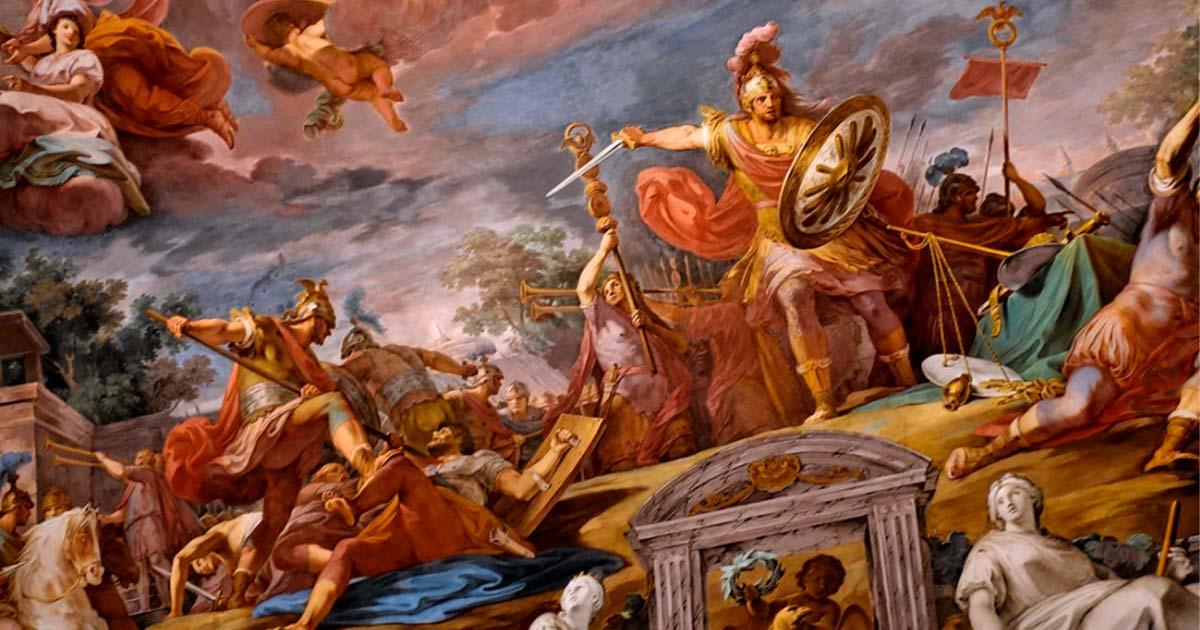
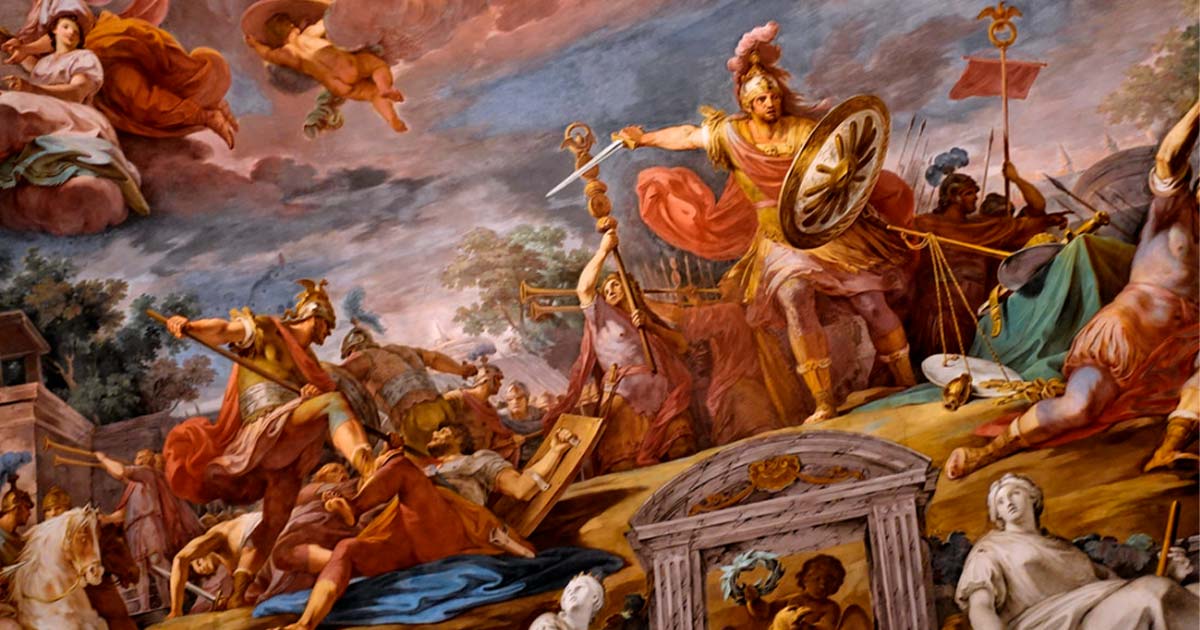


The stories of three heroes of the early Roman Republic: Coriolanus, Cincinnatus and Camillus. The struggle between the social classes is known as the Conflict of Orders.
RECOMMENDED READS - Click Image for Link:
(Music)
-Theoretically, the Senate might discuss and decide only such issues as were presented to it
by a magistrate, and its decisions were merely advice (senatus consulta), without the force of
law. Actually, its prestige was so great that the magistrates nearly aways accepted its
recommendations.
11
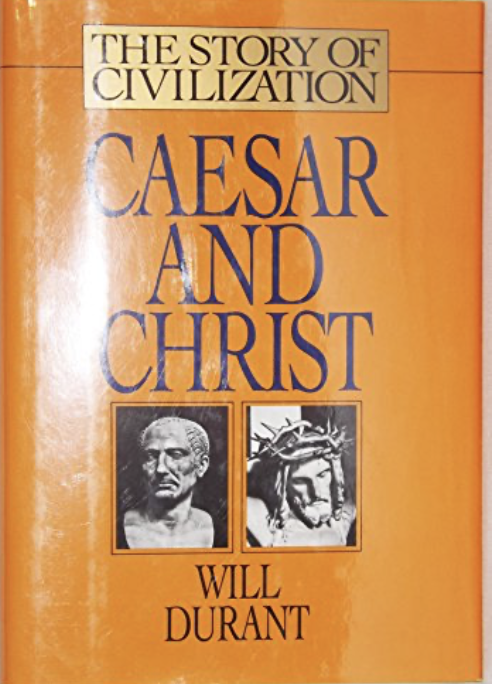
-a quote by Will Durant, from his book, Caesar and Christ
(Music)
Hello and welcome to the Western Traditions Podcast. My name is Rob Paxton and this is the
ninth episode in the Roman Empire series. This episode will go over some heroes and stories
from the era of the early Republic in Rome, in the 5th and 4th centuries before Christ.
Now, the chronology of the entire period of the Roman Republic is frequently divided into three
eras, or stages. There is the early Republic, which essentially includes the centuries between
the fall of the last king in Rome and the beginning of the Punic Wars in 264 BC. This early
Republican era includes the sack of Rome by the Gauls in 390 BC.
The term Middle Republic is usually used to describe the time of the Punic Wars, between 264
BC and 146 BC. By the end of the Third Punic War in 146 BC, Rome had eliminated most of
her significant geopolitical enemies in the Mediterranean.
The Late Republic, then, covers that period between this pinnacle of power at the end of the
Punic War, and the rise of the first Emperor Augustus, in 27 BC. The late Republic is
characterized by infighting, corruption and a slow movement away from the oligarchic
democracy of the past and the autocracy of the coming Empire.
This episode, though, will look at the early Republic, or, at least, what little we know about it.
As I have previously stated, the city of Rome was sacked and burned in 390 BC by the Gauls,
so good records of what happened before were mostly lost. Consequently, it seems possible
that these stories about the early Republic are somewhat legendary, possibly even fictitious.
Nevertheless, we will look at stories about three heroes from this period because, even if they
are embellished or even fabricated, they are the stories as told by later Romans, and so we
gain a good idea at least of what later Romans cherished about their history and about their
culture.
Furthermore, this early period gives us a good look at something known to Roman history as
the Conflict of the Orders. In the last episode, I already alluded to this phenomenon: the class
struggle between patricians and plebs. During this period, the era prior to the Punic Wars, we
see the conflict between these strata of society continuing to heat up, resulting in ongoing
changes in the structure of roman society and its government.
If you would like to support the structure of this podcast, please remember to like, subscribe,
share and comment wherever you listen to it. The Western Traditions Podcast is found on
Amazon Music, Spotify, Podbean, Youtube and other platforms. On my website, western-
traditions.org, you can visit the shopping page to buy Westsern Traditions merchandise, or you
can support the podcast directly through donations with the PayPal or patreon buttons.
Patreon supporters get personal updates about the podcast, and I also share links and essays
about historical topics on the Patreon page.(Music)
Let us begin with Coriolanus. His account is possibly the most legendary, and the modern
consensus is that he did not even really exist. However, Plutarch, who is not afraid to describe
certain characters in his essays as somewhat legendary, appears to take it for granted that the
man was a real general of the Roman Republic.
According, then, to what ancients such as Plutarch and Livy have passed down to us,
Coriolanus was a real man, son of a patrician family, who led Roman forces in battle and
exemplified certain cherished aspects of Roman conduct.
His praenomen, or the first of his three names in the Roman nomenclature called tria nomina, is
uncertain. It may have been Caius, with a ‘c’, Gaius with a ‘g’, or even Gnaeus, g-n-a-e-u-s.
But, regardless, he was a son of the house of Marcius, so his nomen, or middle name was
Marcius. Though perhaps I should pronounce that as Markius in classical LAtin.
And, finally, he became known in life as Coriolanus, which became his cognomen, due to a
certain battle that I will get to here in a moment.
Coriolanus would have been born, if he was truly born, sometime in the late 6th century,
coming to manhood in the early 5th century. Therefore, he was born during the monarchy, and
was a young defender of the equally young republic.
Plutarch reports that Coriolanus was raised by a single mother, who was a widow to some
Roman man of the house of Marcius. Plutarch quickly tells us that Coriolanus was remembered
and haled for his great deeds in life, but that the glory of his remembrance was tempered by
“the vehemence of his passion” and his “obstinate reluctance to yield or accommodate.”
And this just reinforces the idea that the Romans were less wiling than the Greeks to forgive
bad conduct in their heroes.
Achilles could pout on the beach all he wanted and Odysseus could get himself tangled in any
number of situations complicated by awkward moral choices because these men ultimately
accomplished great deeds. The Greeks forgave them their errors, indulged them, because they
atoned for their misdeeds and omissions with their heroism.
Roman heroes, though, must demonstrate dignity and humility, as well as bravery and
ingenuity. For more evidence of this, just revisit the Aeneid, and there, in the portrayal of
Aeneas, you have the perfect Roman man: brave and strong, yes, but, more importantly,
dutiful, pious, dignified.
Perhaps the defects in Coriolanus’ character derived from the very circumstances in which his
superior qualities originated. Disadvantaged by his lack of a father growing up, Coriolanus
threw himself into manhood, as if he had something to prove. As Plutarch tells us, he inured his
body to all sorts of activity and endurance. He learned to handle weapons and armor as a
young boy, outran his opponents in races, outwrestled them, and was known to be tireless and
brave, almost foolhardy, from the very start of his manhood.
Now, when Coriolanus was a young man, the exiled king Tarquin was still organizing resistance
against the new republic. Many of the realms surrounding Rome allied with this king, all of them
eager to take a local enemy down a notch, even if would just aid a foreign king to retake his
throne.And Rome’s danger cannot be understated here. At this point, the Romans controlled just three
or four hundred square miles of territory in west-central. That may sound like a lot, but it is less
than the metropolitan area of many modern major cities. In fact, they probably only controlled a
territory the size of the actual city of Rome today. This included all their farmland as well as
their urban and suburban homes and businesses. Even with iron age arms and technology, it
would not take much more than one major battlefield loss to overrun such a tiny republic.
So when young Coriolanus displayed unusual bravery in a battle versus these enemies, he was
recognized and lauded by his superiors and crowned with a garland of oak leaves, as was and
continued to be the custom in Rome for recognizing a man who had saved Roman lives.
And Coriolanus, or Marcius as he still would have been known at this time, went on to achieve
other victories and earn more trophies from the Romans, but most important of all to him, so
the legend goes, was the joy of his own mother each time she saw him crowned with another
reward for glory.
As with virtually all Roman stories from the Republican era, though, there is more to the plot of
Coriolanus’ legend than his heroic deeds. There is, as always, the class conflict. Get used to
this in reading Roman history. It almost always comes back to the warfare between the
commoners and the upper classes.
It came about, when Coriolanus was already quite famous among the Romans, that the plebs
began to agitate about their treatment, especially due to the money lenders who preyed on
them. It should be remembered that this legend dates back to before the Twelve Tables, about
which I spoke in the last episode, and a portion of the Twelve Tables was dedicated to
controlling interest rates on loans. Indeed, the class struggle in the tale of Coriolanus may be a
surviving tale of the conflicts which led to the resolution of the Twelve Tables.
Anyway, even men who had fought for Rome in its many battles were finding themselves
turned out of house and home and turned into paupers, due to money-lenders, who seem to
be always a pestilence in society, even today.
There came a time then, when the consuls called the men of Rome to assemble for yet again
another military campaign against Rome’s enemies, and the commoners simply did not show
up, leaving the consuls standing there with virtually no source of soldiery. The upper classes
could provide the cavalry but they needed heavy infantry, light troops, and many other kinds of
troops to fight a war effectively.
In fact, at this time, the plebs did not just passively resist. When they saw that the Senate was
not going to address their concerns, they seized a nearby hill top and declared that they could
go anywhere in Italy to breathe air, drink water and die, which was all they could any longer
afford to do in Rome, anyway.
Some of the more moderate men in the Senate desired to negotiate with the plebs over the
matter.
Not Coriolanus, though. He is not that kind of hero. Coriolanus was enraged with the insolence
of these plebs, and told the senate that this would lead to full-scale revolt and the resistance
must be put down at once.
Here, though, is what one of the senatorial negotiators had to say to the plebs on their hilltop
redoubt:(Read p. 177)
And the plebs accepted this reasoning, and opened negotiations which led to the senate
agreeing to the annual elections of five tribunes. This was, according to the legend, the origin
of the tribunes: elected men who would work in the government to ensure that the consuls and
the senate did not mistreat the commoners. This office of tribune would continue to evolve
over time, growing to include six and then fourteen total members at any time, with the
significance of their power increasing or decreasing depending on a variety of circumstances.
Coriolanus, for his part, wanted to show that he and his class of Roman, the patrician class,
were indeed superior to the rebellious commoners. So, in the next military campaign against
the nearby town of Corioli, he was not content to drive the enemy back into their city. Instead,
he pushed on with a few rugged volunteers, daring to fight even under the city walls where the
enemy could fire spears, darts and arrows down on him. Eventually, he and his small band
actually breached the gates and stormed the city, which was then sacked. And thus he gained
his cognomen, Coriolanus, for his taking of the city of Corioli.
Later, Coriolanus finally made his move and stood for election to the consulship. He had a
sizable following among some of the young sons of powerful men in Rome. But he was
ultimately rejected for the position of consul, probably due to his violent antipathy for the
masses.
Afterward, when a large quantity of grain arrived in Rome from various parts, including a gift
made to the Roman state by the people of Syracuse in Sicily, there was a movement to
disperse the grain equally among the people of Rome.
Coriolanus, however, would hear nothing of the kind. He characterized ancient communism this
as pandering to the masses, as something the Greeks would do, because in Greece, as he
said, “the populace is supreme.”
When the tribunes, present in the hearing before the senate, relayed this message to the plebs
outside, there was a tumult. Only just barely did the tribunes and the senators keep the entire
populace from overthrowing the state in that moment. A great and lengthy courtroom drama
ensued, in which Coriolanus was initially made to appear before the people and explain
himself, but he spoke so unapologetically and so insultingly that the tribunes sentenced him to
be thrown from the Tarpeian rock and thus fall to his death, but, after much back and forth
between upper and lower classes, and more proud words from Coriolanus, he was finally
sentenced to mere banishment.
So Coriolanus took up residence among the Volsicians, against whom he had just recently led
Roman troops on many occasions. Soon, then, being as passionate in his vengeance as he
had previously been in his loyalty to Rome, he was leading Volsician troops against Rome. He
laid waste to the countryside, seized many Roman colonies and conquered many cities allied
to Rome as well. Eventually, his army came to the very walls of Rome itself. The populace
inside those walls, both the real “people” and the commoners alike, found themselves terrified.
The Senate first sent politicians to try to sway Coriolanus, then they sent priests. But all their
appeals, to brotherhood, to the gods, were to no avail. Finally, when it seemed certain that this
former favored-son of Rome would soon lead foreign troops over the walls and destroy the city,
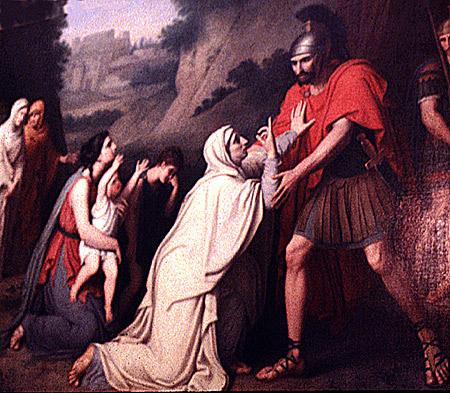
his mother and his wife and children were sent to see him in his war camp. He could not resist
his mother’s pleas on behalf of Rome. He broke up his camp and returned the Volsician
soldiers to their homes.In response to their salvation and the role of women in this, the Romans built statues and a
temple dedicated to Lady Fortune, about whom we will hear much more in later eras of Roman
history.
But Coriolanus himself was not fortunate. Upon returning to his new home among the
Volsicians, he was charged with treason for having let the Romans escape certain defeat. The
exiled Roman had both supporters and detractors among the Volsicians, but while they argued
the merits of his case, conspirators attacked the man in a group, in much the same way
perhaps that Julius Caesar was brought down, and they successfully assassinated him.
In the immediate aftermath of this tragedy, the Volsicians again went to war this time with one
of their own allies. The result was total defeat of their army, and the Volsicians were so
weakened by this loss that soon they became subject to Rome.
(Music)
Not long after these events, another figure of Roman history and legend comes to the forefront.
In fact, he may have been contemporary with Coriolanus, even if they were both essentially
legendary.
I speak now of Lucius Quinctius Cincinnatus (provide real pronunciation), but he is
remembered today simply as Cincinnatus.
We learn of Cincinnatus through the Roman historian Livy rather than Plutarch. Cincinnatus
provides us with perhaps the classic example of Roman patrician virtue. Coriolanus was a
great man, but, for the Romans, he was too passionate and too ambitious. When we read the
Greek histories, men like Alcibiades and Themistocles are at least tacitly admired for their wily
ambition, but this trait was a sign of low character for the early Romans.
Now, of course, famous Roman men of later ages, like Marius and Sulla and Pompey and
Caesar, were obviously ambitious men. So, with the story of Cincinnatus I am not trying to say
that Romans were universally stoic and unambitious and coldly dignified, etc, but rather simply
that stories like this tell us something about the way that the Romans saw themselves, or what
they wished to emulate, and what they told themselves was ideal. In the same way, in Christian
societies, there are factions, and ambition and revenge and lust and greed, but the people of
those societies aspire to another model. In the same way, the Romans were as capable of base
passions, but looked to legends like that of Cincinnatus, or even Aeneas, for their inspiration.
Cincinnatus provides us with a quick and classic example of the way that Romans thought
political power should be handled. He came from a patrician family. Now, during the
tumultuous years of the fifth century, when the Republic was struggling just to survive, it was
not uncommon for the consuls to elect a dictator from among the patrician class.
I mentioned this government role in the last episode. A Roman dictator was elected to hold
supreme power for six months, basically to streamline things during a military emergency,
when senatorial discussion would take too long to meet a crisis.
As the story goes, anyway, the Roman army, sometime in the mid 5th century BC, had become
surrounded by the enemy at Mt. Elgidus in nearby Latium, and was in danger of a complete
massacre. Cincinnatus was appointed dictator to lead reinforcements to save this army. It took
just sixteen days for Cincinnatus to be nominated, assemble his forces, march to the
battlefield, defeat the enemy, save the army, and return to Rome. Upon returning home, he
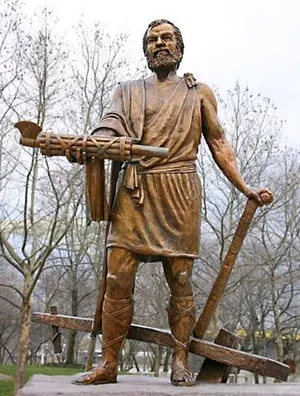
immediately resigned the dictatorship.The story is made even more delightful by the following details. When the senatorial delegation
went to inform him of his election as dictator, they found the man ploughing his field. After
accepting the appointment, he had to wipe the mud off and put on formal senatorial garb
before rallying the remaining men of the city, many of them, too young or too old to have
ventured out with the first army.
And after winning the battle which saved Rome and its army, just sixteen days later,
Cincinnatus returned to Rome, resigned his post, and went back to ploughing his field.
The story presents ideal Roman virtues. Cincinnatus is brave, as any Roman man should be,
but he is not vainglorious about it. He accepts the responsibility of power in the dictatorship,
but does not use it to his own advantage. He does not, for example, try to extend his
dictatorship even one moment longer than what was required to accomplish what he was sent
to do. A weaker man, a less virtuous man, remember that virtue originally simply meant
manliness for the romans, a less virtuous man might have tried to use this power to enrich
himself or his friends, dole out favors, etc.
And then he returns to his humble work in ploughing his fields, where he grew cabbages.
However real or fictional this account might be, there is one important detail that we should
notice.
Cincinnatus was not a fan of the plebs. Virtuous as he may have been, he was not an
egalitarian. The legend tells us of how he stood against all measures in the senate that favored
the plebs.
The legend of Cincinnatus also tells us that his son was charged with actually murdering one of
the plebeians and that Cincinnatus had to sell much of his estate to pay the fine that was
leveled against the family. He moved to a smaller farm farther away from the city after this,
where he continued to plow the land and grow his cabbages.
Now, today, we see the wealthy as people far separated from the labor of their servants and
the products which give them their wealth. And, in times of war, the wealthy are the ones
pulling the strings and reaping the benefits while poor people go to die in battles which benefit
only the arms makers and the oil barons and so on.
When we look at someone like Cincinnatus, then, we might be inclined to simply see him as an
oppressor, one of the upper class who uses the plebeians, the working class, to further his own
gains.
But the thing that seems to distinguish the upper classes of the past, compared to those we
have today, is that they had skin in the game. Cincinnatus may have been rich and
domineering, but he was not afraid to share toil and danger with the people that he led. We see
this in the stories of the ancient Greeks as well. Odysseus finds his father, the former king,
living simply in the countryside at the end of the Odyssey. His wife, Penelope, the Queen, spins
her own wool. And Cincinnatus is muddy from working his fields alongside his servants and
slaves.
And when these famous, wealthy men of the past declare war, they do not send others to do
their dirty work - they share the danger and, quite often, suffer death in battle. In the Greek
series, all the heroes and leaders were often at the forefront of battles, right down to Alexander
the Great.This sharing of the troubles of life is a characteristic of the wealthy right up until the modern
age, actually. Even as recently as the US Civil War, in the 1860s, we see many generals on both
sides of the conflict running risks and dying in battle, not just sending others to die so that they
might benefit. In World War II, it was still common for sons of the wealthy, like John F. Kennedy,
to share the dangers of war with comrades from less advantaged backgrounds.
And then, something changed. The wealthy stopped sharing those dangers, stopped having,
so to speak, skin in the game. They started to benefit enormously from the labor and suffering
of others, without sharing any of the risks and troubles, Discussion of that change, in which we
see now that the ultra-wealthy are completely cocooned, preserved, from the struggles of the
common man, will appear in another series in this podcast.
So, while we may scorn a man like Cincinnatus somewhat, and quite justifiably as an elitist, we
should still admire and respect his bravery, his willingness to stand alongside plebeians and
share their work and their dangers on the battlefield, even if he stood to gain more from the
risks taken.
And understand that there is, unfortunately, more to his story than just a noble legend. This
legend tells us that Cincinnatus resigned his dictatorial powers and humbly went back to
farming cabbages. But in another account, told by the historian Dionysus, Cincinnatus used his
position as dictator to hold a trial and banish from Rome a plebeian who had merely displeased
him.
Power, the struggle for and against power, and corruption, are ever themes in this Roman story.
(Music)
Ancient historians of Rome, such as Polybius, portray the ancient Roman Republic as the very
model of order and stability. But Polybius, who was technically a diplomatic hostage during his
time in Rome, was either very enamored of Roman society or was trying to flatter his captors,
or both. So in his writings he gives us an idea of Rome which unfolds in as orderly a fashion as
the universe does in the first chapter of Genesis, one logical step after the other.
But, reading the histories of Plutarch, one can become easily confused when trying to compare
his descriptions of events and people with Polybius’ and others’ portrayal of Roman
government. For example, I have told you about the supremacy of the Senate and their
delegation of power to two consuls who were elected year by year. In times of great need, a
dictator might be elected for six months, or even less in the case of Cincinnatus.
Yet, when we come to the story of a man like Camillus, who reportedly saved Rome from being
completely erased from history after it was sacked by the Gauls in 390 BC, it is hard to see this
stratified scheme of government in place and working just as described. Camillus himself was
never once a consul, but he was dictator several times. And the story of his life seems to
portray the popularly-elected tribunes as having more de facto power than the consuls and
even the Senate itself.
Perhaps we need to accept that, for the Romans, time periods like the 5th and even the 4th
century are still “legendary” or mythological times.
Among the Greeks, in the 5th century, we already have the writings of Herodotus and
Thucydides giving us increasingly clearer, more coherent and more reliable accounts of past
events, even if they suffer from the expected human bias and lack of perspective at times. As Istated in the Greek series, we see in those documents a clear movement away from
mythological writings, gods moving among men, fables of heroes etc, and toward more
realistic portrayals of events.
Not so among the Romans, though. Perhaps this is all due to the loss of their earliest records
when the Gauls sacked Rome in 390 BC. Regardless, the fact is that when we compare the
writings and accounts that we do have of Roman events during these centuries, we get a much
more chaotic picture of how Roman society was managed in its earliest days than we would if
we just stuck with one historian.
Were the consuls in charge or the tribunes? Or maybe the censors? Were they elected or
appointed, and by whom? Just how involved was the Senate in day-to-day matters? And does
the people just mean the upper classes? Does it include the plebs or not?
No doubt, Roman society, and Roman order, was evolving during this period.
The life of the Roman hero Camillus, as described by Plutarch, will describe the last era of this
murky period in Roman history. After his life, we move more clearly toward the time of the
Punic Wars, and more detailed accounts of Roman events.
His full name, his tria nomina, was Marcus Furius Camillus. If he was a real person, he would
have been born sometime after the mid-5th century BC. According to Plutarch, he was elected
tribune at a time when the six tribunes held more power than the consuls did, being trusted
more perhaps because there were six of them rather than just two, there being such a great
fear of monarchical power among the people then.
The story of Camillus begins, sometime around the year 400 BC, with the siege of a city called
Veii. This city lay to the north of Rome. At the time, as I said before, Rome was still confined to
a small space in west-central Italy, possessing a realm not much larger now than the present
day metropolis of Rome. And the Romans were still in constant conflict with their neighbors.
But the meaning of constant warfare in the ancient world had a different meaning than it might
now. As we saw with the stories of the Greeks and the Persians, it was typical for armies to
campaign only for short periods of the year, usually during the summer when crops were
growing and required less labor. In the fall, armies would disband and the troops would return
home to harvest the crops, only to reassemble for war, if necessary, in the late spring after
planting a new crop.
The siege of Veii, however, required more dedication. The people of Veii were essentially
Tuscans, probably descended from the ancient Etruscans. They possessed a society more
ancient than that of Rome and the wealth of ages helped them to easily endure a Roman siege.
So the tribunes began to expect Roman soldiers to stay and besiege the enemy city year-
round, building forts and raising mounds to oppress and hopefully to finally break the Veiians.
This was hard on the citizen soldiers of the young republic and they grumbled about it but they
endured the sacrifices required. They were probably inspired by Camillus, who was elected
tribune more than once during the war with Veii and had reduced some other enemy cities
while the main army remained at the siege.
But during the tenth year of the war, again elected as one of the tribunes, Camillus favored a
plan to dig tunnels that led from the war camp outside the city to points directly underneath
Veii. Attacking the walls simultaneously while Roman soldiers emerged suddenly from their
secret tunnels inside the city, the Romans were finally victorious after ten long years.This victory, though, was not uncomplicated. There was controversy about how the spoils were
handled, how the soldiers behaved when they pillaged the conquered city, and Camillus was
never without his detractors even as a great part of Roman society lauded the man. In a
subsequent war with another neighboring city, Camillus accepted money from the citizens of
the enemy town in exchange for peace, and returned with the army to Rome. This angered
those soldiers who had hoped for another opportunity to loot a fallen city.
Eventually, due to this and other conflicts with the people of Rome, Camillus was sent into
exile. Leaving his wife and children behind, he removed himself from the city and sojourned
among the neighboring lands of Tuscany and Latium.
Now, sometime prior to all this, maybe during the late 5th century BC, the Gauls had expanded
into Italy. These were a Celtic peoples, Indo-European speakers, like the Romans, but from a
branch of that ancient migration that had spread into Western Europe, rather than southern
Europe, thousands of years before. Now, their former environs, the regions known today as
France and Germany, were overpopulated, and they were pouring into northern Italy by the
hundreds of thousands, their women and children and their livestock and their wagons trailing
behind them.
By the time that the Romans were capturing Veii, the Gauls were conquering and settling all of
northern Italy, even seizing control of former Tuscan areas along the Adriatic Sea. The Romans
were asked to mediate peace talks in this war, but, seeing that these talks were failing, the
Roman diplomats organized nearby Tuscan forces for an attack on the Gauls. This attack the
Gauls defeated. The Gallic leader, a man named Brennus, was enraged by the perfidy of the
Roman diplomats, who had come as ambassadors of peace only to violate their neutrality by
siding with the enemy. In the aftermath of the battle, he marched his army toward Rome.
Now, we have a tendency to portray the Gauls as classic barbarians in our heads, men dressed
in animal skins if dressed at all, swinging axes, setting everything on fire. But its clear from their
descriptions that these were men with just as much refinement as any other, and just as much
intelligence. They were not burning cities down and looting everything they came across. They
were, as does every major power in the world, using their strength, which in this case lay in
their numbers and ferocity, to better their position in the world. Thus have all great powers ever
done, no matter how “civilized” they appear.
On their march to Rome, Brennus ordered his troops to leave all of Rome’s neighbors
untouched. “We are only at war with the Romans,” he told these people, thus ensuring their
neutrality in the coming conflict, if not actually garnering their assistance.
The army that the Romans were able to muster to meet this sudden challenge was large,
perhaps 40,000 men, according to Plutarch. But they were mostly untrained conscripts with no
time to drill or prepare. The Gauls, arriving swiftly, swept them aside, and entered the city.
When the Gauls came to the Roman Forum, they found a strange sight. Here had gathered
many elderly priests and senators, those who had decided they could not bear to abandon the
city or to take refuge in the Capitol. The Capitol was the fortress on a hilltop at the center of the
city, much like the Acropolis of Athens, where survivors might rally after a breach of the city
walls. Here many inhabitants, including Camillus’ family, had taken refuge.
These old men that the Gauls found, seated and dressed in their finest robes, were completely
silent and motionless. The Gauls, Plutarch tells us, thought that perhaps they were some
exalted beings. One bold Gaul, though, approached an old senator and tugged at his beard.The enraged old man struck the soldier with his staff and, in response, the Gaul stabbed him
with his sword, killing him. Then the spirit of pillage finally took over, and the Gauls, after killing
all the senior men in the Forum, began to ransack the entire city.
They occupied the city for some seven months, besieging the many survivors who had fled to
the well-defended Capitol.
During this time, some survivors of the Roman army that had been destroyed in the field had
been holed up in Veii. They sent a messenger to Camillus, asking him to organize a new army
and retake Rome from the Gauls.
After he agreed, they sent a man by a secret path into Rome and the Capitol area, where he
told the remaining Romans of the plan. The remnant of the senate also agreed. They declared
Camillus dictator, sent the messenger back, and settled down to wait for their rescue.
It is this seven-month period in which we hear the now-famous tale of the sacred geese on the
temple grounds in the Capitol. These geese alerted the besieged survivors to an attempt by the
Gauls to use that same once-secret path, used by Camillus’ messenger, to infiltrate the Capitol
and put the Romans hold-outs to the death. The invaders were only barely turned back.
Finally, though, after seven months, half-starved and weary, and not having heard any news of
Camillus since they had elected him dictator, the Romans offered to buy their freedom from the
Gauls. The Gauls were only too willing to hear the offer, because they had been suffering the
effects of a hot summer in Rome, which even back then had already become a haven for
malaria-ridden mosquitos. The Gauls were acclimated to more northern, mountainous climes.
They were already, quite literally, sick and tired of the low lands of central Italy.
Just as the Romans were measuring out the gold before Brennus, the leader of the Gauls,
though, Camillus appeared at the head of a new army, composed of reorganized elements of
the defeated army and many allies. He defeated and destroyed the Gauls and then began to
rebuild the eternal city.
(Music)
Camillus would go on to be named both tribune and even dictator again several times in his
life.
The years after the sacking of Rome were as dramatic as any in the history of Rome. At this
time, the conflict between the commons and the patricians continued to heat up.
If you pay attention to global politics, if you know anything about the political turmoil of the last
few centuries, then you are familiar with the idea of land redistribution. Radical political
movements will state that the best solution to inequality in agricultural societies is redistribution
of the land. In more industrialized or commercial societies, the same kind of movement will
demand a more direct redistribution of wealth itself.
Already, in ancient Rome, this economic solution to inequality had occurred to political leaders.
As Camillus aged, there was a greater outcry for resolution to the ever-present inequality
between patricians and plebs. First, it was suggested that one of the two consuls elected every
year should always be chosen from among the commoners. Second, there was also political
impetus to declare it illegal that anyone should own more than 500 acres of land. Essentially,
this would result in a sort of redistribution of the land to the less wealthy, basically by seizing it
from the wealthy.Camillus was conflicted about such matters. He had always stood on the side of the patricians
in earlier class conflicts. But now, so many years later, he had fought alongside so many men,
so many plebs, who now clamored for some redress of grave economic injustice, that it was
hard for him to take sides. In the end, more severe reforms were avoided, but it became
customary for consuls to be elected at least sometimes from among the plebs, with
commoners even being called to the dictatorship in times of need.
The tribunes would also grow in number, as would their power. Their greatest stance against
the patrician senate was to to simply say Veto, I forbid, in Latin, against any senatorial decision,
and this veto would, in the words of Will Durant, bring to a grinding halt all the machinery of the
state, until the tribunes were satisfied.
In the next episode, we will transition into the era of the Middle Roman Republic, a long and
busy period of Roman history in which the Punic Wars reshape the atmosphere of the
Mediterranean and restructure the Republic itself.
Until next time, I thank you for listening to the Western Traditions podcast.
(Music)