Episode III.06 - The Foundation of Rome


The story of Romulus and Remus. With the capture of the Sabine women, Rome expands territorially and biologically. The birth of the glory of Rome.
RECOMMENDED READS - Click Image for Link:

(Music)
-Mankind possesses no better guide to conduct than the knowledge of the past.-
A quote from the opening of the Rise of the Roman Empire, by the Greek historian Polybius,
who lived in Rome during the 2nd century BC.
(Music)
Welcome to the Western Traditions podcast.
Today’s episode will bring us down out of the realm of the mythical and the legendary and into
what I call the semi-historical period of Rome’s origins.
In previous episodes in this series about Ancient Rome, we have waded through legend and
myth, through stories co-opted from Greek into Roman mythology and entertained mysteries
regarding the genetic and cultural origins of the Romans according to the best science about
them that we have today.
But now we will begin to learn the history of the city of Rome as the Romans understood it.
We should keep in mind, in all that we learn today, that the things that I tell you today are the
things which the Romans told each other. But we also have to remember that the city of Rome
was sacked and burned in 390 BC, when the Gauls overcame the defenders of the Roman
republic for the first and only time. And any records of the times from the prior period of Roman
history were either lost or greatly damaged anyway.
So it has long been an archaeological theory that this event, the sack of Rome in 390 BC,
allowed Rome’s leadership to rewrite or “reimagine", to use a modern term, to reimagine the
ancient past of the city for the populace.
Now, it would not have been possible to simply rewrite the past and make a lot of things up,
though that is a popular left-wing theory about much of history and religion, that manipulative
rulers just made things up about the past and pulled one over on the stupid masses, as
modernists will often characterize common people.
But the problem with any such endeavor to hoodwink the masses would have run into the
always existing popular oral traditions that people have always had and continue to have
today. Just because the city was sacked, does not mean that the survivors suddenly
experienced amnesia.
However, we must admit that this event, the sack of Rome in 390 BC, certainly would have
made it easier to tweak traditional perspectives on the past.
We have seen how common perspectives on the past can undergo great change even in our
own times. Abraham Lincoln, in his own time, was seen both as a despot, a brutal tyrant by
the rebellious South and, by many in the North, as an incompetent fool who had lucked his
way into the Presidency.
By the beginning of the 20th century, though, something of a hero-cult had fully grown up
around the man. Carl Sandburg’s six-volume biography of Lincoln, whose final book was
published in 1939, is a barely-disguised love poem dedicated to that fallen president.And yet, by the end of the 20th century and on into our own day, Lincoln is viewed more
complexly, and now often with disdain by the same political school-of-thought which had once
embraced him.
So imagine how much easier it may have been for a similar evolution to have taken place in the
remembrance of Rome’s past after its historical records had been destroyed.
Nevertheless, we must work with what we have. And we must rely on good sense to help us
to be open to both skepticism and belief.
As for working with what we have, if you would like to help me work with what I have, please
consider visiting the website, western-traditions.org, (repeat). There you can contribute to my
work by purchasing Western Traditions merchandise from the shopping page. You can also
directly support me with gifts through PayPal or you can become a paid member by
subscribing to my patreon. Patreon supporters get access to my Patreon page, where I share
updates and previews and also pass on historical links and other resources.
Whatever you decide to do, please remember to like, share, subscribe and comment wherever
you hear this podcast. I am also on Youtube, Spotify, Amazon Music, and other web platforms.
(Music)
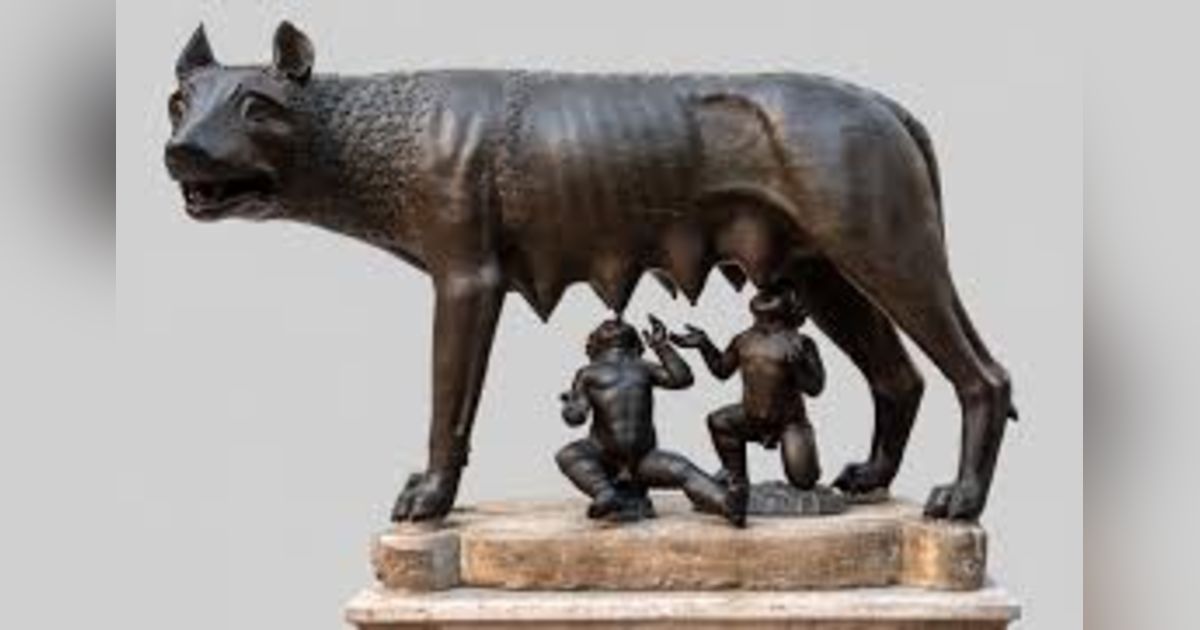
Some of you have probably heard a brief, perhaps very brief, synopsis of the story of Romulus
and Remus. That two young boys were raised by a she-wolf and grew up to found the city of
Rome. I have included on this episode’s page on the website a famous image of a she-wolf
suckling the two young boys.
Plutarch gives us this legend, not quite so briefly, in his Life of Romulus.
Now, Romulus was the legendary first king of Rome and we should not be surprised, when we
read his legend, to find many aspects of the story to have a commonality with many other
stories of heroes that we have read.
Joseph Campbell was a 20th century professor of literature. He wrote many books on the value
of myth, its function in society and on its similar appearance in almost all human cultures. He
told us that most heroes have a sort of mysterious or even imperiled birth story. Sargon of
Akkad, the Mesopotamian conqueror and ruler of the 3rd millennium BC, according to legend,
was born of a single mother who placed her infant in a basket and tossed it into the waters of
the Euphrates river. As an infant, Moses suffered a similar peril on the river Nile in Egypt.
Oedipus of Greek myth, as an infant, was given away and meant to be left to die of exposure
before he was rescued. The baby Heracles had to defend himself against two snakes that the
goddess Hera sent to kill him.
Heroes are also born in mystery. Isaac, in the book of Genesis in the Bible, is born of an aged,
presumably post-menopausal mother. Theseus, born of a single mother, discovers his father’s
sword, and his destiny, beneath a rock. Jesus is born to a virgin. King Arthur, at birth, is handed
over into the care of the wizard Merlin and grows up in obscurity until he releases Excalibur
from its rocky confinement.
Just so is the birth of Romulus imperiled and mysterious.In one version of the legend, according to Plutarch, Tarchetius was the king of Alba, perhaps
sometime in the 8th century BC. Alba was a region in central Italy, essentially in the same area
as Rome would someday be. He was one of those story-book wicked kings, apparently.
An apparition of a male figure appeared in the hearth of Tarchetius’ home. Perhaps, this means
ghost, perhaps not. I find it interesting, given what we know about the importance of the hearth
in Roman culture, that the “apparition” appears there and not in a bedroom, or a temple or
some other location. This just reinforces that, for the Roman, the hearth, the heated center of
the home, where food was cooked, where sacrifices were given to the gods, this was the
central location of spirituality, of sacred focus, of divinity.
Anyway, the king consults an oracle and learns that any virgin who gives herself sexually to this
ghost in the hearth will conceive a son who will be brave, strong and fortunate. Note those
three exquisitely Roman virtues: bravery, strength, and luckiness. Now, the child born of this
union will not be an idiot, but I do think it is interesting that nothing is said here about the child
being intelligent or cunning or clever. This is not a Greek story. It’s a Roman story. So its
important that the hero-child will grow up to be brave and strong, before anything else.
And, of course, being fortunate is mentioned as well. We will come back to this concept of
fortune again and again in the Roman series.
So the king orders his own daughter to surrender her virginity to the apparition. But she,
disdaining such a dubious opportunity, tells her female servant to give it up to the ghost. When
the king learns what happened, that his will was denied, he imprisons both of the girls.
In an interesting interlude in this story, the father is only deterred from murdering both his
daughter and her handmaid by the goddess Vesta. Again, the goddess of the hearth. And so
the father tells them that they may secure freedom from their chains by weaving cloth. But
whatever progress they make in weaving by day, he unravels it all at night.
I can’t get over the strange connection between this story and that of Penelope in the Odyssey.
But maybe the deeper connection, in both stories, is to the whole idea of fate and how it is
represented by spinning and weaving and sewing. I have often, without intending anything
really profound, referred to history in this podcast as a tapestry, and I see now where I got that
concept, subconsciously perhaps, from this very ancient and very human idea that history and
fate are made up of things sown together, woven together, and unable, no matter how hard we
try, to ever be unraveled.
As you might have already guessed, the servant girl gives birth to two boys and they grow up
to kill the wicked king.
But, as with much Greek mythology, there are various versions of this origin story.
In another version, the land of Alba is ruled by descendants of Aeneas, the Trojan refugee, from
down out of the deepest times of the past, until two brothers struggle against one another over
the throne. Eventually, one brother, Amulius by name, takes the throne and forces his brother’s
only daughter to become a vestal virgin. This girl, however, gets pregnant and gives birth to
two big, beautiful sons. This pregnancy was a terrible crime for a vestal virgin.
Amulius orders the two boys destroyed, but a servant instead leaves the two children in a box,
or chest, on the banks of the River Tiber, the river which flows through the city of Rome to this
day. The little ark is carried away by the tide and comes to a she-wolf who raises them.This is one story anyway. As I said, there are many versions. But the similarities with the birth
stories of both Sargon and Moses are fascinating. I imagine that there are many other famous
heroes in other cultures who endure similar experiences.
In some stories, it is the god Mars who got the vestal virgin pregnant. In others, it was Amulius
himself, the girl’s uncle, who impregnated her. In other stories, there is no she-wolf but instead
it is the servant who was commanded to kill the boys that raised them in secret.
The stories all agree that the boys eventually grow, meet their grandfather, the king’s brother
named Numitor, and they overthrow the wicked king Amulius.
Plutarch remarks that some of his contemporaries were suspicious of these dramatic stories
and considered them pure fiction. But the biographer, though he is a Greek, reflects on all this
in a truly Roman manner when he cautions us to remember that "fortune is sometimes a
poet”, and that possibly Rome would never have risen to such eventual power unless it had its
origins in something so miraculous.
(Music)
After the death of Amulius, Plutarch tells us that Romulus and Remus delivered the land of Alba
up to their grandfather and paid their mother “honors befitting her.”
It is important in Roman legends for their heroes to act with propriety, to do what is
appropriate. And here that is reinforced because it is not enough for Romulus and Remus to be
heroic and manly and brave, though these virtues are important, no doubt. But, when all is said
and done, they then honor their grandfather and their mother.
For the Greeks, heroes like Achilles have some leeway with regard to their behavior. In the Iliad,
Achilles can get away with sulking on the beach outside Troy and letting his companions get
slaughtered by the Trojans while he wallows in self-pity. This behavior may be lightly chided in
the tale but it is largely ignored because Achilles exhibits so many other manly qualities. He is
forgiven his impropriety, his self-indulgence, because he later goes on to became the very soul
of war itself and wreaks havoc on the Trojan enemy. Like Odysseus, like Agamemnon and
others, Achilles is forgiven for his iniquity because of his great deeds.
Not so with the Romans. Their heroes, their real heroes, must observe the social niceties as
well as be brave and skilled in battle. Note this again and again as we go through Roman
history, especially the history of the Republic. It is only when we get into the period of decline
at the end of the Republic’s lifespan that we will see the misbehavior of certain heroes, such as
the vices of Julius Caesar, being overlooked in the light of their other accomplishments.
I get the sense, then, that, while the Romans kept much of Greek mythology and integrated it
into their own mythology, that maybe they thought of much of it like modern Christians think
about certain parts of the Bible. Romans had to accept that “heroes” like Odysseus did some
pretty shady things every now and then, and Christians have to accept that things like the
extermination of the Canaanites are in the Bible without focusing on such things too much.
These questionable things are in the scriptures for both ancient Romans and for Christians, but
their presence is merely accepted rather than focused on.
For the Romans, then, the Greek heroes existed but their focus was on their exclusively
Roman heroes, whose achievements were just as great but whose personal behavior was
much less dubiousSo, proper social etiquette, proper demonstration of morality are expected of Rome’s heroes
and its people. Nothing is more important than performing social and religious duties properly.
It is not enough for Romulus and Remus to kill their enemies. They must also observe ritual
requirements, fulfill familial obligations, and so on.
Strangely, though, the earliest Roman ancestors are not exactly models of propriety. Plutarch
tells us that around Romulus and Remus, at this early stage, had gathered a band of slaves
and fugitives who made up most of their entourage. After founding their own city, Rome itself,
they originally built a special temple there as a “sanctuary of refuge,” a place where fugitives
of various sorts could go to find safety from life’s mistakes and troubles. I’ll quote Plutarch
here,
“Where they received and protected all, delivering none back, neither the servant to his master,
the debtor to his creditor, nor the murderer into the hands of the magistrate.”
So they even accepted runaway slaves, debtors and murderers into their ranks and gave them
protection. Once you read on, though, this begins to make more sense. Much of Romulus’
activities, as the first leader of Rome, are bent on expanding the population. The episode of
the Rape of the Sabine women, which we will get to in a coming segment, is essentially an
attempt to expand Rome genetically as well as territorially.
Because two brother warlords and a band of fugitives do not a nation make. Much like
adventurous entrepreneurs trying to scale up their business and defeat their competition,
Romulus and Remus try at every turn to expand their populace in order to grow their power.
But Remus himself does not continue in this effort for very long. While actually doing the dirty,
hard work of founding the city, finding the site and breaking ground while managing what must
have been a rowdy following of virtual gypsies and scavengers, the two brothers got into a
scuffle over the interpretation of birds.
I have mentioned before this fascination, bizarre for us moderns, that the Romans had for birds
and their activities as omens. This episode in the founding of Rome is just another instance of
men, who may otherwise appear to us as rational as any of our peers, allowing the trivialities of
bird activities to influence their decision-making process. Here, the influence of the birds
actually results in the death of Remus, the brother of Romulus.
Apparently, at odds with regard to the exact location of the city they wanted to build, the future
Rome, the brothers Romulus and Remus decided to place themselves apart at a great distance
and observe bird flights, and then come back to compare notes, so to speak. When they got
back together, Remus said that he had observed six vultures in flight, but Romulus claimed
that he had seen twelve. So Romulus’ selected site would then be the location of Rome.
But, after Romulus then began construction on his selected site, Remus felt cheated and sure
that Romulus had lied, so a fight broke out between the two brothers and between their
followers. And, in the scuffle, Remus was killed.
Plutarch, in a side note, mentions that one man who fled quickly from the aftermath of this fight
was named Celer, (spell it), and from this we get the term celerity, which means to move swiftly.
It can be mystifying to read ancient history sometimes. The idea of taking seriously the flights
of birds, and that such an ugly little squabble resulted in the murder of a brother and the
foundation of a city that would rule the known world for centuries, is hard to fathom.But we have seen this before in Greek history and perhaps we also overestimate just how
seriously the ancients took these stories.
I know people tend to read ancient history and assume a certain amount of gravity and
formality in everything that the ancients did.
But then I consider that someone studying the United States a thousand years from now might
repeat the story of George Washington chopping down the cherry tree and they might think
that Americans in the 21st century took this story as gospel. Whereas the truth is that many
people don’t even know the story any more and those that do think it is just an amusing little
legend, at best.
Regardless, once Remus was buried, the city was then built on the site of Romulus’ choosing.
Even though Plutarch wrote this essay about Romulus some 8 centuries later, he notes that all
the construction was done in a very formal and religious way, while observing ceremonies and
rituals performed by “Men from Tuscany” for whom Romulus had sent to bring to the location.
This is all very Roman, again, that this undertaking would also be a religious ceremony and be
carried out with sacred concentration.
You may have perhaps already heard the legend of Cincinnatus, for whom the American city of
Cincinnati is named. We have not come to that Roman leader’s time yet in our chronology, but
his story is one of those stories of simple honesty and virtue in a man of high-station. In brief,
Cincinnatus is called to lead the Roman state in war and he is very successful at it. Once the
emergency has passed, however, he goes back to working his farm, uninterested in power.
We will come to the story of Cincinnatus in a later episode but I bring him up now to show that
this kind of characterization of an early Roman hero is not unique to him. Right from the
beginning, we have this view of Rome’s founding fathers, as men who are simultaneously
brave, scrupulously religious, possessed of a serious and formal demeanor and also very
down-to-earth and willing to get their hands dirty. Romulus at the founding here is depicted
yoking a cow and a bull to a plow in order to dig a trench to mark the original boundaries of the
city, the first great man of Rome not afraid to engage in the humble but fundamental business
of earth-moving.
We see this, also, in things repeated today, in ground-breaking ceremonies. The CEO of the
company, the bishop of the church, the governor of the state, they will show up at the
groundbreaking and stand amid the tractors, wearing a hard hat and carrying a spotless,
shining shovel and make the first digging movement to initiate the building of a skyscraper, a
church, a new capitol building.
The date of this foundation ceremony of Rome is traditionally given as the 21st of April, 753
years before the birth of Christ. But for Romans and their calendar, this is the first year of the
city and of their history. Ad urbe condita, is how they would say it. For the Romans, foundation
of their city was ab urbe condita 1. The birth of Christ would come ad urbe condita 754. And
today, as I publish this episode in the year of our Lord 2025, we are living in ad urbe condita
2778.
(Music)
Now, you should know that sometimes this podcast will seem to bog down into statistics and
numbers and other details that may seem boring to you. For others, those details may not beso tedious. For some students of history, those details are the very juice of life in the annals of
history.
Some may prefer to read about the battle of wills between political opponents, such as
between Pericles and Cleon in ancient Athens, while others prefer to read about the battles of
swords and spears, such as in the story of Leonidas and the 300 holding off the entire Persian
army.
In this podcast, I consider it necessary to entertain both audiences. Furthermore, focus on the
nitty-gritty details of troop numbers and battle tactics, with regard to Rome, is necessary
because these things are the very heart of Roman ideals and those details of numbers and
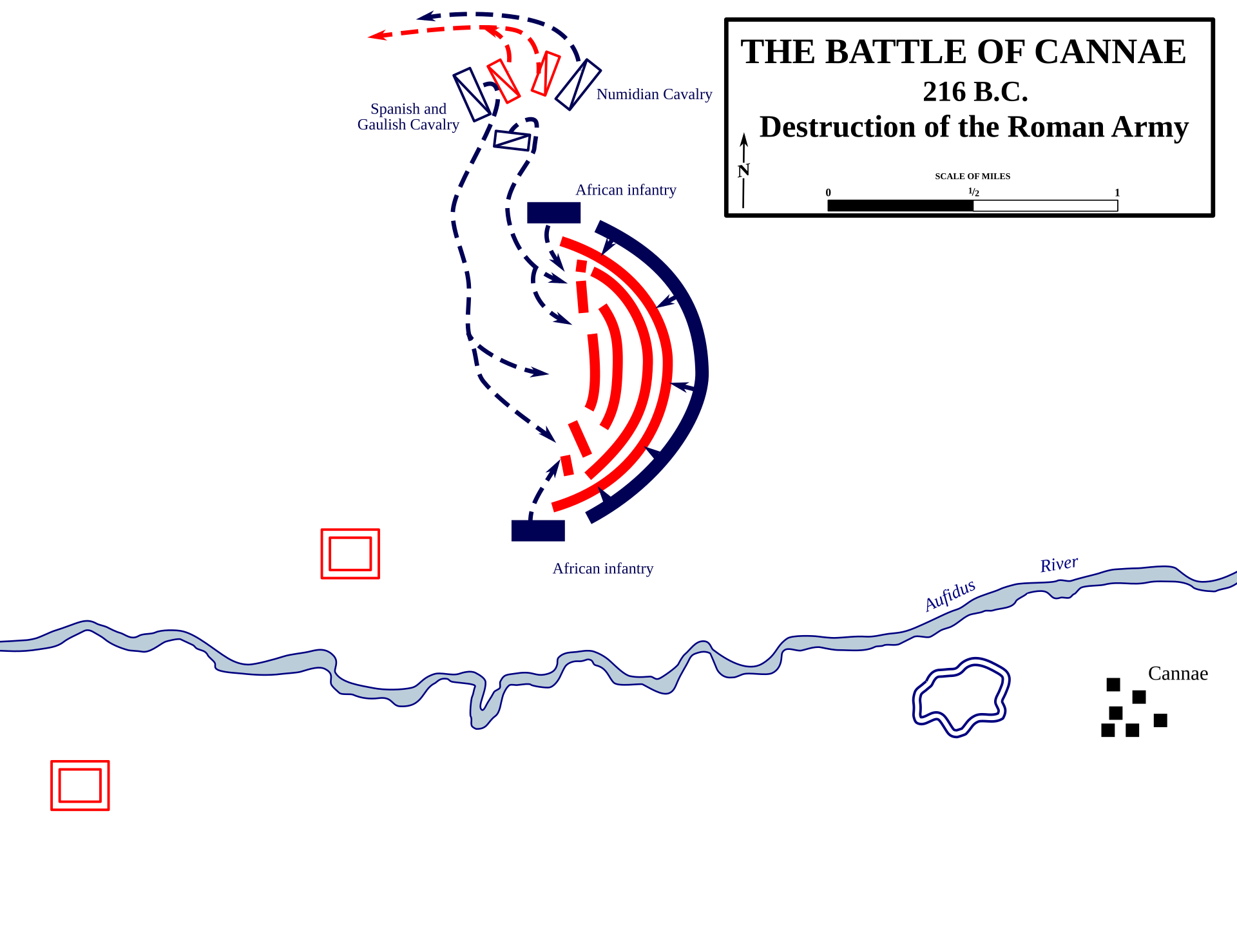
formations often impact the fate of that nation. The troop movements at the battle of Cannae,
for example, are still referenced today in both military and political discussions. If you wish to
know about the Roman spirit, then you must come to know about not only their attention to
such details, but their impact on Roman fortunes.
Additionally, given that so many of our modern Western languages are based on Latin, it is
worthwhile for this podcast to focus sometimes on the relationships between certain ancient
Roman terms and modern words that we still use today.
Anyway, that was all a long-winded preface to Roman military organization, which begins with
Romulus.
After founding the city, Plutarch tells us that Romulus immediately organized the men of military
age into companies of troops, each company consisting of 3000 foot soldiers and 300 cavalry.
These companies were known as legions.
The word legion presumably comes from the Latin verb legere, which has multiple meanings
but among them is the meaning to choose or to select. And the Roman legions are so-called
because they represent the select or chosen ones from the Roman populace.
But we should also take note of the phrasing Plutarch uses in describing this selection: he
describes “men of military age.” For the ancients, this would not have meant what it means
today, when many countries often restrict military selection to the ages between 18 and let’s
say somewhere in the late 20s. Popular films, like that terrible movie 300 with Gerard Butler, will
depict ancient warriors as a bunch of hot young men in their 20s with bulging biceps and six-
pack abs. When the reality was that armies, both standing armies and those conscripted in
emergencies, were typically composed of men from ages as young as 15 to as old as 60. So
it’s hard to say just how “select” these legions were.
Regardless, whoever was not numbered among the soldiers - women, children, men too
young, too old or too feeble to bear arms in the legions - all these were named “the people,” or
populus: from here we get the word population.
From the people, Romulus selected another hundred men of greater years, from the finest
families, and he called them patricians, from the Latin noun pater, which simply means father
in English. They were the fathers of their country.
From this term we also get patriotism. A patriot is someone who loves their patria, or their
father’s land. In most romance languages, patria, or fatherland in English, is the term used to
describe one’s country.When these 100 patricians sat in council, they were known as the senate. This term, senate,
literally means gathering of elders, from the Latin word Senex. Consider how we use terms
such as senile, senescence, senior to describe aging or to describe someone of many years.
The senate, then, is a gathering of elders, which is why even in the modern United States
Senate you have higher age limits. A US representative in congress may be as young as 25,
but a senator must be 30 years old and the president must be 35 or older.
This Roman senate will be a long-standing body of governance and council, always in the
forefront or in the background as we read through the next two thousand years of history in the
Roman Empire. It will be the governing and guiding body for many centuries under the
republic, but even after the Emperors take control the Senate will be the body with which the
Emperor must at least engage in order to undertake any endeavor or make any decision.
As a formal body of governance and council in the West, the Roman Senate will continue to
exist even after the fall of the city of Rome in AD 476. Gregory the Great, first Pope of Rome
under that name, in AD 603, over a century after the supposed fall of Rome, he lamented in
one of his writings about the “near-disappearance” of the Senatorial class in his time, but that
remark is the last that we ever hear of this body in the West. Presumably, the Senatorial class
in the West went extinct sometime that century.
In the East, in Constantinople, the body of the Roman Senate will continue to advise the
Emperors until AD 1453, when the Muslims sacked the city and the Roman Senate, founded
over two thousand years before, finally went totally extinct.
(Music)
Traditionally, the next episode in the history of Rome is known as the rape of the Sabine
women.
Now, rape has always been a highly charged term and is so charged today that that you can’t
even discuss the subject on social media without being banned. Indeed, since I will repeat the
term multiple times in the coming segment, I suspect that my YouTube upload may be denied
or banned.
But, for the sake of clarity, let me explain that the rape referred to here means something more
like abduction rather than sexual violation. Thus, in the 18th century, Alexander Pope will write
a humorous poem titled The Rape of the Lock, referring to the theft of a woman’s lock of hair,
and not implying whatever else someone might infer about that wording.
Of course, I don’t want to downplay the gravity of the term too much. When the Roman men
steal the Sabine women away from a community festival as described here in a moment, it
seems quite likely that this episode was followed by the sexual violation of those women. But
the name of the episode, the Rape of the Sabine women, refers to their kidnapping, not to
anything else.
Now, who were the Sabines, anyway, and why did the Roman men abduct their women?
As for the identity of the Sabines, we should prepare ourselves, here at the beginning of the
Roman series, for a litany of battles and skirmishes against people living in the lands
immediately surrounding Rome. That is much of the fundamental story of Rome’s rise, these
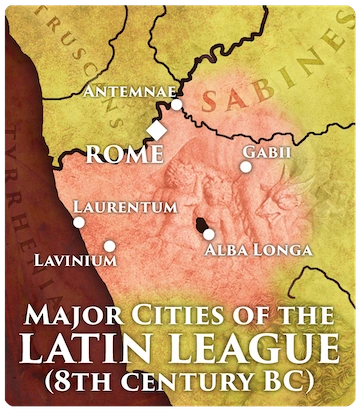
battles against local tribes in the Italian peninsula.Today, we tend to identify Rome with all of Italy, but we must remember that the peninsula, in
the 8th century before Christ, was full of numerous tribes of both Indo-Europeans and other
races that were either descended from the Anatolian-farmer cultural diaspora from a few
thousand years before or were even descended form the “original populace” whose bloodlines
went back to the earliest hunter-gatherers of Western Europe.
Now, the Romans were a Latin-speaking, Indo-European group. I say group because, as we
see already, they weren’t even really their own tribe or clan of people connected by blood or
culture. Romulus appears to have combined a lot of outsiders, refugees and, for lack of a
better term, a bunch of vagabonds into his own little band. And Rome grew from there,
essentially from this band of drifters, as we shall see.
So, the people around the Latin-speaking Romans were, often times, probably pretty similar in
terms of language and culture since these men would have come from the surrounding area
and not from anywhere else. Few, if any, examples of language from the tribes immediately
surrounding Rome have survived to the present, incorporated, as they were, so soon into
Roman history through conquest and other means of cultural absorption.
As for the Sabines specifically, they may have been descended from Indo-European
immigrants into the peninsula in the same area but, according to one tale, they considered
themselves to be a colony of Sparta. They would still be Indo-European language speakers,
then, but from the Greek branch.
But this is all hard to really determine decidedly because the Romans, very early on, absorbed
the tribes immediately surrounding them, such as the Sabines and others. And most of the
early history of the republic narrates a methodical conquest of the Italian Peninsula, right up
until they encounter the Carthaginians, at which point a new stage in the development of the
Roman state begins.
But that is all far in the future.
At this juncture in Rome’s history, just after Romulus founded the city, the most pressing
problem was not security. The Romans were mostly men, “mean and obscure men,” according
to Plutarch, and not the kind of civilized men who might be intimidated by violence. No, the
most pressing problem for Rome at this stage was continuity.
Biological continuity.
There just weren’t many women among the Romans. And, Romulus, apparently, saw that this
would become a critical issue soon. Romulus seemed to see the state as his business, his
enterprise, and, like a good businessman, he wished to make it strong and give it a long life of
prosperity. So, Rome would need both women, and alliances with the cities around it, in order
to prosper.
And perhaps this was a common viewpoint among politicians prior to our own time now,
when politicians seem primarily to be parasites who wish to suck the blood out of their country
and then leave it for dead.
Anyway, Romulus invited the peoples from all around Rome, and these were mostly Sabines, to
come see and participate in a festival of games. We see here again a bit of similarity to the
Greeks, this fascination with games as a celebration, and by games this means the athletic
competitions that Greeks glorified in their Olympics.During the games, Romulus gave a pre-prepared signal and the men of Rome stole away with
many of the Sabine women. Some sources say that this was as few as 30 women, others more
than 500. All of them except one, according to tradition, were “virgins”, that is, young,
unmarried women.
They carried the women back to their homes and, we are told, that this is where we get the
tradition of a man carrying his newlywed bride over the threshold of their home after the
wedding.
Interestingly, the Sabine men, who are reputedly a colony of uber-masculine Sparta, do not
immediately attack the Romans but instead send ambassadors to politely request the return
of their daughters.
I think that the strangeness of this turn of events contrasts in multiple ways with our modern
perspective on matters and we just have other come to grips with the fact that the ancients,
while they are the same genetically with us, were also simply a different people. Living in
different circumstances.
For example, none of the stories about the Rape of the Sabine women even really touch on the
part of the story that probably concerns most modern readers, I.e., the rape part. Now, as I
said before, the term rape in the title of the story mostly refers to the stealing away of the
women but, obviously, they were being stolen away for the sake of subsequent sexual
conquest. But that element of the story is pretty much glossed over, while we remain offended
or even incensed by it.
How can we explain the disparity between the ancient and modern takes on this part of the
story?
One thing to understand, or simply accept, is that the ways in which men and women
interacted back then were probably far different than our own. This can be seen in the outcome
of the story, which I will get to soon. Men were expected to act in certain ways, whether our
modern sensibilities like it or not. And women also expected men to act in those ways.
As you will see, the women in this story do not seem particularly upset about being stolen
away. Even when their own tribesmen come for them and they have the opportunity to seek
vengeance on their rapists, they do not do so.
But, then, we are perhaps also disturbed by the fathers of the women initially sending
ambassadors instead of an army to get their daughters back. Aren’t these Sabine men
allegedly descendants of Spartan colonists? Why are they acting so meekly in this matter?
Again, the only explanation is a great divide between the way that a man might think of his
daughter now and how a man thought of his daughter then. I can’t plumb all the depths of this
matter now, but we should remember that, in the past, when a man of means had a daughter,
his thoughts on her were primarily about how to get her successfully married off someday. He
wasn’t going to send her to college so that she could get a degree and become a successful
professional someday. So, he was expecting her to be carried away, in some sense, by
another man. The only complaint that the Sabine men would have really had would have been
the cultural violation of their custom, not the sexual violation of their daughters.
So they wanted the arrangement of these “marriages” to either be nullified or formalized. That
is all.As for Romulus, many scholars interpret this move of his not as a cold-blooded plan to ravage
the daughters of the surrounding tribes, but as a way to force union of some sort with them
and to secure Rome’s future. Without women from the other tribes, Rome was destined to
decline and disappear. Even though this move provoked potential conflict, Romulus may have
cleverly seen, with his politicians’ guile, that the outcome would ultimately be reconciliation.
Perhaps Romulus saw the situation much like we might view a relationship between a man and
a woman. If a couple never fights, we don’t necessarily consider that a good sign. Those of us
who have been in relationships know that fighting, and, in particular, the reconciliation that
comes afterward, these things often bring about a stronger bond that goes much deeper than
just mutual admiration or love. It is sometimes necessary to have conflict, and then resolve
the conflict, in order to become closer to someone.
And the same with nations. Historically, the nations of France, England and the United States
had every reason to be enemies, not allies, in the World Wars of the 20th century, but you could
make the argument that these nations’ long acquaintance in mutual conflict in prior centuries
actually brought them closer when it came to repelling the Germans, a foe common to all three
of them.
Thus, perhaps Romulus saw that the Rape of the Sabine women would eventually force
Rome’s neighbors to come into closer fraternity with them, through engagement of one kind or
another.
Indeed, Romulus’ first response to the ambassadors that came to retrieve the women was to
encourage the ambassadors to accept this all as a sign of a future and greater
correspondence between the tribes, correspondence here meaning cooperation, even alliance.
The Sabines overall do consider this possibility but Akron, the king of a local tribe, decided
that Romulus was gaining too much power and he declared war. As with many battles to come.
Romulus wins this one. When the people of Akron’s city surrender, he demolishes the place but
lets the survivors live and brings them to Rome and welcomes them as citizens.
See, then, Romulus’ true goal. Not bloody conquest and pillage for its own sake, but the
growth of his population base. More people equals more power. In the past, particularly,
people were not burdens as societies view them now. People were resources, because it was
men and women who sowed the crop, who plowed the fields, who hammered out tools and
weapons in the smithy and guided merchant’s caravans and put on the arms and armor of war
when the time came. A greater population meant more power, more wealth.
In the wake of this Roman victory, Plutarch describes the first triumph of Rome. Triumph, here,
refers to the celebration after victory in war, when Rome would march the spoils of war and its
captives through the streets of Rome. In future episodes, victorious generals will bring back
captive kings and wagonloads of gold and jewels and columns of slaves and other valuable
resources and parade them all in front of a rejoicing Roman populace.
At this first triumph, Romulus carved a tree trunk and placed the armor of the dead king Akron
on it and marched it through town at the head of the triumphal column and dedicated it to
Jupiter.
Romulus himself gained here something called the opima spolia, that is, the triumph whose
spoils are won by a general who not only wins the battle but who, with his own hands, kills theopposing general. Only two other men in all of Rome’s history would earn this opima spolia,
through killing a foreign general by their own hand.
The war was not over, though. There would be more battles, with other Sabine cities and with
other tribes as well. All would end in Roman victory, and often in colonization of new territory.
Livy is the name of another great historian of Rome. And in describing these many battles at
the start of Rome’s rise, Livy tells us the story of the Tarpeian rock.
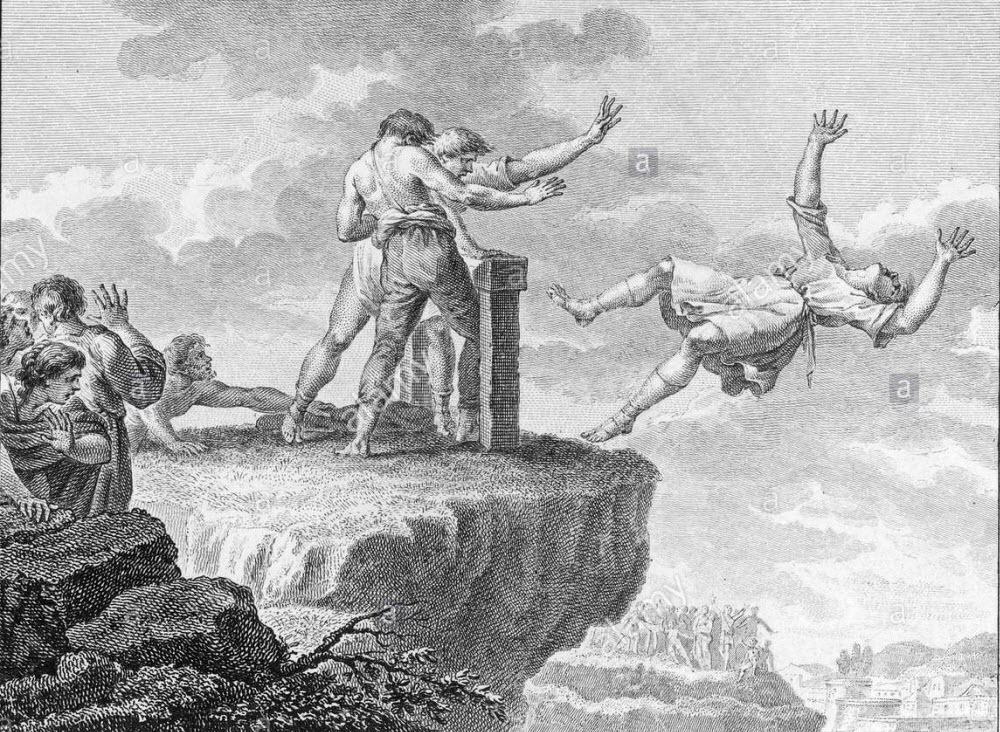
The Tarpeian rock is something that will loom occasionally in future episodes about Rome. This
was a cliff next to the Capitoline hill in Rome, a cliff from which Romans would throw down
criminals doomed to execution, much like we heard about the Spartans doing in the Greek
series. Indeed, we also hear that the early Romans, like the spartans, would throw disfigured or
disabled children from the same cliff, disposing of people who would simply be burdens of
society if allowed to grow.
There are several traditions about how the rock, or cliff, came to be so named. The most
famous is that a Roman woman by the name of Tarpeia betrayed her city by allowing Sabine
men to enter the citadel, in exchange for their many gold and jeweled rings, bracelets and
armbands, which she had admired from a distance. Allegedly, after the citadel was taken, the
Sabine captain despised Tarpeia for being a traitor and he and his men buried the woman
beneath the weight of all their jewelry, possibly at the foot of this cliff.
Regardless of how it came to be named, the Tarpeian rock will be remembered by us in this
podcast again, especially in light of the ancient Roman adage
Arx tarpeia Capitoli proxima
Translated, “the Tarpeian rock is close to the capitol.”
Meaning, that men who reach great power are not far from execution. Many powerful men of
Rome, such as Julius Caesar, will live only long enough to learn this personally.
Now, unexpectedly, all this warfare comes to an end only when the Sabine women intervene.
Things were quite dire for the Romans at this point. Thanks to the treachery of Tarpeia, the
Sabines had penetrated the Roman defenses and Romulus had only just managed to rally his
men to fight off the initial onslaught of Sabine warriors. As the two sides were preparing for one
more titanic battle that would decide the fate of the city, the daughters of the Sabines, the ones
who had been carried off, ran onto the battlefield, amid both their Roman husbands and their
Sabine fathers and brothers. Here are their words according to Plutarch:
“In what way have we injured or offended you so as to deserve such sufferings past and
present? We were ravished away, unjustly, and violently by those men to whom we now
belong. That being done, we were so long neglected by our fathers, our brothers and our
countrymen that time, having now by the strongest bonds, united us to those we once mortally
hated, has made it impossible for us, not to tremble at the danger and weep at the death of the
very men who once used violence to us.”
From this language, we can presume that some time, months or even years, must have passed
between the theft of the women and this battle. Indeed, the women’s closing statement, which
speaks of the children they have had with their Roman husbands, makes this clear.“Restore to us our parents and kindred, but do not rob us of our children and husbands. Make
us not, we beg you, captives twice.”
In other words, the women demanded peace, so as to preserve both their male relatives’ lives,
and the lives of their new husbands and children.
No doubt this language irks many a listener, that the Sabine women would seek to preserve the
lives of the men who abducted them, but there are probably many things about our own time
that would disturb the ancient Romans.
(Music)
The plea worked. Peace was declared. According to the legend, the Romans and Sabines
agreed to live in the city together, as one people. The size of the military legions was doubled,
to 6000 foot soldiers and 600 cavalry each, after taking on Sabine soldiers. And the Roman
soldiers, in turn, adopted Sabine arms and armor.
The senate, as a result of this union of two peoples, was doubled in size to 200 in order to
accommodate Sabine patricians in governance as well.
Furthermore, laws were passed regarding the respect to be given to the Sabine women, and
that they were not to be expected to do any hard labor beyond spinning, that is, the
manufacture of garments. Here, perhaps, we begin to see the different attitude toward women
that will strike such a contrast with the Greeks, who, when they visit Rome in later centuries,
will be appalled by the freedom of women in Roman society.
Nevertheless, I should not suggest that Romulus was any kind of suffragette or feminist. Rome
was still a very male-oriented society. For example, Romulus would later pass a law declaring
that a man was permitted to divorce his wife, but a woman was not allowed to initiate any such
legal proceedings. She was married until her husband said different.
This Roman origin story also reveals many other customs, words, ideas and traditions that we
will continue to see down into imperial times in Rome and, in some cases, even down to our
contemporary times in the 21st century.
The population was at this time allegedly divided into three “tribes”. And it is actually from this
division that such groupings are called, in Latin-based languages like Spanish, English or
French, that such groupings are called tribes, from the Latin word for three, tri, t-r-i. From this
word, we will eventually get other words, like tribune, the Roman political representative, and
the word tribute as well.
The festival of the Lupercalia, held in February, is purported to have its origin in the foundation
of Rome, though it is probably based on an ancestral celebration of much greater age. During
this feast, seven centuries later, Mark Antony will offer a crown to Julius Caesar, who will refuse
it, but still be assassinated later that same year for fear that he sought total dictatorial power
over Rome.
In later times, the Christian Feast of the Purification of Mary, held on February 2nd, will replace
the Roman Lupercalia.
I have already mentioned how the Roman triumph, or parade of a victorious army, finds its
origin here, and these triumphs are commemorations that we also continue to have, such asin the celebrations of VE and VJ Day after the end of World War II, or the ticker-tape parades
for the astronauts in the 1960s.
And, of course, our calendar, our names of the planets, our wedding ceremonies and customs
and many other things spring from this fertile cultural moment in Roman History.
For a time, there was power sharing among the two peoples, with Sabine leaders such as
Tatius and Romulus cooperating in leadership but eventually, Romulus finds himself sole
leader of the confederacy. Perhaps, in order to distract people from his arrogation of power, he
goes on to lead Roman troops into many battles, and much of the land surrounding the city is
secured and colonized by the growing population.
Nevertheless, even after these early conquests, Rome still remains a small, if sturdy, kingdom
in the heart of central Italy.
And kingdom it is. Even though the men of the Senate, jealous of Romulus power, will try to
democratize power by getting rid of Romulus, they will end up being forced to submit to
monarchy during his life, and even afterward, by the cult of belief that they propagate after
Romulus’ death.
Here is how he died.
Romulus, now in sole power, had become more and more “kingly” as time passed. He stopped
going out among the people so much, he ruled from a couch on which he reclined, he wore
scarlet robes with purple borders, and we know how purple was regarded as the color of
power, wealth and nobility. Reportedly, he grew arrogant, and the people became offended by
his behavior.
One day, in July, while celebrating public ceremonial rites, Romulus just disappeared. One
running theory, common in Plutarch’s later time, was that members of the Senate simply
assassinated him, killing him and then chopping his body into tiny pieces and carrying them
away in their robes so that there would be nothing left of him.
Naturally, there was public outcry at his disappearance, because even dictators have their
supporters. The senators neutralized suspicions, though, when they publicized that a great
storm had come and Romulus had ascended to heaven. Later, even, according to one man
whose honesty was unimpeachable among the Romans, Romulus appeared in the flesh and
assured his witness that all was well, and that he was to be worshipped now as the god
Quirinus.
Now, I mentioned earlier that Quirinus was among the first triad of gods worshiped with
particular attention by the pagan Romans. And this is the origin story of that God.
The matter is a bit confused, though, because the root of that name, Quirinus, is quiris, and in
Latin, quiris is the word for spear, or a dart, as Plutarch calls it. So this name might mean “the
spear-thrower.” And the name has been attributed not only to Jupiter and to Mars as well but
also even associated with the goddess Juno.
Some historians alternately believe that Quirinus was a Sabine war-god and perhaps this
moment represents the ascendancy of Sabine culture among the Romans. As we shall see in
the next episode, the Senate will not be able to maintain its oligarchic hold on the state and a
new king will follow in Romulus’ footsteps but he will be a Sabine man named Numa Pompilius.However it happened, Romulus disappeared from the society which he had brought into
being. He was, according to the story, just 54 years old when he disappeared and he had ruled
for 38 years. Which means that he achieved power over that initially small band of never-do-
wells at about the age of 16, and then he turned it into the embryo that would someday
become the greatest political and military power on earth.
In the next episode, we will look at the kingdom of Rome which continued on in the wake of
Romulus’ death.
But I want to end today’s episode with a little digression about the greatness of Rome that
gave me hope for society.
I have mentioned before, the modern meme that claims that men in western societies, even
today, still think about ancient Rome at least once a day. It is incredible to think that even
today, as we send rockets into space and build computers with brain power nearing the human
level, that we still remember, on a regular basis, the bravery, ambition and wisdom of men and
women who lived over two thousand years ago in iron-age Italy.
A few days ago, at work, I was actually inspired when a young man in his twenties showed me,
on his phone screen, a meme that is popular among him and his friends. A woman’s body was
tastefully obscured in the background. In the foreground, the bust of a roman emperor was
prominent. The message written on the screen was essentially this: Do not be distracted by the
flesh because the glory of Rome is forever.
I guess there is hope for the future of our Western Traditions.
(Music)