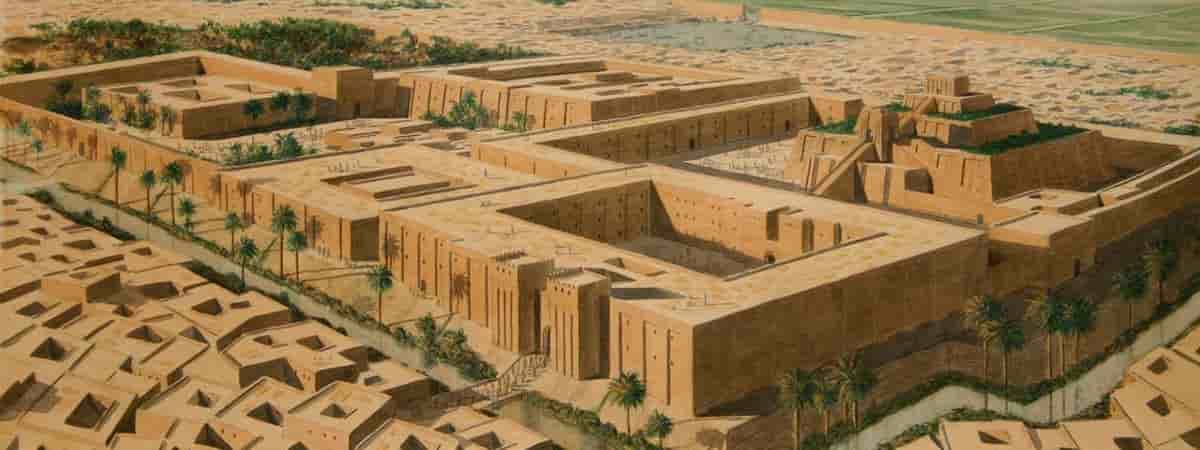
Episode III.04 - Roman Mythology I: Roman Religion
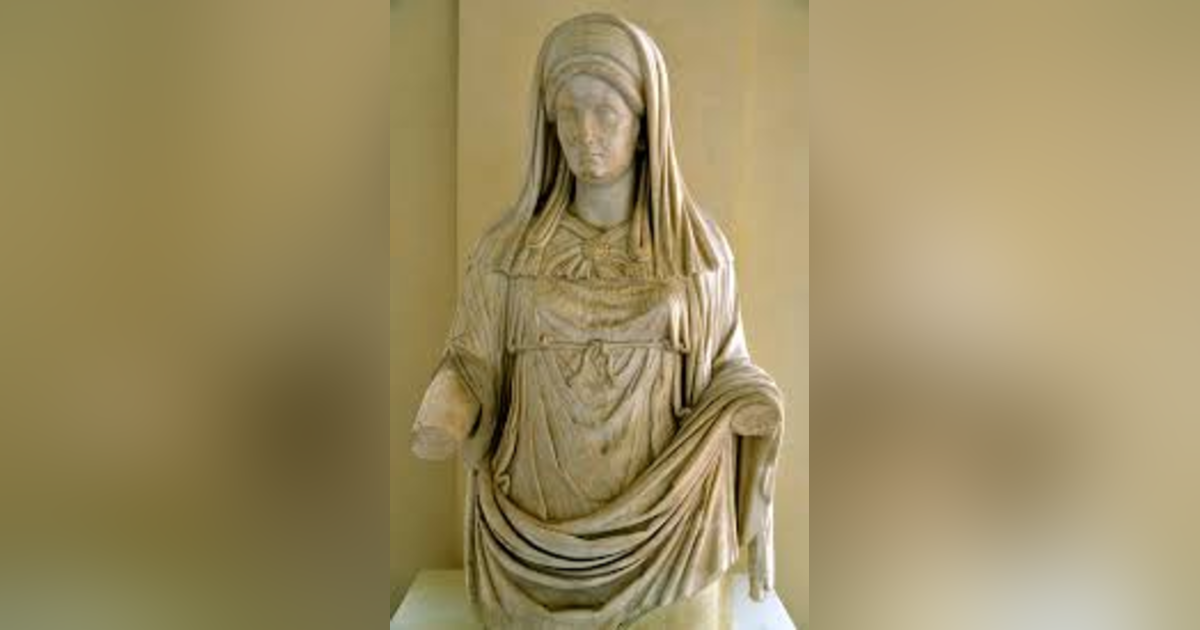


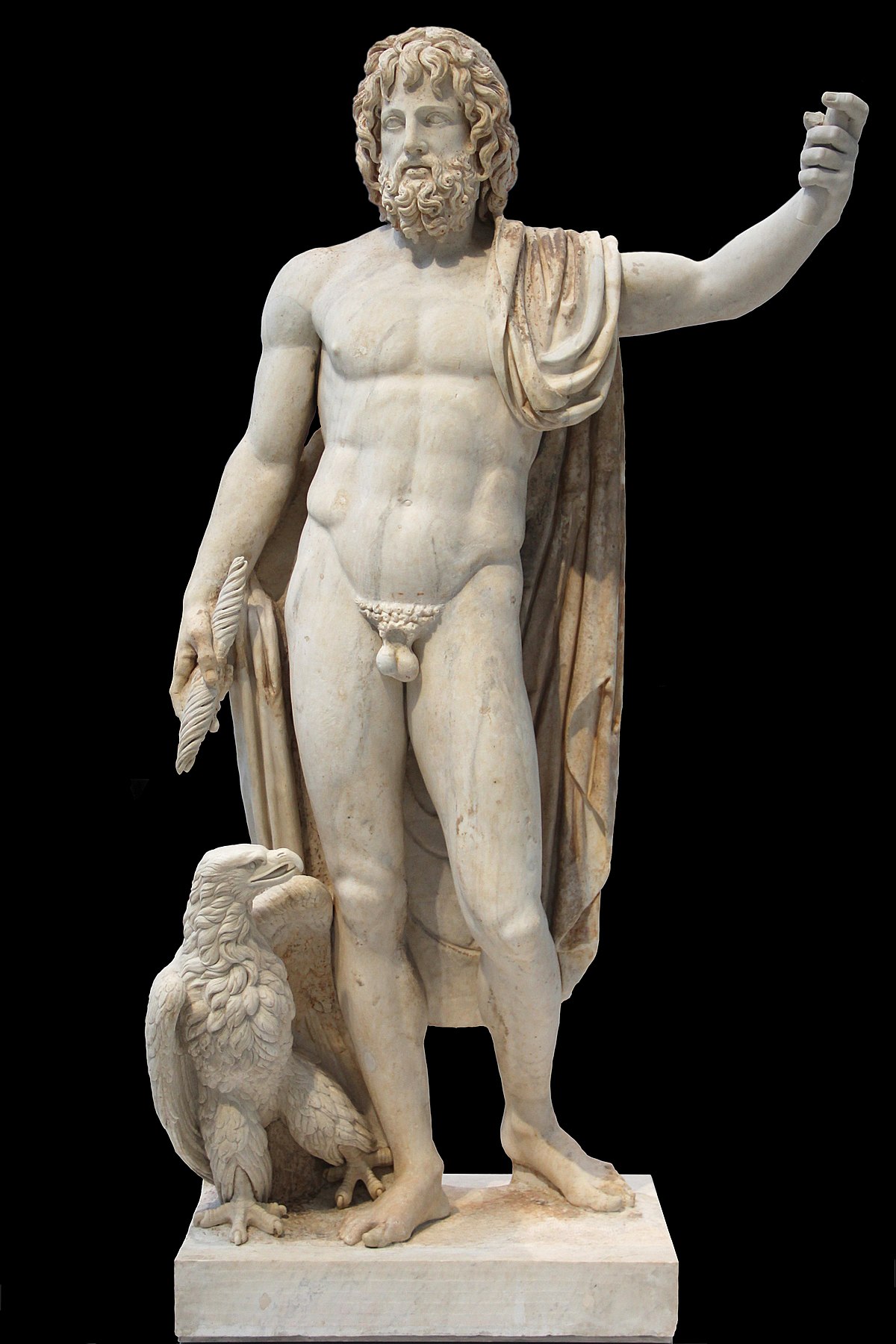
The gods through the eyes of the earliest Romans. The Indo-European religious inheritance. Jupiter, Juno, Mars, Minerva. The precision and discipline of Roman religious practice. The ties to early Christianity.
RECOMMENDED READS - Click Image for Link:

(Music)
“The Roman child grew up, in piety and obedience, to form the sturdy citizen of an invincible state.”
-Will Durant, from Caesar and Christ, the third volume of his Civilization Series.
(Music)
3000 BC. Tribes of culturally and genetically inter-related pastoralists have become too populous for the regions they possess and control on the steppes of Central Asia. They have, all of them, domesticated the horse, discovered or adopted the wheel and, more importantly, they have invented the axle. To the wagons undergirded by these wheels and axles, they have yoked their oxen.
And they have become highly mobile.
They begin to expand in all directions. With them, each of these migrating tribes carries their common language and their technological and cultural achievements, including advanced metallurgy that had either already led them into the bronze age or soon would.
With them, besides their tools and their language, they bring their gods. Most powerful among those early Indo-European gods is a deity they call Dyaus Pitar. (Spell). His name means, simply sky father. Dyaus is the ancient proto-indo-european word for sky, and pitar means father.
In northern India, these migrants will remember Dyaus Pitar, his name unchanged in ancient Sanskrit, in the Vedas, a collection of Hindu religious texts.
The Indo-European speakers that migrate west and then south into Greece will call this same god Zeus Pater at first, and then, simply, Zeus.
Over the centuries and millennia that pass, another branch of these Indo-european speakers will continue migrating even farther west, and then turn down into the Italian peninsula. For them, the name of their primary god, Dyaus Pitar, also changes a little in pronunciation. For them, as they settle along fertile river valleys like the Po and the Tiber, their primary god Dyaus Pitar has become known as Yupiter, or, as we pronounce it now in modern English, Jupiter.
At least, this is what we believe happened. There are no written records of these migrations. We must trace the passage of our ancestors with their ruins, their graves, their relics, their stories and bits of their DNA, piecing together fragments that do not always fit perfectly.
Nevertheless, there seems to be no doubt that the gods worshipped by all the ancient Indo-European speakers in Europe and those in central Asia and those in northern India, are the same gods. Or, at least, there is a core of similar gods at the heart of each pantheon as they developed in India, in Greece, and even in the frozen lands of the Norse in Scandinavia, and in the deep forests of the Celts of central and western Europe, and in the pantheon of the immigrants who colonized the Italian peninsula thousands of years ago.
But, just as the names of these gods changed little by little over time, as the migrating Indo-European speakers encountered other peoples, and other languages, so also did their spiritual practices change. Consider how different, in appearance anyway, are the manifestations of spiritual practices among the Hindus and the Persians, when compared to what we already know about the Greeks, even though those three cultures are really just cousins separated, perhaps, by as little as a thousand years of migration, maybe two thousand.
And so, when we turn to the Italian peninsula, and the Latin speakers who would become the Romans of a much more well-recorded era of our history, we should not be surprised by the distinct presentation of their religion when compared to those existing back east of them, closer to their ancient homeland in central asia.
Today, we study something called Roman mythology and we think that we have pigeon-holed Roman spirituality. Ah, we say to ourselves, the Roman gods were just the Greek gods with different names. Like some generic toothpaste that you might buy at a Walmart or a supermarket, and pay a little less for. It’s got a different name but its essentially the same ingredients.
And how wrong we are when we default to this kind of thinking.
Now, we have already gone through the Aeneid in the last episode, and in the coming episode, we will get into the mythology of the Romans as presented by the Roman poet Ovid in a book called the Metamorphoses. But it is important to remember that those two works, the Aeneid and the Metamorphoses, they were both composed and published within thirty years of each other, right around the time of the birth of Christ. And that is some thousand years or more after the first latin-speakers would have filtered down into the Italian peninsula. And those poems were also written long after the Romans had at first encountered, and then absorbed, Greek culture centuries earlier.
I call this episode Roman Mythology Part One, but, in a way, I’m not really going to discuss Roman mythology now. That will be in the second part of this sequence of two episodes about Roman religious beliefs. This episode is not about mythology, because this is a term we use as a general term but, let’s face it, we automatically think of Greek mythology when we say the word mythology now and then we try to fit every other pantheon we read about into some comparable assortment of gods and cultural practices.
No, this episode is about Roman religion, about Roman spirituality, before they encountered the Greeks. Or perhaps I should say, before they reacquainted themselves with the Greeks, many centuries after their ancestors had parted ways on the migration route out of central Asia and into Europe.
All that is ahead. Before we transition to the sacrificial meat of this episode, I encourage you to head over to the website, western-traditions.org, and check out the episode lists for all twelve of my podcast series. The podcast covers Western history from the very beginning of the universe right up into the present day, and also includes other series on current events, the history of the Americas, exegesis of the Bible and even a series on turning the podcast into a curriculum for both children and adults.
While you’re on the website, you can find Western Traditions merchandise on the shopping page. You can also directly support my work with contributions through the PayPal or Patreon options. If you become a regular patreon supporter, you will get access to my patreon page, where I publish updates about the podcast, free-standing essays about current events, and links and other resources about historical and cultural matters.
And now, let’s turn back to the earliest days of the Roman people and discover what they thought and felt when they considered the gods and the spiritual world.
(Music)
Before I generalize about Roman spirituality, let’s look at some things with which we are already familiar: for starters, their worship of multiple gods. When we think about the word pantheon, we typically think of the twelve high gods of the Greeks, the Olympians, even though we remember that they had many other gods and demi-gods, and sundry divine beings populating their spiritual world.
But the Romans did not have the same religious evolution as the Greeks. The Greeks seem to have been very focused on their tales of anthropomorphic gods. Zeus threw lightning bolts and Apollo fired arrows at people in the Iliad. Both of those gods also came down to earth to seduce or sometimes rape human women. The products of these unions became heroes like Theseus and Heracles.
And in their councils on high Mt. Olympus, the Greek gods behaved like humans, squabbling and conniving against one another.
But, strangely, the early Romans viewed their gods much more spiritually. That is to say, they were more impersonal, invisible forces in life. This isn’t to say that the Romans didn’t think their gods capable of taking form or of sitting in a celestial hall arguing about love affairs on earth, and seducing one another. It’s more like the Romans imputed so much dignity to their gods that they simply didn’t imagine this of them.
The gods were more like the planets in the sky to which the Romans applied their names: cold, distant, but with an unnervingly apparent impact on human affairs as they signaled the seasons, and watched, every night, over the good and the evil, the killing and the dead.
In the second series of podcasts, on Ancient Greece, I remarked that Socrates seemed offended by much of his own Greek mythology. By the tales of shameful behavior of the gods, particularly the many stories of Zeus’ romantic adventures. And he was probably not alone in feeling this unease with their own mythology. In Plato’s Republic, Socrates easily convinces his listeners that they should, from here on out, censor their own mythology to exclude such tales from now on.
Perhaps the Romans always had this discomfort with such tales and did not glorify them.
Or, perhaps, the Romans gods did share a certain common heritage with Greek gods, but the ancient Greeks’ encounters with locals in the Aegean may have given their own pantheon a different, naughtier flavor than Rome’s.
We know that the Romans had many, many gods. And I mean many. They invoked the spirit world for nearly every action of the day, from the obviously significant to the not-so-apparently significant. They called on a god when giving birth but also when lighting candles or just going through a doorway. In fact, their god of the doorway, Janus, was probably one of their most important gods, particularly in the days before they established themselves in Rome.
The month of January is named after this god, Janus, because that month closes the door on the old year and opens the door on the new.
Not only did they call on these many gods frequently, they believed that the gods, or spirits, were all about them, all around them, the world was just crawling with spirits, with Numen (spell it). They used this term for spiritual creatures but reserved the term dei for the gods, or called them di immortales, the immortal gods.
In total, even contemporary romans numbered the total population of that divine world of gods and spirits in the tens of thousands. Petronius, a Roman from the 1st century AD, complained that, in some rural towns, there were more gods than men.
It reminds one of the way that they Greek world was full of river spirits and nymphs and dryads, and the way that the Celtic world, also Indo-European, was also full of fairies and gremlins and goblins and so on, the woods just full not only of biological creatures but also of ethereal forces, which animated everything.
Now, most of the next episode will focus on the stories of those gods whose names, or identities, we already know. The high gods like Jupiter, known as Zeus in Greece or Minerva, known as Athena in Greece, and so on.
But, for the Romans, just as important, maybe even more important, were their household gods. As a group, these spirits, these gods, these numen, are known and remembered by different names: the Lares or the Penates, the Lemures and other names. This is not to say that the ancient Romans had no use for the so-called high gods, such as Jupiter or Neptune, but the daily spiritual focus of a Roman started and ended with his or her household gods, or spirits. According to strict customs, offerings were left to these spirits at different times, such as during meals when a plate might be set aside for a household god and then burned in the hearth afterward.
As for the hearth, we have, so far, overlooked its importance, in terms of general Western spirituality. In Greek mythology, the goddess of the hearth is Hestia. In the 2nd series of this podcast, I introduced her and quickly moved on, noting that she seemed to have initially been a part of the 12 Olympians but was removed in later years, perhaps to make space for Dionysius or someone else.
But the truth is that our modern perception of Greek mythology is probably colored by our focus on surviving literature and documents. And those documents largely come from a time very late in the evolution of Greek thought and greek spirituality, beginning with the 5th century BC. Socrates, and presumably many of his contemporaries, had a very refined and intellectual conception of the gods. There were a number of messy things about his own mythology that Socrates wanted to censor, and perhaps, to some extent, Greek society by then had already begun to forget conveniently about certain aspects of their earlier beliefs.
The Iliad and the Odyssey, written in the Greek dark ages, perhaps about 800 BC, and dealing with matters from at least a few centuries prior to that, can possibly give us a better idea of early Greek spirituality and it does indeed have some semblance of this classic idea about the gods, all of them feasting in Zeus’ hall, and Ares sulking and Poseidon surging the waters and Aphrodite flirting and teasing.
But there are also monsters and sorceresses in those epics. There is magic. There is Odysseus draining sheep’s blood into a pit and invoking the souls of the dead. So, there is sign of messiness, of natural fascination with the mysteries of life in the physical world and macabre speculation about what astral powers undergirded that world.
And there was magic among the early Romans as well. The Romans were extremely meticulous in their religious rituals, and we will get more into that later. But one strong reason for this attention to detail in their rituals was because they were trying to coerce the unseen forces, to bend them to their will, just like a witch might do with an incantation.
Pliny the Elder, a roman author of the 1st century AD, has this to say about Roman superstition: “We are all afraid of being transfixed by curses and spells.”
There is speculation that the Romans inherited this spiritualism, or superstition if you will, from the Etruscans, but it may also simply be that this kind of thing was simply common to all ancient peoples.
Possibly, the earliest Greeks lived in a world not so different from the earliest Romans, with magic and armies of spirits and household sacrifices and numerous daily rituals and recitations. But the oral traditions were eventually lost, and all that have to attest to any religious traditions are the scraps that we glorify by calling them written documentation. What little we know about figures like Hecate in Greek mythology, however, suggests that the Greeks were, indeed, surrounded by spirits and clouds of curses and incantations.
Some scholars of early Roman culture have gone so far as to say that the Romans didn’t even really have any mythology before they met the Greeks. That is to say, they did not have a set of intriguing tales about the gods’ exploits, but had mostly their household gods, their nature spirits, and some token praises of highly-respected gods like Jupiter and Juno. And, for the Romans, all these deities and spirits were mostly invisible and without form or shape. They were, high gods and household spirits alike, they were mostly energy, impersonal forces moving, willing things, or restraining things.
In their devotion to these many household, personal deities, the Romans remind one very much of the Hindus, who are also speakers of an Indo-European language and inheritors of a common religious legacy. In the Hindu world, there is less emphasis on public, ritual gatherings and more on private, personal rites of worship carried out in the home. Which isn’t to say that they do not have public events, they certainly do, but this is not a podcast about Hinduism, so I will have to let that drop.
And the Romans also had the hearth. That, the central fire of the home, perhaps, may be the true nexus of the spiritual world for the aboriginal Roman. And the goddess of this hearth, the chief Roman deity representing the value of the hearth was Vesta.
Now, I’m not going to take this podcast down the deep rabbit hole of looking into the etymology and earliest origins and the scholarly explanations for each and every Roman god. It would be fascinating, though. Even for a goddess with so little individuality as Vesta, you could easily be absorbed by the wealth of scholarly speculation and the recovery of a wide range of intriguing relics and ancient commentary about this goddess.
For our purposes, know that Vesta was typically regarded as another virgin goddess. Early on, she is also associated in some way with the household gods who looked over the individual hearths of the Roman people. Eventually, she becomes a national goddess, who cares for the hearth of the whole people, but that is for the next episode on later roman mythology.
But the sacredness of the hearth for the romans cannot be overstated. This is a religion that will respect, over everything else, the integrity and the value of the family. A family headed by a father and a mother, the father strong and the mother fertile. The house is the sturdy, safe and warm place in which they will raise their children.
And this value and essential worship of the home fire, the hearth, is probably one of our most ancient beliefs as humans, actually. We can tell this by noting how the same worship is also found in other Indo-European cultures.
Now, scholars have found a way to reconstruct the original Proto-Indo-European language, in terms of vocabulary and grammar and syntax, by tracing back words that are found in many later branches of the language, even those separated by thousands of miles. So they have discovered words that were virtually the same in Sanskrit as they were in later German, Latin and English. For example, the words for brother and father and mother all sound very similar in all those languages, so those words must likely be close to some word spoken on the plains of central asia some five or six thousand years ago by our cultural ancestors.
And the same goes for the worship of the hearth. We can trace the worship of the hearth back the original Indo-Europeans because we find similar religious observances among widespread cultures that descend from that ancient Central Asian culture. Remember that the Persians worshipped fire. We treat this as exotic and strange and think of it as some bizarre aspect of a strange “eastern” religion. But they are just doing the same thing as the Greeks and especially the Romans did: Attributing spiritual and existential value to the primary thing keeping the wilderness at bay and keeping the family safe: Man’s mastery of fire.
And, for a modern example, attend sometime an Easter ceremony at a Catholic midnight mass, when the priest lights the holy fire. It takes you back thousands of years.
(Music)
One oddly remarkable thing about Roman myth is its concentration on politics, specifically the politics of the city and the nation. In the next episode, we will look at more traditional, familiar stories about the Roman gods, stories which are, for the most part, just Greek stories with Roman alterations and amendments. But those come from a later age, after the Roman gods had been reinterpreted due to the encounter with Greek culture.
The stories that really moved the Romans revolved around the history and politics and conflicts of the city of Rome. And this may be what truly distinguishes their mythology from the the Greeks and others: The focus on the political history of their city. In most of these stories, as in the Aeneid, the actions of the Gods are not the primary interest of the story, but rather its the actions of men that make sup the plot. The men who make brave decisions and who make sacrifices, not just the appropriate animal sacrifices but personal, heroic sacrifices, to keep their people safe, to keep their families safe, to keep their hearths safe.
Again, this is a distinction by degree. The Greeks, too, loved their cities and had many mythological stories about them. I only note here that the Romans had much less extraneous matter in their mythology. There was less amusement with romantic intrigue among the gods and more concern for reinforcing discipline, self-sacrifice and a stoic emotional reserve.
In a coming episode, I will look at a story, somewhat of an alternate to the Aeneid, about the founding of Rome: the story of Romulus and Remus. But as we go through that tale, this same idiosyncrasy of Roman myth, its anchoring in essentially political matters, in the decisions and actions of men and not gods, all this will be present and obvious. Yes, the gods exist in these stories, the gods are praised and invoked, but they do not come down to earth to set matters right or to avenge wrongs. That is all handled by the men who are their instruments.
Roman mythology, Roman religion, is ultimately more about practice, about ritual, than anything else. It was less important who you were worshipping than how you worshipped them, or maybe, how well you worshipped them. It was important to get the ritual right. The priests of the Roman religion, about whom we will speak shortly, were required to carry out their ritual functions perfectly.
Today, in Western society, we put a lot of focus on the personal sanctity of priests and pastors, on the moral integrity of our western clerics. What mattered to each ancient Roman, however, from the earliest times down to the conversion of Rome to Christianity, what mattered most was the fulfilling of your ritual obligations. And it should be no surprise, then, when this attention to detail carries over into the Roman Catholic religion in the opening of the Middle Ages which follow the decline of the Western Empire.
There are more similarities, or signs of continuation, between the Roman religions, whether they were pagan or Christian. For example, while the Greeks had their twelve Olympians, the Romans always had a particular focus on just three of the gods. Yes, they worshipped, usually under different names, a similar large set of high gods, all headed by Jupiter, the sky father. But there was originally, in the primeval setting of the earliest days of Rome, a triad, or trinity, you might say, of gods who claimed the most religious attention from the Romans. Such triads are actually found throughout many ancient Indo-European cultures.
Those three worshipped in the early days of Rome were Jupiter, Mars and Quirinus. Jupiter was the archetypal father, head of the household of the entire nation. Mars was valued because of his ability to aid the Romans in their many wars and conquests, but he also had early ties to the earth and agriculture for the Romans, and was not simply a god of warfare. As for Quirinus, a god of whom you may not have heard, we will get into his divinity in the next episode.
By the time of the late republic, however, this trinity had transformed. It was still headed by Jupiter, but the other two members were now Juno and Minerva. Juno, the goddess of home and motherhood, and Minerva, a renamed Athena, who was both wisdom and war personified. The last king of the Romans, in the 6th century BC, oversaw the construction of a Temple dedicated to the public worship of this Trinity on the Capitoline hill in Rome.
This would be a rare religious triad that contained two female deities as members.
This outnumbering of the male in the latest trinity of Roman gods upsets the default perception of the Romans as supremely patriarchal and conservative. But it is often forgotten that it was in Roman society, not Greek or Persian or other societies, but only in Roman society, that women had any status at all. Recall the famous story of the Greek who visited Rome and was appalled that Roman men let their wives sit at the dinner table with them. In Greece, at the time, except in rare circumstances, women had no status at all and did not sit down to dinner with men, unless they were prostitutes. Recall also the admonition of Pericles at the funeral oration at the beginning of the Peloponnesian War: that women did their best for their city and their families when they were quiet and avoided becoming the subject of gossip or scandal. Greek women were little better off in terms of public status than their Persian counterparts.
Now, this isn’t to say that the Romans were antiquarian suffragettes. No, without a doubt, they were a proudly patriarchal people. But these details about their religion should remind us that there are nuances to everything, and that we cannot fit any culture, or any group of people, into a neatly labeled box. Keep that in mind as I go on in this podcast to characterize the Romans and their religion. There are exceptions to everything, and shades of nuance everywhere.
Nevertheless, as time went by, Roman conservatives would lament the appearance of more, how shall we say it, feminine elements into their national religious practice. For centuries, the traditional religious rites of the state, the praise and petition of gods like Jupiter, Juno, Mars, Minerva and more, would continue. Even after the Emperors accepted Christianity in the 4th century AD, there was some continuation of these rites and they were only abolished decades later. Even the Christian emperor initially felt some compulsion to honor the ancient gods of the city and the empire.
And, make no mistake, individual Romans would continue to honor their household gods, even after the Empire turned Christian.
But there were changes to the Roman religious landscape underway long before the worshippers of Christos, as Tacitus called them, long before these religious deviants came to Rome.
Liber was some sort of wine god, associated or blurred into similarity with Bacchus, the Roman equivalent of Dionysius. His worship was already present and accepted in Rome during the early years of the Republic. There was a rebellious, democratic sort of air about him, and though the Republic obviously believed in a form of democracy, it was also highly authoritarian and a religion supporting the plebeian, or lower classes was already a bad sign for the established priesthood of the national gods.
Cybele was an Anatolian goddess, associated with the Earth, with fertility and with motherhood. Worship of this goddess had actually already appeared in Greece, possibly as early as the 6th century BC. But she may have been seen as simply a version of one or another Greek goddess, such as the Titan Rhea, Zeus’ mother, or the Olympian Demeter, Zeus’ sister and goddess of grain.
But Cybele became the center of her own Greek mystery religion over the years. What distinguished her priesthood from those of many other religions was that many of the priests, but apparently not all, castrated themselves as a sign of devotion to their mother goddess.
I will get more into Cybele and how she came to be accepted in Rome when we come to the Punic wars in a future episode later this year. For the time being, know that she was just one of many cracks in the patriarchal foundation of ancient Rome.
Later, worship of the Egyptian Isis would also spread around the Mediterranean during the late Republic and early Empire of Rome.
But this is a podcast about the religion of early Rome, and we will stick, as much as possible, to the spiritual world of the Romans down through the years of the Republic.
(Music)
About that national religion. The Roman state supported a priesthood that was, in some ways, like all priesthoods of early times, in that it existed to further the interests of the state. It was not entirely an all-male affair, however.
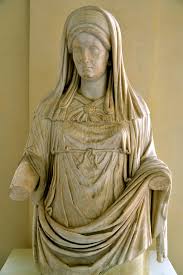
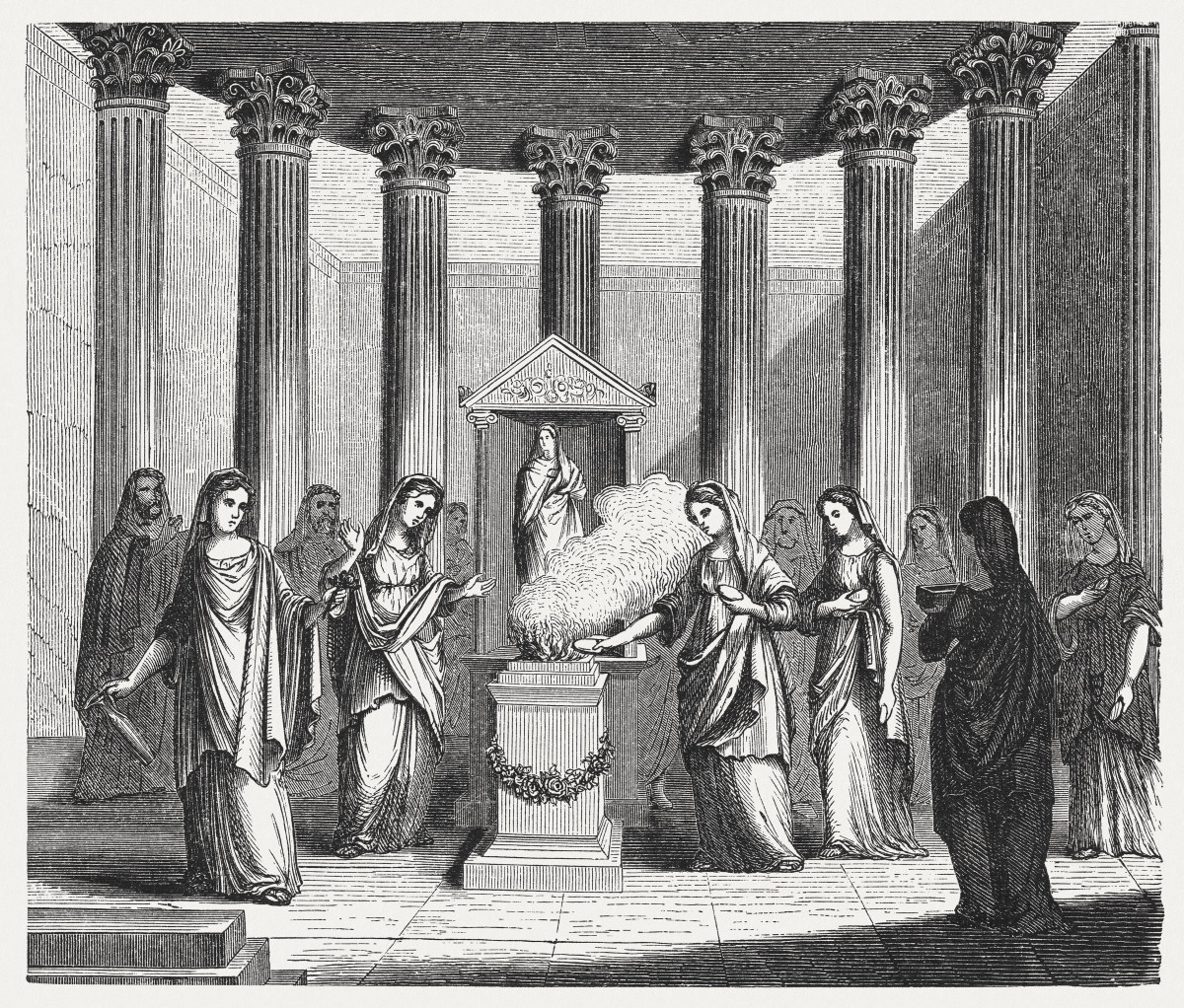
For example, one of the highest posts would have been serving as a vestal virgin, a role reserved to women. Young prepubescent girls entered the service and took a 30-year vow of celibacy. Under pain of death, they were forbidden to have sexual relations during this period. Afterward, they were free to do as they pleased but, as you can imagine, in that time and by that age, her chances for marriage and children would have been slim, so this was essentially a life sentence. In the meantime, they maintained Vesta’s communal hearth in the city of Rome, protecting the central fire of the Roman people.
As for the priests, I have to admit there is not a great deal of information, or, at least, not the kind of information that I desire to know. Everywhere I look, I am told that the Romans did not have a priestly class like you might find in other cultures: that is, a caste or class of men specially set aside and living separate from the other classes of society. And this holds with what I had already perceived about Roman priesthood. For instance, in reading Roman history and literature, you hear about powerful politicians simply being appointed Pontifex Maximus, that is the high priest of the Roman religion.
By the way, the Pope is still known as the Pontiff, or pontifex in Latin.
Anyway, politicians were appointed to this office of high priest, so it was not necessary, as it is now in Roman Catholicism and in the Orthodox churches, to already be a theologically educated priest in order to be elevated to a high ecclesiastical office such as Pope or patriarch. No, the office of high priest was more likely doled out as political spoils. As the encyclopedia Britannica tells us, “almost all Roman priesthoods were held by men prominent in public life."
Even Will Durant, the acclaimed 20th century historian of Western Civilization, just glibly repeats the same information: that Roman priests were not members or products of some theological institute, which taught men in doctrine and trained them to perform the sacraments.
“No special training was necessary,” Durant tells us, “for membership in these sacred colleges.” And he goes on to say that they were “politically powerless except as tools of the state.”
But in the very same paragraph, he goes on to say that “they received the income of certain state lands for their support, with slaves to serve them, and grew rich through generations of pious legacies.”
And, you know, this just sounds like a separate class of men set aside for theological concentration. Even though all sources on the matter keep telling us that the priesthood was just a lot of men appointed politically and not a “separate” class of men.
Consider, when thinking about this, the high requirement for precision in the rites of the roman religion, at sacrifices, prayers and other sacraments. If there was any error, Durant tells us, the rite would start over and be repeated as many as 30 times until they got it right.
Now, this is also valuable information for telling us something about how important perfection of a ceremony was for the Romans. The emphasis was not on morality or on the participants’ genuine, heartfelt love for their deity. What mattered was getting the ritual right and properly manipulating the gods so that you might get your desired results.
But this little fact also suggests that the men performing these rituals must have had some kind of focused, specialized training. They couldn’t have just been random politicians or generals. Perhaps, though, training in the religious rites was a part of every aristocrat’s upbringing.
Certainly this much is true: that fathers were the high priests in their homes. We already know that the little rites and prayers at home were of primary importance to the Romans and fathers were those who led the private religious ceremonies of the home. So it does make some sense that men, those from the upper classes anyway, might have simply grown up with the requisite knowledge and practice required to simply jump into a priestly role at some point in their life as a result of a political appointment.
To better understand Roman religion, then, let us move on to discuss domestic matters: things like marriage, children, the home, and, of course, sex.
(Music)
The religion of ancient Rome was not moral, in the way that we would perceive morality. Indeed, Durant says that “in some ways it was immoral.” But, I think that he might have better said that it was amoral.
It is common for people in Western society today to think of religious practices, even the very mechanical sacraments of the church, as moments in which we must feel something, or the ritual is left without meaning. It is important that “your heart be in it.” People who go to mass or a church service and who don’t walk away feeling as if they had some significant breakthrough in understanding, some moment of epiphany, they will come out later and say that they felt empty, that it was just a meaningless event, with no soul.
The Romans had no such concerns. The purpose of a religious rite, as I stated in the previous segment about the priesthood, was to manipulate the gods. To propitiate them in order to prevent them from harming you or to get them to help you. Yes, the gods were to be feared and respected but, ultimately, they were spiritual implements. You needed to get them on your side not to achieve some elevated spiritual state, not to achieve nirvana, but to acquire the wife that you wanted, to protect your child from harm, to get the high political post that you sought, and, most importantly, to achieve victory in war.
And you won the gods over with proper presentation of the required religious ceremony. Just as you took care of the details involved in making some business transaction, or planting a crop, or organizing a force under your command for battle, you would also assiduously adhere to a religious ritual in order to make true that you had those divine boxes checked when starting any endeavor.
Let’s turn our focus, now, to the concept of marriage. You cannot discuss a religion adequately without looking at how it deals with marriage and with family life. You couldn’t study catholicism, for instance, without considering its unusual dichotomy between the celibate life of its priesthood and its simultaneous emphasis on procreation among its non-celibate faithful.
So, let’s begin with marriage among the Romans.
And keep in mind always my admonition that we are looking at men of the earlier periods of Roman history, not the later empire.
Roman men married young, sometimes even before age 20. There is a simple evolutionary explanation for this. In a period of such high mortality, either through disease, accidents or warfare, the only families and traditions that could have continued to survive from generation to generation would be those that stressed early marriage and that proposed every encouragement of fertility. Any culture that practiced late marriage would have simply been erased over time by the vicissitudes of ancient life.
Marriages were typically, but not always, arranged. Usually, the bride came with a dowry, money and possessions which she then turned over to her new husband. To celebrate the wedding, they often ate a cake together, giving us our modern custom of the wedding cake.
As you might have already learned, or as you might expect, the man was supreme in the marriage and in the family. He was, for the family, the local incarnation of Jupiter, the great father of all.
St. Paul encouraged Christian fathers to love their wives and their children and to treat them with respect, even though the father was still regarded as supreme. There is no such admonition here among the Romans. For the father, there was a wide range of permissible actions. Cato the Elder, a 2rd century BC, Roman statesman, tells us the following: “If you find your wife in the act of adultery, the law permits you to kill her. If she surprises you in the same situation, she may not touch you. The law forbids her.”
The legend of the pater familias is that he was literally permitted to kill his own children if they offended him, and he would not be charged with a crime. And he could certainly kill disobedient slaves without hesitation.
As in virtually every culture, female virginity was prized, and it was expected at marriage, if the couple was young and previously unmarried, that is. After her marriage, there was only one acceptable destiny for a woman: to bear her husband’s children, to rear them, and to die faithful to husband, family and Rome.
Children, of course, were raised with iron discipline, to follow their father’s instructions, to watch him carefully carry out religious observances, and to follow in their parent’s footsteps.
In this way, Will Durant reflects, Roman religion did provide moral guidance. It aided in rearing children in a milieu of piety, which prepared them for “discipline, duty and decency.”
But this characterization of the ancient Romans is probably overdone. They were also people. Men have always and everywhere, in every culture, found ways to show affection to their wives and children, no matter what societal paragons modeled for them. There is no record of a pater familias ever killing his own children with impunity. There are countless attestations of Roman children recalling their lost fathers with tearful affection. And Frank Abbot, the early 20th century author of a book titled The Common People of Ancient Rome, records this touching tribute found on the tombstone of a Roman woman who had had two husbands during her life:
-You were beautiful beyond measure, Statilia, and true to your husbands. He who came first, if he had been able to survive fate, would have set up this stone to you. While I, alas, who have been blessed by your pure heart these sixteen years, now have lost you.-
The Romans were tougher than we are today, there is no doubt. Their gods were remote, unfeeling. Their priests applied themselves to ceremonial excellence, not to spiritual or psychological guidance. Their society left little leeway for deviation from a strict family life.
But, like all of us today, the Romans also ached for connections, for affection, for remedies to the loneliness of which the Bible reminds us when Isaac, in Genesis chapter 24, brings Rebecca into his tent:
“She became his wife, and Isaac loved her, and was comforted.”
(Music)
Now some of this may seem at odds with what you already know about roman mythology. It may also seem off-topic. You may have been hoping for some amusing accounts of Jupiter rollicking with random human women, or the stories of Narcissus or Ulysses as told through a Roman lens.
We will get to such things. But those things, you should know, are not really the heart and soul of Roman religious thought. They are stories which the Romans adopted after their encounters with the Greeks. Yes, they always shared the same Indo-European gods to some extent, even before their cultures clashed in the 3rd and 2nd centuries BC. But the Roman Jupiter was not simply a renamed Zeus. Not originally. He was more like the Dyaus Pitar of the Hindu Vedas, a remote sky god, without specific form, who had fertilized the Earth mother with his rain and brought forth life.
The Aeneid I have already discussed. The Metamorphoses of Ovid, with its often scandalous tales of divine naughtiness, will come next. But the Aeneid and Metamorphoses only became canonical as Roman mythology in the middle ages. That is why we know them so well, because these are the documents that were preserved and copied and recopied by monks down through the ages, if for no other reason than simply because the West spoke Latin and so it was the Latin, Roman versions of these stories that were passed on. The Greek names and myths only became rediscovered, really, after the Renaissance.
These stories, however amusing, do not accurately represent the earliest Roman sentiments regarding religion. If anything, the spirituality of the Roman Catholic Church, particularly in its earlier days, would carry on the real Roman tradition.
Think of how many things about the ancient Roman religion as described here in this podcast, sound like characteristics, or criticisms, anyway, of the Catholic Church. The importance of rote prayers, of precision of ceremony, the priesthood, the special garments for priests, the Pope as Pontiff, the celibacy of nuns, who are the Church’s own vestal virgins, the trinity, the tide of spiritual beings surrounding the ancient Romans is comparable to the army of Catholic saints, who also number in the thousands, and so on.
In the episode on Greek religion, in the 2nd podcast series, I made it my thesis that Christianity was essentially a Greek mystery religion, the one that won out in the long run. But it is also a continuation of the ancient Roman religion. I continue to uphold the idea that there was no religious break with the past. Christianity is, indeed the faith of our fathers, even those fathers that lived many thousands of years ago. Just as with the distinction between Greek and Roman mythology, the names have changed but there is a common heritage underlying the identities of our gods.
Now, we have, already, to some extent, begun to delve into the character of the typical early Roman, mostly with regard to issues that directly deal with or skirt the topic of religion. There is much more to say about the men and women and children of this era. We will come to that soon.
In the next episode, however, we will indulge ourselves one last time in the tales of mischievous gods and men as found in the Metamorphoses of Ovid. Because, despite all my emphasis on the severe and the grave in this episode, those tales are also a proper part of Roman mythological and religious expression.
Until then, I than you for listening to the Western Traditions podcast.