Episode II.39 - Alexander the Great: Hegemon of Greece
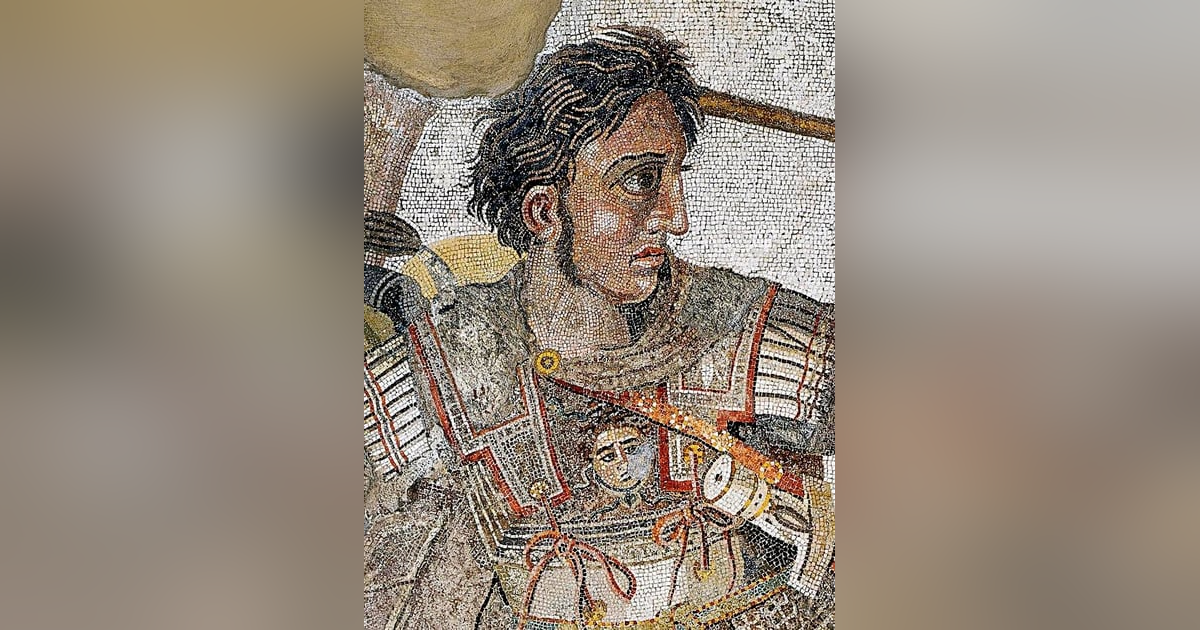
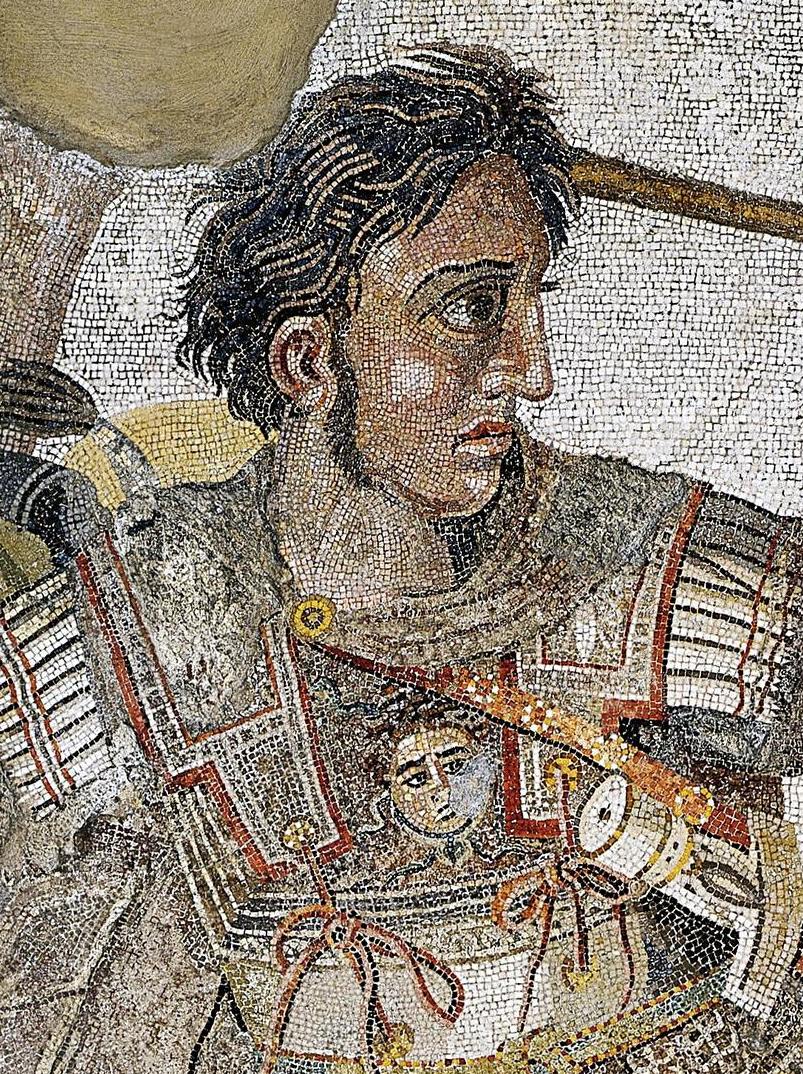


The youth of Alexander the Great. His strange mother Olympias. His friends Ptolemy, Nearchus and others. Cleopatra , Darius III and the fall of Thebes.
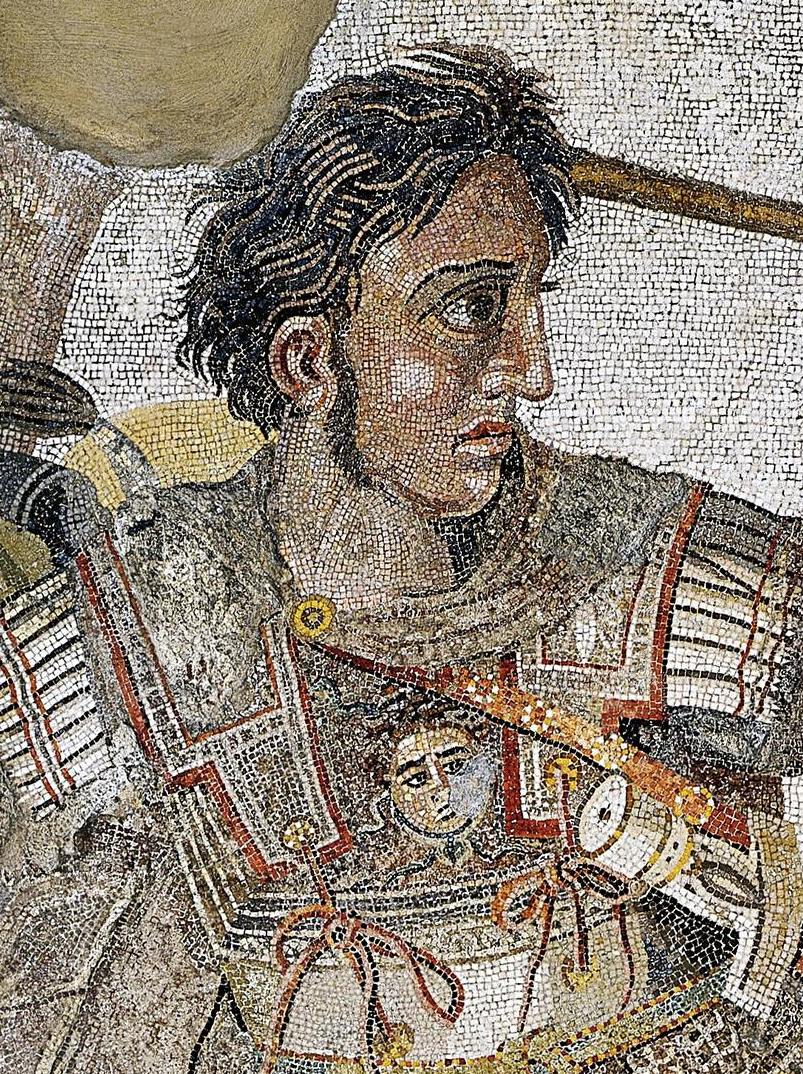
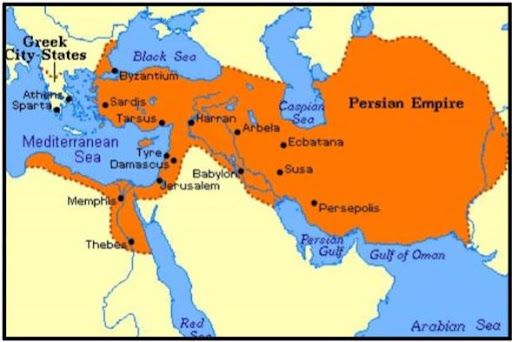
RECOMMENDED READS - Click Image for Link:
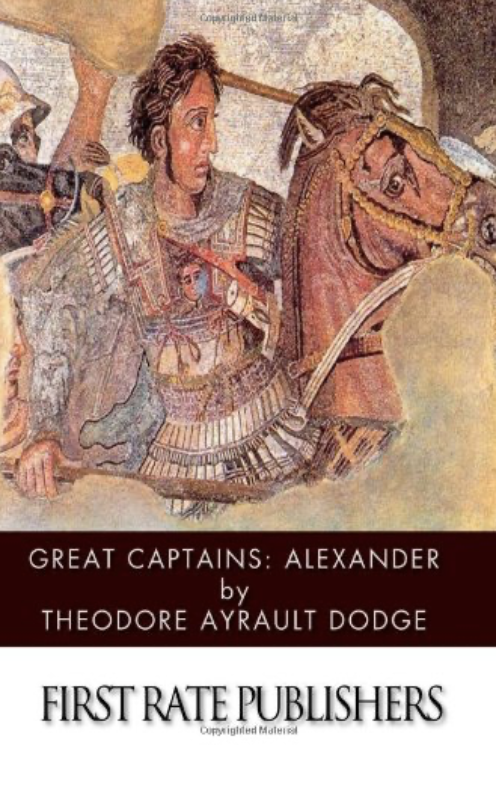
(Music)
“Thus ended the proud city of Epaminondas.”
-Theodore Ayrault Dodge, describing the massacre and demolition of Thebes after Alexander punished it for rebellion.
(Music)
Hello and welcome to the Western Traditions Podcast. This is the 39th episode of the Greek Sun, a podcast series about ancient Greek history.
This episode will discuss the youth of the man remembered to history as Alexander the Great. We will also review Alexander’s initial conquests in mainland Greece before he crossed into Asia with the army he inherited from his father, Phillip II of Macedon, in 334 BC, when Alexander was just 21 years old.
Before we begin, please help to support the podcast by liking, sharing, subscribing or commenting on whatever platform that you use to listen. This podcast is found on YouTube, on Podbean, on Spotify, Amazon Music, iHeart Radio, FM player and many other platforms.
If you can, please help support the podcast financially through the Paypal or Patreon options on my website, at western-traditions.org. Direct, one-time contributions through PayPal are always welcome, of course, but Patreon supporters receive newsletters, updates and behind-the-scenes information about the podcast, and have the opportunity to ask questions and interact with me directly.
If you are already a Patreon supporter, I thank you from the bottom of my heart. It is a great pleasure to write this podcast, and you make it easier.
And now, let’s turn to Alexander the Great, before he was Great, when he was just a young man, suddenly fatherless, and surrounded by peril in a country primed for war, but on the brink of dynastic chaos…
(Music)
In the previous episode, we learned about the rise of Alexander’s father, Phillip II of Macedon. Phillip was suddenly and unexpectedly assassinated, in 336 BC, on the eve of his departure for the long-prepared conquest of Persia.
Now, as I’ve mentioned before in this podcast, royal succession during most of human history, and in most places, did not work out as neatly as it is portrayed in our fairy tales about the days of kings and queens. Typically, in any royal family, there was someone who was looked upon as most likely or more suited to take the throne after the death of a monarch, but there was no legally-protected structure or process surrounding the succession to the throne. The firstborn son of a monarch didn’t really have any more “right” to the throne than anyone else. That may be hard to believe today, when we see on film or television the flawless, beautiful transitions of monarchs such as the last century’s elevation of Elizabeth II to the throne of England, or the more recent enthronement of her son, Charles III, for example. But, in the past, succession was much more often a violent, bloody debacle.
So how did successions usually work, when the monarch died and the throne was suddenly empty? There usually followed a period, brief or long, of chaos and conflict.
You have heard the phrase, “the king is dead, long live the king.” This may sound odd, somehow contradictory, to our modern ears but the phrase is actually one of relief, or even joy. It was said by people when one king had died and another had been firmly established on the throne. You see, after the death of the king or queen or other monarch, regular people typically suffered in the chaos that followed. Bands of warring soldiers might cross the land, fighting for one aspirant to the throne or another, and steal or kill in order to sustain their armies. Thus, commoners were elated when there was an established king, because then order could be restored.
All the better if this interregnum, a Latin phrase which literally means between the kings, if this interregnum was short.
When Phillip II of Macedon died, there was more than the usual uncertainty. For some years, it had been taken for granted that Alexander would be the heir to the kingdom, that he would someday become Alexander III, there having been two Macedonian kings named Alexander already.
But, after returning from victory in battle at Chaeronea in 338 BC, where his son Alexander had, in fact, been virtually his second-in-command, Phillip had married Cleopatra, the niece of one of his generals. Now, Cleopatra was a full-blooded Macedonian, not a foreigner, like Alexander’s mother, Olympias. And Cleopatra’s father, Attalus by name, noted this genetic fact at the wedding celebration, and then he made a toast hoping for a “lawful successor” to be born of the union between his daughter and the king. Obviously, Attalus relished the idea of becoming the grandfather of the future king.
Alexander was present for this toast, and recognized the threat to his place in the line of succession. An ugly scene ensued. The historian Plutarch describes Alexander throwing a cup of wine at Attalus and Phillip drunkenly falling over in an attempt to intervene.
Now, keep in mind that Alexander was already not alone among Phillip’s sons. He was not the next-in-line to the throne by default. He had had to outshine his many siblings. Indeed, his mother, Olympias, was only Phillip’s fourth wife. Phillip had children by many women at this point. But Alexander had certainly earned at least a prominent place in the growing kingdom, if not the full role of crown prince. He had led the left wing at the battle of Chaeronea, after all, and no one else could say that. His pride, and his expectations of future power, were well-founded.
Nevertheless, after this debacle at the wedding, Alexander and his mother fled to Epirus, where Olympias’ brother was king. But Phillip called Alexander back, and six months later the young prince had returned to Macedonia.
But the succession matter did not clear up. Soon, Alexander learned that another of Phillip’s sons by another woman was going to marry the daughter of a Persian Satrap. This seemed to be a threat as well. A Macedonian prince marrying into the Persian nobility might be setting himself up to succeed Phillip after he conquered part or all of Persia. So Alexander interfered with the arrangements and ruined the potential marriage. His father, Phillip, scolded Alexander and resorted to sending most of Alexander’s closest friends into exile.
And who were these friends, these companions of the future conqueror? Hear their names now for the first but not the last time: Harpalus. Nearchus, Ptolemy and Erygius. All were destined for glory. Two would die violently in the coming years. One, Ptolemy, would become Pharaoh of Egypt, and found a dynasty lasting nearly 300 years. Cleopatra, the Egyptian Queen of fame and legend, was the last successor to his throne, and she would not be deposed until 30 BC, when she committed suicide after her lover Mark Antony, died in battle versus Octavian, who would become the first Emperor of Rome.
But that is the future. We’ll come back to these friends in a moment. For now, in 336 BC, Alexander was alone and under suspicion. Then, unexpectedly, his father was assassinated. Surely, all of Persia breathed a sigh of relief. The growing Greek threat had been extinguished. The son of Phillip, who had been such a powerful menace to Persian supremacy, this son of Phillip was now alone in the world.
But all of Alexander’s work alongside the troops of his father's army over the years, all of his valor and leadership, all of this paid off. The nobles and generals and soldiers who were present when Phillip was assassinated, all these immediately proclaimed Alexander king. There would be no succession battle, there would be no chaotic interregnum this time.
We will see this, too, as a theme often repeated in succession battles in the histories of other nations. The one with the best chance of seizing and retaining control of the throne is often the one whom the army likes best.
Now, Alexander wasted no time in securing his hold on power. Indeed, he never wasted time in general, in any endeavor. He immediately ordered the murder of Attalus, the general who had scorned his right to the throne two years before. He also executed Amyntas IV, the rightful heir to the throne that Alexander’s father Phillip had usurped and whom Phillip had for so long permitted to live.
And then Alexander sent for his friends to return to the capital. He had great plans in mind for them.
Olympias, Alexander’s mother, didn’t waste any time, either. She ordered men to find Cleopatra, Phillip’s most recent wife, and Cleopatra’s daughter, and she had the two of them, mother and infant, burned alive.
But even with his closest enemies out of the way, there was much work to do. Phillip had been recognized hegemon of the Greeks, their warlord, their military commander, when matters concerned the Persians. But the alliance of all these city-states, Corinth, Thebes, Athens and others, their allegiance was to Phillip, not to Macedon, not to just any ruler of that country. They had sworn allegiance to Phillip, not to anyone else. So they immediately resumed their independence.
But, if Alexander was going to fulfill his father’s dream of conquering Persia, he would need every ounce of Greek strength. The Macedonians were not enough. So, 20 years old, he assembled 3,000 cavalrymen, and rode south, to battle, and to his destiny.
(Music)
Let us pause, now, for a moment, and consider the milieu, the friends and the ancestors of Alexander. After all, he did not spring out of nowhere, with this indomitable sense of purpose, this natural valor, and all the qualities that inspired the unquenchable loyalty of an entire army and civilization for the next 13 years. No, Alexander was a product of genetics, a product of training, and a product of his environment.
As I described in the last episode, Macedon was barely Greek, and most “real” Greeks, like those living in Athens, or Thebes, did not consider Macedonians to be worthy of their association. They had only submitted to Phillip of Macedon due to his military superiority. They never admitted his cultural worthiness.
Indeed, at the time of his father's assassination, Attalus, the general who had spurned Alexander, he had been in contact with Demosthenes of Athens, the famous orator who had routinely spoken against Phillip. Rumor was that Attalus was going to go over to Athens and support these “real” Greeks in rebelling against Macedonian rule.
But why were the Macedonians so unacceptable to the cultured Greeks of the South?
For starters, the Macedonians were simply rural. Pella, the capital of Macedon, was nothing in comparison to urban settlements like Athens and Thebes. Macedon was home to a scattered population of mostly agricultural and pastoral people. Now, yes, most people in Athens and Boeotia and other regions in southern greece were also probably farmers, or fishermen or herdsmen or of similar, simple background, but they participated in a society centered around cities of great history, the locations of many powerful Greek Myths. Heracles and Theseus and other heroes transited the environs of Athens and Sparta and Thebes and Delphi and so on. There weren’t many references to Macedonia in the annals of Greek history.
In fact, during the prelude to the Persian War, the Macedonians had been subject to the Persian invaders and had cooperated with them wholeheartedly. So if the nature of “Greekness” was to be opposed to Persia, and that had certainly been the theme of history for the last 150 years, then Macedon could hardly stand at the side of the Greeks of the south, who had defied Persia even when it cost them their homes and their lives.
And Macedonia, while speaking a variant of the Greek language, was far to the north, on the very outskirts of Greek culture, and surrounded by strangers and barbarians of other cultures, who, yes, spoke related Indo-European languages, and sometimes even worshipped similar gods, but whose practices and ways were strange and even disturbing.
Alexander’s mother was one of those barbarians. She was still, technically a Greek, though, and a Greek speaker.
Olympias, Alexander’s mother, was born in Epirus, a Greek kingdom to the northwest of the Greek mainland. Her father was King Neoptolemus, who traced his ancestry back to Achilles. So, as far as that goes, they were reliably Greek. The people of this realm were known as Molossians, and they would continue to prove their authentic Greekness in the next century, when Pyrrhus, King of Epirus, fought the encroaching Romans to a standstill and delayed Greek submission to that growing threat from the West.
But there was strangeness here as well. Mystery rites abounded among the semi-savage peoples of these regions. I spoke of some of the primary mystery rites in the episode on Greek religion. All mystery rites are strange by modern standards, even the watered-down, garden-variety Catholic mass that still remains today as an echo of the more romantic, mystifying rites of previous centuries.
Olympias was allegedly initiated into a mystery rite attached to the worship of Dionysus, but which also apparently involved snake worship and is even described as “orgiastic”, which doesn’t necessity mean a sexual orgy, though it doesn’t preclude it. Christian ceremonies of the early centuries would also likely have been described as orgiastic, in that worshippers were overcome with emotions and surrendered to the spirit in displays of ecstatic exhilaration. Such affairs, hooting and hollering masses of people given over to apparent madness, would have been loud, chaotic, even frightening.
But these rites and religions in the hinterlands of ancient Greece were the branches of a mystical trunk that has its roots in much more ancient gods, gods that predate the Olympians, and probably the Titans as well. Nameless Mother goddesses, gods of mountain and river, legendary creatures, and mystical rites that devolved into displays of sacred passion, in which identity and reality were blurred, and lost.
And Alexander was child of a woman who exemplified the archaic barbarism of these peoples. Olympias was not even her real name, actually. She’d been called Polyxena at birth, but over her life she would take on several different names, depending on the situation, molding into each new arrangement of life easily, changing her face, her name, but remaining true to whatever darkness dwelled at her core, just like some hidden mother goddess of forgotten times, whose name may have changed but whose face stared up out of the depths of the past ever the same. She would always be Alexander’s tender mother, just as she would always be the murderess who ordered a woman and child to be burned alive.
With such a mother, Alexander was considered half-wild, even in the eyes of his fellow Macedonians. As if he possessed some feral streak, some savage influence inside him.
Now, it would be natural for a wealthy, privileged, royal son to attract friends. And this certainly happened for Alexander. Like all such young men, there was the usual horde of sycophants and would-be followers surrounding him. But perhaps it was this wild element in him that drew some of them so close, made them so dedicated.
Who were they, these close friends of his, his friends from childhood on up? Let us briefly study them because they will all be key figures at one or more points in the near future.
Harpalus was, like all of Alexander’s close friends, a young man of aristocratic birth. He was not, like most of the other friends, a capable warrior. He suffered from some unspecified lameness in one leg. Alexander trusted Harpalus with the finances of his ventures, and this childhood friend would go as far as Babylon, where he would take charge of the treasury of the Persian Empire in 330 BC, just six years after Alexander came to the throne of Macedonia.
Nearchus, another friend, would serve Alexander in a variety of ways throughout the conqueror’s campaigns, which would last from 336 BC until 323 BC. He was one of many officers who were companions to Alexander without holding a given rank or station over any unit of men. Instead, companions like Nearchus would be tasked with leading ad hoc arrangements, perhaps given command over several units of soldiers as a new task force, or to rule as a governor in a newly conquered territory. Nearchus would find himself most often in charge of naval matters, blocking the Aegean against the Persian, or, at the farthest reach of Alexander’s conquests at the border of India, where a fleet was constructed on the Indus River. Nearchus would serve as admiral of this fleet until its return to Babylon.
Alexander’s friend Laomedon, was familiar with the Persian language. He was given charge of the captives taken in war during the invasion of Asia. Though little else is known of his importance among the conqueror’s compainons, when Alexander died, Laomedon was given the land of Syria when the Empire was divided up by his surviving friends.
Erygius, like Nearchus, was employed by Alexander in different ways throughout the conquest of the Persian Empire. At one point, he was in charge of the allied cavalry, that is, the contingent of horsemen who were not native Macedonians. Later, he commanded an entire third of the army as it invaded norther Persia. Erygius would die in combat before Alexander’s triumphant return to Babylon in 324 BC.
Finally, let us speak of Ptolemy. While it is very likely that he was of distantly royal birth, there are actually ancient rumors that he was an illegitimate son of Phillip II, and therefore half-brother to Alexander. But this story may have been concocted by Ptolemy to legitimize his later usurpation of the throne of the pharaohs in Egypt.
Ptolemy would command the entire left wing of the army, as Alexander had done for Phillip just a few years before, at the battle on the river Issus in 331 BC. Later, he would even be entrusted with independent commands of portions of the army.
We will discuss Ptolemy again when Alexander’s brief Empire comes to an end and is divided up amongst his companions.
(Music)
Most of these friends, and others who would become inseparable from Alexander, marched south with him in 336 BC to reassert control over the Greeks.
Alexander was quick to show off his own flare for tactics and the stamina of his men. The Thessalians tried to stop him from riding deeper into Greece by blocking a mountain pass. Instead of bloodily carving his way through some of the very men whom he would later need to conquer Asia, Alexander ordered his own men to ride over the mountain that night. The next day, his Thessalian opponents woke to discover that Alexander and his Macedonian cavalry were now in their rear, and they promptly surrendered and joined forces.
And this was a pattern that would continue throughout much of Alexander’s military campaigns. When enemies surrendered, especially if they surrendered quickly, Alexander would generally honor them with immediate admission to his realm and to his armed forces, without the usual sacking of cities or execution of prisoners.
With this combined force, he continued south and called for a meeting of the Amphyctionic Council, which had first recognized his father as Hegemon of Greece. This meant that all of Greece, or at least those cities represented at the council, accepted him as warlord in any conflict against Persians.
Notably, though, neither Thebes nor Athens sent representatives to this council. But, as soon as it was over, Alexander and his growing army marched against Thebes and then both these stubborn pillars of classical Greece capitulated and accepted his overlordship.
He would thus be able to count on their financial and logistical support once he invaded Asia.
Only Sparta remained independent. Alexander could have forced his way in to Laconia and subjugated the Spartans, but it would have been pointless and resulted in needless bloodshed and time lost. Left alone, Sparta would not be a threat in his rear, and, tough as they remained, they offered nothing that could contribute to the lethalness of his phalanxes.
It was now Spring of 335 BC, but still Alexander could not depart for his meeting with destiny in Persia. As bold and daring as he was, Alexander was also meticulous. Even as he was recognized Hegemon, there were uprisings among peoples who had been allies to Macedon in the north. The Thracians revolted , and then so did the Illyrians and others in the north.
In what became known the Danube campaign, Alexander led his fine-tuned army against armed forces much smaller and far less well-equipped compared to his own. And, again, this would demonstrate his own capacity for dealing with matters both small and great. He could have rushed off to the great war with Persia, sung about and dreamed about for centuries. But he was not afraid, nor was he too impatient, to tie up loose ends in Greece, in Europe, before turning his army loose against the enemy it had been training to fight for decades.
So Alexander fought against barbarians armed with daggers and dressed in animal skins. He climbed and fought his way through passes in which the enemy rolled wagons down on him and his men. He used fontal assaults, he used flanking maneuvers, he besieged towns, he confused and tricked his enemies large and small, he sent his five thousand of his men swimming at night across the Danube with flotation devices made from hides and hay to surprise the enemy on the far shore, who had assumed he would need a fleet and several days to prepare an attack.
And when I say Alexander did these things, I mean just that. Alexander personally fought in most of his battles. During one chancy moment years later in Asia, he would actually be the first atop the wall of a besieged city and terrify his own men with concern for his safety.
And here he took all these risks and made such great efforts just in order to secure a frontier virtually barren of real resources, but which would threaten his rear and subtract from his concentration when it came time to face the Great King on some plain of battle in Asia.
And then Thebes revolted.
Alexander was hundreds of miles away, with his army entrenched in battle with northern barbarians. Meanwhile, the very foundations of his alliance were crumbling and Persia still waited in the East for his conquest. Once again, everything he and his father had dreamed of was in peril.
Thirteen days. That is how long it took Alexander to disengage his army and march all the way from the Danube to Thebes, over mountain passes and across plains, to bring himself before the stunned Thebans, who had not expected to face the consequences of their rebellion so quickly, before any other assistance could arrive. The Athenians had already put reinforcements on the road to aid Thebes, but they were still far away.
The end result was a total massacre. It is said that Alexander later repented of this, and, as I stated before, his usual treatment of resistance was to offer generous terms in exchange for a quick surrender. But, when his initial requests for the surrender of the main perpetrators of the revolt was refused, he unleashed his army, and the city fell. Thousands were massacred, women and children included, and some 30,000 were sold into slavery. In the aftermath, nearly every building in the city was razed to the ground.
It was now September of 335 BC. All remaining dissent in Greece was quashed. Athens bowed and scraped, begging for pardon. Demosthenes, the Athenian statesmen who had railed constantly against the Macedonian cause, only narrowly escaped being turned over to Alexander for execution.
Sparta was quiet. And so was all of Greece, really, as Alexander turned his army around and marched northward again, now determined to embark on his proposed conquest as soon as Spring came.
Greece would remain quiet for more than a decade, too. As the historian Theodore Ayrault Dodge puts it,
“For the coming dozen years, until Alexander’s death, the history of Greece is practically a blank.”
The land of heroes would become, for a time, nothing but a sideshow to Alexander’s magnificence.
As he marshaled his new model army in Macedon that winter, preparing to conquer the greatest empire in the history of the world, Alexander was 21 years old.
(Music)
Alexander was much more than a warrior, though he was the quintessential military leader. No man will ever be more inspired by leadership than his Macedonians. Alexander nearly always fought at the front of his army. He strategized before conflicts, and gave orders to trusted lieutenants, but then always plunged into combat personally, roaring alongside his men as they flung themselves into battle.
But he was also a man capable of thought, of reflection. When Alexander first came south to subject all of Greece to his will, there is a legend that, in the city of Corinth, he encountered Diogenes the philosopher, who by then would have been around 70 years old.
Diogenes was famous for having lived a life of intentional poverty, disregarding the “modern” world’s expectations as pointless vanity and pretense. He lived in the streets, begged for food, urinated, defecated and even masturbated in public, living without personal possessions, even going so far as to shatter the bowl he used to drink out of, after observing a poor boy in the streets drinking out of his own cupped hands. He lived, in the streets of Athens and other cities, a life of complete opposition to established customs, as a sort of living philosophical judgement on both propriety and excess. He held no one in regard, respected no customs.
According to the story, Alexander encountered Diogenes one morning in the city of Corinth, where the philosopher lived out the last years of his life. Diogenes was lying on the ground, taking some sun, as the saying goes. Alexander knew well that we has in the presence of a famous mind, and asked if there was anything that he could do for Diogenes.
The reclining philosopher replied, “Yes, get out the way, you’re blocking the sunlight.”
The conqueror, who might have easily perceived this as an insult and killed the man with impunity, simply laughed and remarked, “If I could not be Alexander, I would be Diogenes.”
How did Alexander come to possess such equanimity? Why was the son of a warlord, and a blood-soaked conqueror himself, why was he inclined to reply so philosophically to Diogenes’ curt dismissal of his presence?
The answer might lie in Alexander’s upbringing. Not long before this encounter with Diogenes, when Alexander was perhaps 12 or 13, his father Phillip had placed him under the instruction of the one and only Aristotle. Yes, the author of the Ethics, the Metaphysics and so many works of logic and politics had been charged with the education of young Alexander.
We do not know much about this period in Alexander’s life but we know that Aristotle schooled not only him but many of the friends whom I have already mentioned, as well as the young men who would grow up to become some of Alexander’s best generals, such as Hephaestion and Cassander.
These young boys learned Homer. They read the Iliad and the Odyssey with their famous schoolmaster Aristotle. They watched and read the great plays. Alexander was able to quote the poet and playwright Euripides by heart, and he carried Aristotle’s own annotated copy of the Iliad with him when he departed to conquer Persia. Obviously, that great tale of struggle and battle on the shores of Asia would have appealed to the man who planned on conquering the same land and more.
But Alexander learned more than literature. Aristotle taught his students about biology and logic and science and philosophy. Not so much that they might become men of learning, but that they might become more than soldiers, that they might become leaders, who knew more than how to sharpen their swords and swing them.
Thus, when Alexander embarked on his great adventure, perhaps the greatest adventure of all western history, he took with him a whole cadre of such soldiers, men educated in both word and sword, and he also took with him a full complement of philosophers and scientists, astronomers, writers, biologists and more, men who would marvel at, study and write about what they found in this exotic land.
This collection of thinkers would accompany the army into danger, and help to not only being wisdom and knowledge form the East back into Greece, but to also help impart Greek customs and thought into Asia. The result of this intermingling of East and West, as we shall see, would be Greek Buddhists and Indian philosophers. There are, today, images and statues of recognizably Greco-Roman gods and heroes accompanied by Hindu deities scattered around the ruins of Afghanistan and Iran. And the contemporary philosophy of Greece would be forever impacted by an encounter with the already ancient religions and philosophies of Persia, India and other lands that both soldier and scientist would soon see.
(Music)
In the Spring of 334 BC, then, Alexander and his army were ready. The armed troops probably numbered somewhere around 35 or 40,000. It is not known how many civilians and camp followers accompanied them. In more ancient times, followers often amounted to an equal number to the troops that they supported, but Alexander’s father, Phillip, had purposefully organized his army to minimize the need for extra mouths to feed. Still, it was likely that there were at least several thousand such non-combat, support personnel following the troops into Asia, among them cooks and whores, philosophers and blacksmiths, horse grooms and quartermasters.
The troops were mostly heavy infantry, tens of thousands of men packed into hoplite phalanxes. But probably on ly 10,000 or so were actually Macedonians. The rest were allies and mercenaries.
There were the light troops of various allied nations as well, but only a few thousand, maybe five thousand at most, of cavalry. And of these cavalry troops, again, probably less three thousand were Macedonians. The rest were also allies and mercenaries.
Yet Persia had several hundred thousand troops, maybe more than a million, actually. And their cavalry, from Persia and their allies, numbered in the tens of thousands.
But Alexander was not merely outnumbered. The Great King of Persia, Darius III, had access to the wealth of millennia that had accumulated in the Near East, where civilization had brewed for many thousands of years. Alexander, when he began to ferry his army across from Europe to the shores of Anatolia, was in debt. He was broke, actually. He and his father had borrowed money for years perfecting their army for one great day.
Alexander was gambling everything on victory.
And the significance of this gamble was compounded by ignorance. Not ignorance in terms of education, but in terms of geography. Sure, Greeks, such as Xenophon and the ten thousand, had traversed the interior of Mesopotamia some decades ago, but they had looked with soldiers’ eyes. And other Greek mercenaries had since worked among the Persians and returned with tales of distant lands.
And this was helpful because soldiers were going into battle there again and would need these soldier’s recounting of terrain and enemies. But Alexander was going to conquer and settle the land, to appoint governors over foreign cities and to deal with a thousand nationalities. In a way, Persia, especially the farther reaches of its empire, was quite unknown to Alexander and to all Greeks. It might as well have been a fantasy land of witches and goblins and monsters. They had no idea what they were going to encounter, and were trusting their swords and their minds to help them navigate the unknown.
The gamble involved the whole of Greece’s destiny as well, because Alexander had not reproduced yet. His father’s advisors and generals, men such as Parmenio and Antipater, about whom we will soon hear a great deal more, they had urged Alexander to marry and wait for an heir to be born before leaving to make war on Persia. But, as detail-oriented as the young man was, this was one matter that could not delay his progress. Alexander had no time now for matrimony and child-rearing.
It was time to conquer Persia.
(Music)