Episode II.37 - Greek Philosophy VI: Aristotle
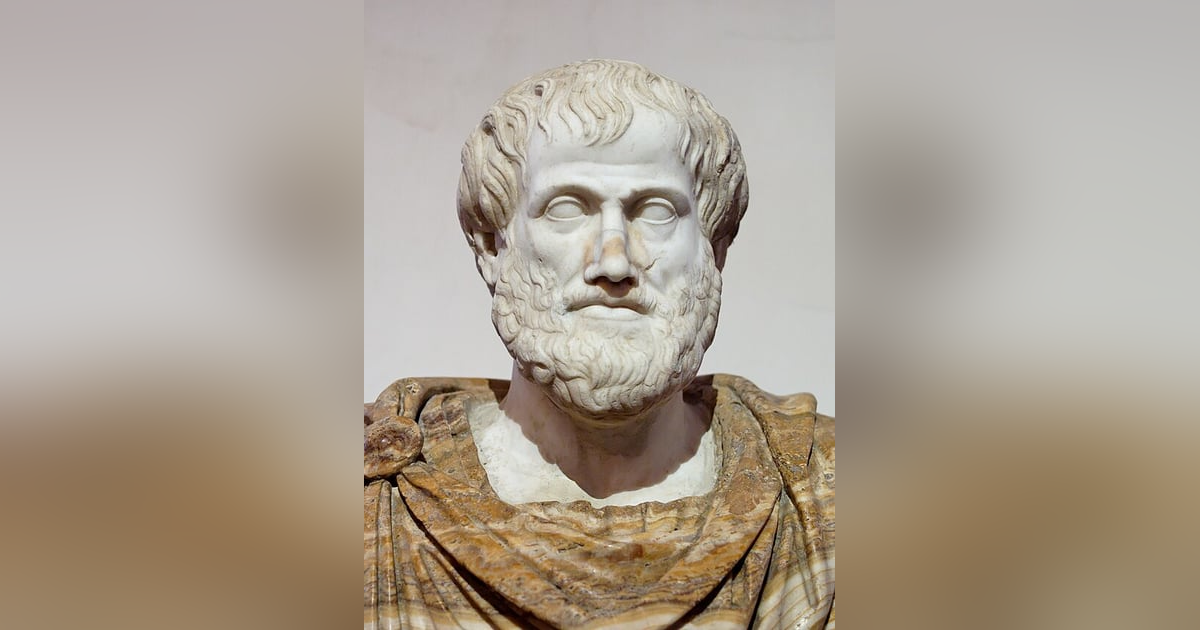
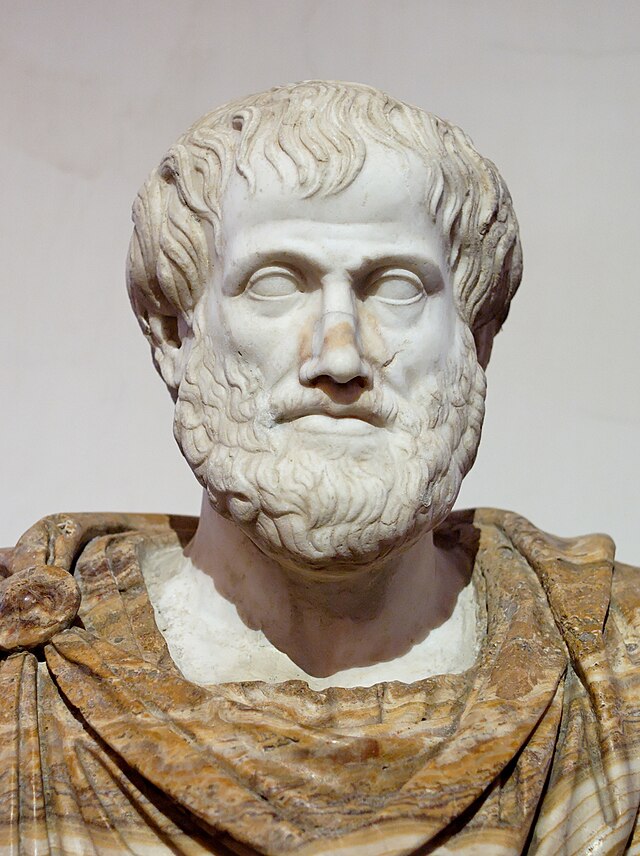


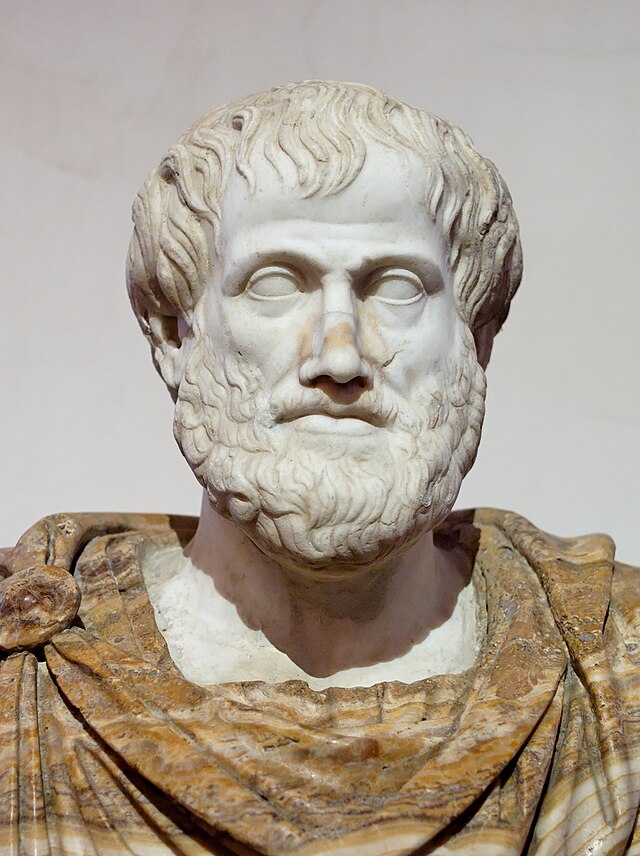
The philosophical works of Aristotle. Metaphysics, Ethics and Politics.
RECOMMENDED READS - Click Image for Link:

Episode II.37 - Greek Philosophy VI: Aristotle
(Music)
-Wisdom is a science of first principles.-
From Book 11 of Aristotle’s Metaphysics.
(Music)
Hello and welcome to the Western Traditions Podcast. Today’s episode is the 37th in the series about ancient Greece. This episode also marks another critical turning point in history. Today we will end the second unit of the Greek series, as history prepares for the advent of the Macedonians, who will change not just Greek history, but also the history of the world.
I have divided the Greek series into three “units”. If you’ve been listening for some time, then you may know that I have a background as a teacher, so my approach to the podcast is usually in terms of curriculum. In my mind, I see the layout of the past and future episodes primarily as “semesters” and “years”, terms and units and so on. The core eight series of the podcast cover what I imagine to be eight semesters of a history curriculum. They begin with the ancient world and end with a semester, if you will, about contemporary times, essentially about the 21st century.
So, this episode ends the second unit of the Greek semester, so to speak, and the next Greek episode will begin the final, short unit about how Alexander the Great spread not just Greek military power around the known world, but also disseminated Greek culture into the ancient Near East and beyond.
At this juncture, then, I want to thank all my listeners, and, in particular, my patreon supporters, who sustain my motivation for doing this work, which will take decades to complete, and which may very well be my swan song. I hope that these podcasts continue to interest you and that you spread the word to like-minds.
And now, let’s turn to that last Great mind of the classical period in Greece, and perhaps the first Great mind of the historical period that followed.
Aristotle.
(Music)
To understand Aristotle, and, possibly, to truly understand anything, one must be familiar first with his collections of works known as the Organon: six different pieces of writing, essays if you will, about the matter of logic. We have already visited this work of Aristotle’s in the episode about his contributions to Greek Science.
From there, it is possible to venture into reading some of Aristotle’s much more famous works, such as his Metaphysics.
Often referred to as The Metaphysics, this text searches some of the same ground covered by Plato and Socrates, but in the Aristotelian fashion.
Now, let’s address the distinction between Aristotle and Plato. A lot is made of this by people who only know a very little about philosophy, as if Plato and Aristotle were diametrically opposed, and usually someone with a banal intellect will try to reverse-engineer some sort of dichotomy between right-wing and left-wing ideology among these philosophers.
Typically, people will say that Plato was more abstract and Aristotle was more empirical. And there is some truth to this. But, really, Aristotle was a pupil of Plato’s school, and this shows in his work. He veers off into his own perspective and interests, yes, but he is still absolutely a philosophical descendant of Plato’s. And to say that Plato was abstract is somewhat absurd. Yes, there are dialogues which deal in abstract values, but the primary concerns of Plato and Socrates, his mouthpiece, were quite mundane, as in, based the real world. The Republic, after all, one of Plato’s longest works, is an attempt to apply the concept of true justice to a real functioning government.
So, the truth is that both Plato and Aristotle ventured into abstract and real-world interests, and this is not really by choice, Anyone who deals with ethics, with philosophy, understands that all our laws, applied in real circumstances, were developed, in abstract thought, about things like justice, equality, fairness and so on, and then applied to our own societies.
The opening line of the Metaphysics is as follows:
“All men by nature desire to know.”
Note the use of the verb ‘to know’ in the intransitive sense. It is not, all men desire to know math, to know God, to know how to survive, to know how how to learn. All men desire to know. Period. In some translations, this is given as “All men desire knowledge”.
And this is, as Aristotle says, by nature.
It is easy to pass over a sentence like this without recognizing that it is an encapsulation, a summation, of an entire way of looking at things, of understanding life. It tells us something about the philosophers view of his fellow man, and it is surprisingly a high valuation.
I say surprising because it is also clear that, as with many other philosophers, Aristotle does not generally think much of the run-of-the-mill man. In another of his famous works, the Nicomachean Ethics, Aristotle elaborates on how men can lead three different types of life. The top two are the political and the contemplative life. As for the third rung on this latter, Aristotle does not even bother to name it in the given passage. He simply prefaces the whole thing by saying that
“Most men, men of the most vulgar type, identify happiness with pleasure”
And
“The mass of mankind are quite slavish in their tastes, preferring a life suitable to beasts”
Yet, here, in the opening of the Metaphysics, Aristotle grants a certain elevated status common, perhaps attainable, to all men.
By our nature we desire to know. To understand.
Like many before him, Aristotle then begins to classify and organize knowledge according to whether the knowledge is gained from the senses or from memory, and considers how animals also have a sort of knowledge, but that man’s knowledge is connected, has more integrity, really, that he can use the knowledge gained from multiple experiences in order to come up with higher ideas, generalizations, and so on. That man uses his reasoning to do this.
But the senses, and the information and knowledge gained from them, do not amount to Wisdom. Capital W, wisdom. No, true wisdom, per Aristotle, is knowledge of the first principles of things.
In the eleventh book of the Metaphysics, Aristotle has this to say about wisdom”
(Read from p. 587)
Now, this is not complicated, what Aristotle is getting at here, but it is difficult, for many minds to day, to get down into the very basics of thoughts and reasoning like Aristotle once did. I think, perhaps, this is due to the increasingly electronic environment in which we all live, and due to the eclectic nature and unending quantity of input in our lives, the images and sound software entertainment, news, all our machinery, human voices, etc. How many of us ever just sit in a room, quietly, reading, for an hour, let’s say, not looking at our phones every few minutes, not listening to anything but our thoughts. Those of us that do manage to do this, I bet that even you recognize that these moments are rare.
And so, here, I reiterate, it is so crucial to build understanding of Aristotle by having a firm foundation, which he tries to provide by working with the very building blocks of thought. Aristotle, and Thomas Aquinas later in the Middle Ages, will not cogitate about things in the same way that you and I do. They don’t just roll over ideas, or thoughtlessly accept formulas and traditions. Every time that they think about something, about some concept, they break it down to its fundamental pieces and handle each one, turn it over, clean it, and begin to reconstruct the original abstraction.
Comparing the way that you and I are accustomed to think, to the way that Aristotle thought, is like comparing a man that gets into a car and drives away, and a mechanic who strips the car down and lays out all the parts on towels in his garage and slowly rebuilds the machine before driving it.
And this is really what I’m getting at about first principles. Aristotle does not charge into any discussion. He takes the vocabulary and the ideas and he breaks them down like that mechanic, before he starts driving the vehicle.
You know, a lot of schools in the past and the present have tried to foster an Aristotelian understanding and reasoning in their students by simply throwing the Ethics at them or the Metaphysics or the Politics, another of Aristotle’s important surviving works. But if you start to read one of these volumes without first studying Aristotle’s works on logic, and come to understand the way that he approaches any idea, you will simply be lost. It’s not just the vocabulary, it’s also the style of thinking, the form of reasoning.
And I’m not just confessing my own struggles and ignorance here. In the Middle Ages, the Muslim world was actually more enthused about Aristotle than the Western World was. Indeed, the copies of Aristotle that Thomas Aquinas read and referenced in the 13th century to craft his Summa Theolgica and his other masterpieces, all these copies of Aristotle had been translated into Latin, so that Aquinas could read them, they were translated into Latin not from the original Greek, but from Arabic translations. Because Greek copies were harder to come by but the Arabic translations of Aristotle were in circulation throughout the Muslim world. So he was actually reading a translation of a translation.
And one of the greatest Muslim scholars of that time was a man remembered to history simply as Avicenna. I’ll get into his real name when we come to the Middle Ages. This Avicenna was born in AD 980 in Persia, modern-day Iran. During his life, he worked as a physician and also promoted philosophy, serving in the court entourage of more than one ruler in that region.
Right now, it may seem strange to you to hear about medieval Muslims following Greek philosophy, but that is because we have not yet reached the next unit of podcasts, in which the Greeks will take over many regions in the Near East and leave their cultural footprints for millennia, until right up until the present day, actually. Greek blood runs, though it may run thin, in the populaces of many of these modern day countries in the Middle East, as do echoes of Greek culture.
Anyway, even this Avicenna, regarded as one of the greatest minds of the Middle Ages by Muslims, Christians and Jews alike, even he found Aristotle infuriatingly difficult to understand. He reports, perhaps using hyperbole, that he read the Metaphysics 40 times and was still unable to understand what Aristotle was getting at. It was not until Avicenna read another philosopher’s summation and explanation of the book that he was able to finally wrap his mind around the concepts.
Aristotle, and any philosopher, really, creates an environment of thought, and if you do not enter into this environment with him, you will not understand his references, and thus you will fundamentally fail to understand his point.
For example, in book III of the Metaphysics, Aristotle does what most philosophers have to do in establishing this environment of thought that I speak of: he goes on at length explaining and defining words and ideas. He also does this more directly in book five, describing what he means by sciences, that is, bodies of knowledge, he gets into concepts like substance, unity and multiplicity, cause and effect, philosophical topics which I have addressed or referred to throughout this sequence of podcasts about Greek philosophy.
All of this enables him to go on building his house, his school of thought, so to speak.
Now, looking at the title, Metaphysics, you might have expected something different from the work. Today, we tend to use the term metaphysics to mean a topic concerning the spiritual world, the paranormal world, the afterlife, and other such things. In the original Greek, the word ‘meta’ simply means ‘after’ in English, and the book was named Metaphysics because it was placed after Aristotle’s Physics in the traditional collection of his works. So Metaphysics actually just refers to its physical location in a book compiling the philosopher’s work.
And this title is fitting, because he actually does continue to elaborate on some of the ideas brought up in The Physics. We looked at at this Physics in the episode on Greek Science, which was an introduction to the thought of Aristotle. Here in the Metaphysics, or after physics, Aristotle actually returns to the concept of the “unmoved mover”, that first and primary cause of all that exists in the universe and which substitutes as a sort of Creator God in Aristotle’s philosophical environment. This idea was introduced in Aristotle’s Physics.
Perhaps this investigation of a being that certainly sounds like a deity is why we eventually came to think of the term metaphysical in the way that we do. However, Aristotle’s discussion of the “unmoved mover” is not a spiritual discussion, but rather a rational one, in which he considers how the universe might have come to be in a very mechanistic way. His unmoved mover is neither a savior god nor a great judge of souls, but rather simply the only logical cause he can imagine to have initiated the chain of events that led to our present reality.
At the root of this theological speculation is a Greek scientific saying, which he gives us in book 11, and which seems undeniable:
“That nothing comes to be out of that which is not”
In other words, you can’t get something from nothing. This is why the Greeks cannot imagine a beginning to the universe, or at least, a beginning to matter, because the matter, all this mud and stone and water and air, must have always been there, even if it was in a different form. The Greek would have had no problem accepting our modern ideas of atoms and particles and so on. What would have caused them to stumble, and caused many great minds to cry foul at the beginning of the last century, was the idea that the universe somehow exploded into existence billions of years ago. They would probably have further problems with even more current discoveries of physicists, such as the appearance and disappearance of matter, anti-matter and so on.
So, Aristotle comes other this idea of a “prime mover” or unmoved mover, who sets into motion the chain of events that cause the universe, not through any kind of religious thought or desire find meaning in life, but rather, he comes to it through pure reasoning, because nothing else makes sense in a universe in which, as he says, in a much more convoluted fashion, you can’t get something from nothing.
The Metaphysics also delves into mathematics, not in terms of equations but rather in terms of their existence. Aristotle is curious about how numbers may be said to exist.
I’m not going to turn this episode into a philosophy course, partly because I am not qualified, but I do want you to go away from the podcast with the taste of philosophy in your mouth, so to speak, so that you can decide if it is a matter which you would want to take up more seriously in your future. So let me finish this consideration of Aristotle’s metaphysics with a brief look at the reality of numbers, and we’ll see what you think of how philosophers think.
Let’s consider the number two. Even if you hate math, this cannot be too scary a proposition for you, right? It’s just the number two. Everybody uses it, everybody knows it, small children, maybe even infants, can distinguish between one and two and three.
Now, I am going to skip over the massively important and profound meaning behind the concepts of one, or unity, and two, or duality or even multiplicity. That’s a whole course in philosophy right there, I think. Just getting at what one means and what two means and how they differ. I’m not going to do that today.
No, let’s just consider, for the moment, the number two. To start with, let’s think of two of anything. Two chairs, two people, two cars, two books, two pencils.
Let’s go with two pencils. To quote Rod Serling, imagine, if you will, two pencils on the table before you. One, two. There are two pencils. The pencils exist. I know that we’re imagining things here, but you could say that if you really had two pencils before you, you could say, with confidence, that they each exist. They are each real.
But there are two of them, right? Does the number two also exist? Yes, there are two pencils sitting on the table in front of you, and they each exist. You can pick them up, sharpen them, write with them, throw them at the ceiling to see if they stick, etc.
But where is the number two in all this? Each pencil is there. One pencil and another. They each obviously exist. Does the number two exist? If so, what kind of existence does it have?
Now, you may simply swipe away this concern as pointless and say, well, the number does not exist. The pencils each exist, but the number does not. It’s just how we enumerate quantities.
But a philosopher cannot let this go. For some, like Plato, the number two, the “twoness” of the pencils, does possess an existence all its own. And that “twoness” is found elsewhere, when I have two chairs, two people, two houses, the two is there again, existing.
But another philosopher, like Aristotle, might come along and say two can’t exist, because things cannot be in more than one place at a time. And if I have two chairs here, and two books over there, and two horses in the stable, how could the number two be in all those places?
I’m not going to solve the mystery for you. I hope, though, that if you are the kind of person who has always spurned philosophy, that I have piqued your interest perhaps, in thinking more deeply about things that we all tend to take for granted. If you want more answers, or just to experience the joy of unbridled thought, I encourage you to try some philosophy. You don’t even have to wade through Aristotle’s logic. There are some fine professors and their videotaped lectures on philosophy in multiple places online, and you can’t hear them out for free. Yale University is one place that provides free access to many of their lectures, as is Stanford and many others.
So, I am going to let you open the Metaphysics, or take one of those courses online and dig into this matter yourself.
If you want, like Avicenna, our Muslim scholar from the Middle Ages, to find some helpful written guide to better understand Aristotle, I recommend to you a book by Porphyry, a scholar born during the 3rd century AD in the Roman Empire. He wrote An Introduction to Categories, called the Isagoge, (spell it) which is a brief text that elucidates many of the ideas in Aristotle’s works on Logic.
And after that, you’ll be ready to start tearing down those ideas and rebuilding them, which is the only way to truly understand anything.
(Music)
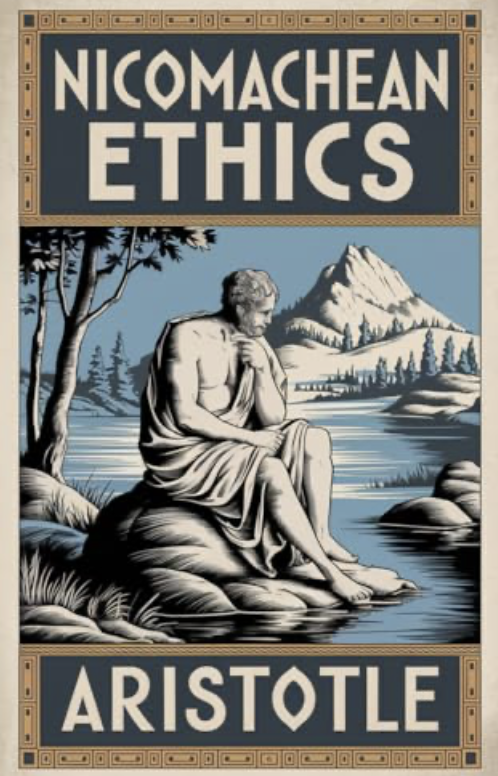
The Ethics of Aristotle is properly called the Nicomachean Ethics, possibly because the text was edited by his son Nicomachus. As with the Metaphysics, it is necessary to have a good grounding in the vocabulary of philosophy. And I don’t just mean Aristotelian philosophy. Regardless of whether or not a modern philosopher admires Aristotle or not, even today, thousands of years later, philosophers are still using much of the same language, the same vocabulary, that was established by the ancient Greeks.
So, you will need to know not just what certain words mean, but what they mean in a philosophical context, right, in that thought environment that Aristotle has built.
For instance, today, we might use the word substance to mean anything material, in particular we use the word to describe chemicals, liquids or drugs. “There was some substance on the floor, he used some substance to get high”.
But, for a philosopher, substance is not material primarily but rather deals with the essence of a thing. It’s something I went over in previous episodes. The same is true of many other words we might understand differently in other contexts. In the Ethics, for example, you are going to need to know what Aristotle means by words such as end and good.
We use end to mean something has finished: this relationship has come to an end, I reached the end of the story. For a philosopher, an end is something toward which a certain activity or thing is meant or aimed, something like a purpose, but with more finality attached to it. As Aristotle says, giving examples, in the opening paragraph of the Ethics, the end of the medical art is health. The end of shipbuilding is a sea-going vessel, the end of strategy is victory.
This focus on the ends of things is known in philosophy as teleology, the greek word for end being telos.
And what about a word like good? It is used not only as an adjective but also as a noun in philosophy. Now, we use good as a noun in common parlance as well, but usually to indicate something for sale. “We sold some goods to that customer, we shipped our goods to another country”
In philosophy, they speak of something as “a good” in a somewhat ineffable way. For instance, many ends are goods, they are positive results or ends of certain activities, the result of the negotiations was peace and peace is “a good”. Other activities might result in disorder, chaos, strife, and these would not be “goods”.
Also, when reading Aristotle or Aquinas, remember that the word “science”, in this philosophical context, strictly refers to certain bodies of knowledge and skills, it is not a reference to the strictly secular pursuit of knowledge in certain areas only, as it is used in modern languages. Science now refers to technology, biology, chemistry, physics, etc, but not, for some reason, to language, math, painting, carpentry and so on. For Aristotle, all of these are or possess in some way a science, which is, again, simply knowledge. Aquinas, for example, in the Middle Ages, calls theology a science, which might upset a modern reader who doesn’t understand that Aquinas is really speaking a different language.
The word for knowledge, by the way, is episteme in ancient Greek and the Latins translated this as scientia (spell it) which we translate as science in English.
I’m sure that I’ve made clear by now that you must sort of relearn a lot of your vocabulary in order to study philosophy. This is not because it is purposefully obscure, but actually because of a phenomenon of which you are probably already aware.
Remember that this form of speaking, of communicating, philosophically, was originally crafted in the Greek language, and, over time, Latin speakers in Rome acquired much from this ancient language and Latin expanse dits vocabulary and retained these meanings.
But, over the centuries, languages separated from Latin and established their own existence. These were known as the vulgar tongues or the vernacular languages. These are just old ways of saying “the slave languages”. I am essentially speaking a slave language right now. Don’t get me wrong, I love English, its my favorite language, but the point is that these descendant languages, in the wake of the decline of Rome, these languages, languages of common people, not philosophers or otherwise educated men, these languages were, at the start, much more focused on material things, and on survival, so their vocabulary didn’t have words for things like substance, end, being, and so on. They had the words perhaps, but they meant material, real-world things in those languages.
This is why, down through the centuries, in the West scholars continued to speak Latin to one another. It was not simply for its use in speaking across borders, in having a common diplomatic language. It was also because Latin was, and still is, to some extent, it was the language in which it was possible to express these ideas. Obviously greek also was a good language for this but the Greek language had fallen out of use many centuries before in the West. So for a very long time, then, western philosophers could not speak about spiritual or philosophical matters or scientific matters in French or Spanish or English or German, because these languages did not have the right vocabulary.
And they still don’t really, especially with regard to theological or philosophical matters. Event he scientific words are pretty much just loaners from latin. So this is why it is so hard to understand what philosophers are saying sometimes. Just look at how hard it was in my first podcast on Greek philosophy to understand what I meant by the word “Being".
Now, anyway, getting back to “the good”, Aristotle says that there must be some activity in which we engage which shepherds and guides all these other activities, and these sciences, toward their ends, and towards the good. And, yes, not surprisingly, the Greek philosopher quickly identifies this activity, this master activity, he identifies it as politics. Recall, how Plato’s most important work was the Republic, which was entirely about how to run a society. So, philosophy in general, does see politics, and legal matters, as a sort of high art or science. The highest, in fact.
This is hard to believe, especially today, when we see politics in our day as a pretty seedy, corrupt practice and no one has anything good to say about politicians. And let’s not get started about lawyers. Whether that is a judgement of politics and the legal system or of our collective character in the modern world, I will let you decide.
But, as Aristotle says here, “Politics uses the rest of the sciences”. Indeed, the rulers of a state decide, ultimately, where resources will go, they focus the state’s activities. During wartime, rulers convert the economy into a war-time economy, focused on building weapons, aiming at victory, and so on. During peace, they free up labor and materials for scientific studies, artistic pursuits, public architecture and so on. Rulers also enforce morality, they punish theft, murder, and so on.
Indeed, even if you only think of science in modern terms, all that science, the research and the studies, the rocket launches and the satellites in space, none of these can take place if some ruler, a politician, doesn’t make it possible through organization of government, allocation of resources and so on. It is only in a politically organized society in which science, of any kind, can really take place.
The politician is the greatest scientist of us all then.
I know, I’m having hard time with that one, too.
But there are actually three prominent types of life, not just the political, according to Aristotle. The first type of life he does not name, he only describes it. That is the life of those men who live only to indulge their passions. And by passion here, understand that I do not simply mean your passion for art, or your passion for theater. I also mean base passions, vulgar pleasures, as Aristotle might call them. But as he describes here, the passions themselves are neither virtues nor vices. It is a matter of how we integrate them into our lives. Since passions are often feelings we have with no choice, anger or fear, for example, it is how we react to them in our life that determines whether or not we are virtuous, or vicious.
The vicious person indulges his vices, the virtuous person practices the virtues.
Those who indulge their vices are the men who Aristotle characterizes as living the lives of beasts. And this is not simply the commoners, as the philosopher points out that some men in higher stations in life also lead this low form of existence. This might bring to mind certain celebrities of our day who seem to be well-rewarded for behaving publicly like beasts.
But, Aristotle tells us,
“People of superior refinement…identify happiness with honor.”
And he goes on to identify this honor really with the possession of virtue, and we are back in comfortable ground in philosophical terms. We have heard something about virtue from Plato. A man, a real man, is defined by his virtue.
As Aristotle says in the second book of the Ethics,
“The man who abstains from bodily pleasures and delights in this very fact is temperate, while the man who is annoyed by this abstention is self-indulgent.”
Self-control, temperance, leads to other virtues, such as courage, faithfulness, honesty. There is a fixation, which might seem strange to you, among philosophers to determine exactly which things are virtues and which simply lead to virtue, to define and categorize all these terms and ideas. Indeed, much of the book is about defining these things exactly.
In modern English, we define virtues as sort of positive qualities, good personal characteristics. For example, honesty, bravery, fidelity.
The word itself, virtue, is actually Latin, not Greek. The Greek word is Arete. The Latins’ translated Arete as Virtue, which comes from the root word, Vir (V-I-R), which means man. So, for the Latins, anyway, and the Greek would probably have agreed even if their language didn’t make it so blatantly clear as the Latin did, possessing virtue simply meant possessing manliness. Being virtuous was, in the ancient world, synonymous with manhood itself, and manhood was only attained by demonstrating these virtues, these characteristics.
Now, in addition to the political life, which possesses much honor, there is also the contemplative life, which is the highest form of life.
Of course, you could accuse the philosopher of being a little self-serving here. Of course, a philosopher would describe the contemplative life as the highest form of life.
But it is characteristic of the Ethics, and most of Aristotle’s work, that we get set up here for a description of the contemplative life, but we never really get it. It may have been in some of his published work, but it is not found in his surviving writings.
Aristotle, regardless of whether or not we may feel him somewhat opposed to our current zeitgeist, he still affirms in his Ethics much that all people everywhere feel to be true, or want to be true. He says that there is no happiness in seeking wealth alone, that true happiness is a matter of virtue, of leading a life of honesty, of courage, of temperance, of honor and faithfulness.
Much of the ethics, then, is devoted to determining what we mean by happiness, and how to get it. Not exactly what you might expect from the title Ethics, which leads most people to expect a dry, boring handbook for morality or something.
But no, like all philosophers, and all prophets of all religions, Aristotle recognizes that life is a pursuit of happiness, and it is of vital importance to know what happiness is, in order to feel like our life has satisfied us, that the journey has been worth the struggle.
As with Socrates, we cannot really determine what the “real philosopher” necessarily thought about any of the subjects addressed in books like the Ethics. That is probably because we do not have access to the published works, as I described in the last episode. The works today that we know as Aristotle’s, and which serve as the foundation of Aristotelian thinking, are really just compilations of notes and recollections of his students.
That may be the reason for the inability of the texts to draw neat conclusions. This is not like the Republic, in which a master philosopher fully displays his reasoning and proceeds step by step toward a thesis.
Aristotle does not give us a neat equation for justice, for example. Consider how the text, in the fifth book of the Ethics, in which he discusses justice, suddenly digresses into the subject of currency. It’s not that this is unrelated entirely to the concept of justice, but neither does it complete the thesis being built in the prior text. And books eight and nine are entirely given over to a long-winded discussion and characterization of friendship.
This is why, when you pick up some editions of Aristotle’s works, they will sometimes only present certain chapters, books, etc, in an unexpected order. Its not so much that they are abridging the text, but they are trying to achieve a continuity of thought that the inexperienced reader will not find if they simply pick up one of Aristotle’s works.
One really great distinction with regard to Aristotle’s sense of morality, is that Aristotle does not seem to consider specific acts or vices as evil per se, but it is rather the excess of certain activities, which lead to negative results, which are genuinely problematic. Virtue is very much associated with temperance here, because the virtuous man controls himself. It is not so much that he is an ascetic, who denies himself every pleasure. Rather, the virtuous man knows how to partake judiciously of various pleasures and delights without endangering his own well-being. To act otherwise, to injure one’s standing, financially, morally, publicly, or to endanger one’s health with eating, drinking or sex, this is the real evil. The excess, the loss of control.
This is a subtle blend of stoicism and epicureanism, with the focus not on pleasure or the avoidance of pleasure, but rather on the careful navigation of pleasures.
However, I would mislead you if I were to suggest that it was actually possible to say what Aristotle’s Ethics is about. In the last book of this work, the author returns to the subject of happiness, but there is not a neat wrapping up of various loose ends from earlier in the text. Indeed, he refers the reader to his essay on Politics to follow up on these matters, but the book of Aristotle’e Politics that we have today does not address those matters just mentioned, because it is obviously not the published text to which he was actually referring. The Politics of Aristotle, which we cover in the next segment, is, like all the rest of his surviving work, probably just a reimagining of the philosophy of Aristotle, composed of his notes and his students recollections.
(Music)
The Politics of Aristotle is divided into eight books or sections.
The philosopher immediately sets the tone by declaring that the state is the highest form of political community.
Now, we might ask ourselves, what is the purpose of the state? Why do people form states? Aristotle tells us: the object of the state is to secure a good life for its people.
He then goes on, in the first book, to outline the structure of a state, beginning with the smallest sub-unit of the state, the household.
This is significant in our time, perhaps more than ever before, because all who lived before these last few decades would have naturally agreed that the household was the smallest unit of the state. A community was made of families, and the state from multiple communities. So Aristotle is not teaching anything here, but just reiterating what everyone already understood.
In our time, it might occur to someone to say that the individual is the smallest unit of the state. But this is the first era in human history in which the human community has been atomized into individuals rather than families.
As we should expect, Aristotle describes the household in Greek fashion, as consisting of a man and a woman, their children and their slaves.
But, as I have warned, do not come to the Politics expecting a completely intelligible thesis. In Book I, after he describes households, Aristotle says that “when several villages are united…the state comes into existence.”
But a few paragraphs later, the text of this same book has the following:
“The state is by nature clearly prior to the family and to the individual.”
It is not that the philosopher is contradicting himself, but this testifies somewhat to the haphazard nature of the text. In each of the two previously-mentioned sections, Aristotle is making different points about these elements of the state, which may have been more throughly developed in separate, published essays.
Shortly thereafter, Aristotle delves into the discussion of slavery, and whether anyone is naturally a slave. This is a fascinating topic of discussion, actually, but it does contribute to the Politics’ lack of continuity.
If you’re curious, though, after a brief analysis, Aristotle does conclude here that slavery is simply natural and better-suited as a lifestyle to certain individuals.
Book I also considers matters such as wealth, property and interest. By interest, I mean interest as in the interest rate on a loan. Today, we live in a world of money-lenders, and debt and interest are considered fundamental to our lifestyle, but these matters were actually quite provocative in Aristotle’s time and for a long time afterward. Aristotle, like many of his peers, considered interest to be unnatural and wrong, because it creates money from money instead of through production of goods or through trade.
For the most part, the eight books of the Politics each examine different aspect of the state, of citizenship and so on, but the last two books actually do have some continuity, as the eighth book begins by carrying on the discussion of education begun at the end of book seven.
The analyses in the books include examinations of different types of government, requirements of citizenship, the function of law, types of factionalism in constitutional governments and other kinds of political instability, and he even describes the inner workings of governments.
For example, in Book VI Aristotle describes the minimum required departments that a government must have in order to function. The description is surprisingly familiar, in that he essentially sets forth the departments of war, of the treasury, the legal system, commerce, and even a department of the interior which oversees public works. Any government of any country in the world today has at least all these departments represented.
The one glaring difference between his list of government departments is that he first lists a religious bureaucracy, on other words, a department managing the state religion. I have already established that, for the Greeks and for most of our ancestors, the state and the religion were one. We will see this continued in the Roman series, in which the high priest of the state religion in Rome, until the Christian religion achieved supremacy, this high priest was always an elected or appointed politician.
Aristotle does not refrain from criticizing the popular themes of the day with regard to government. He specifically mentions Socrates and the Republic of Plato, and finds fault with the organization of the so-called perfect state in that text. He also finds fault with the layout of the manuscript, really, because he points out a really significant hole in the logic of the description of Plato’s Republic.
Plato, in the Republic, divided the populace, if you recall, into the regular people and the guardians, the latter of which are further divided into the military and the rulers themselves. We went over this in the last episode on philosophy. Aristotle recalls the abolition of property and the communism of women among the guardians as described by Plato, but he also notes that the text of the Republic, once it gets to this point, it simply forgets the common people and does not describe how they live. Do they also share property? Do they share their women? He details the ways in which society would break down if this arrangement was made for the commoners as well, but also explains how it would fail to satisfy the guardians as well.
No, there is no denying it, Aristotle is pragmatic and a conservative, ultimately, when it comes to philosophy. He is satisfied only with states that work, and he sees no place for these dreams that Plato has published in books like the Republic.
Instead, Aristotle sees a wealthy ruling class as inevitable, and the need for private property unavoidable. The only real question is how to ensure that this arrangement of society is as just as possible.
(Music)
Aristotle wrote and lectured on many different topics in his day, when philosophy approached and dealt with several subjects that we now consider quite separate. Aristotle’s Rhetoric is a famous work on public speaking, which is still studied at the college level in introductory English courses in many places. He also wrote a short book called Poetics and probably many others, but we have only fragments of this ancient Greek genius’s total output of thought.
Sometime after 350 BC, there was a rift between Aristotle and the Academy in Athens. We cannot be certain about the nature of this rift, but the differences that I have already pointed out between Aristotle’s views and more traditional Platonic views may have contributed to this separation.
A few years later, Phillip II, King of Macedon, reached out to Aristotle and asked him to become the tutor of his son and heir, Alexander. At this time the boy, later known as Alexander the Great, would have been about 12 or 13 years old.
And with this move northward, Aristotle reflected also the movement of Greek power that was already happening. The Macedonians, as I will describe in the next episode, had gained prominence in Greek society in recent years. This was unexpected, because, for centuries, power and influence had rotated between great cities in the south such as Athens, Sparta and Thebes. The Macedonians were virtually barbarians in the eyes of some Greeks, and many in the south did not even consider them real greeks.
But soon, led by Aristotle’s pupil, these Macedonians would conquer the locus of power in the Near East and find themselves spreading Greek culture and thought and having an impact on the history of the world, an impact whose reverberations we still hear today.
Until next time, I thank you for listening to the Western Traditions podcast.