Episode II.35 - Greek Science II: Introduction to Aristotle
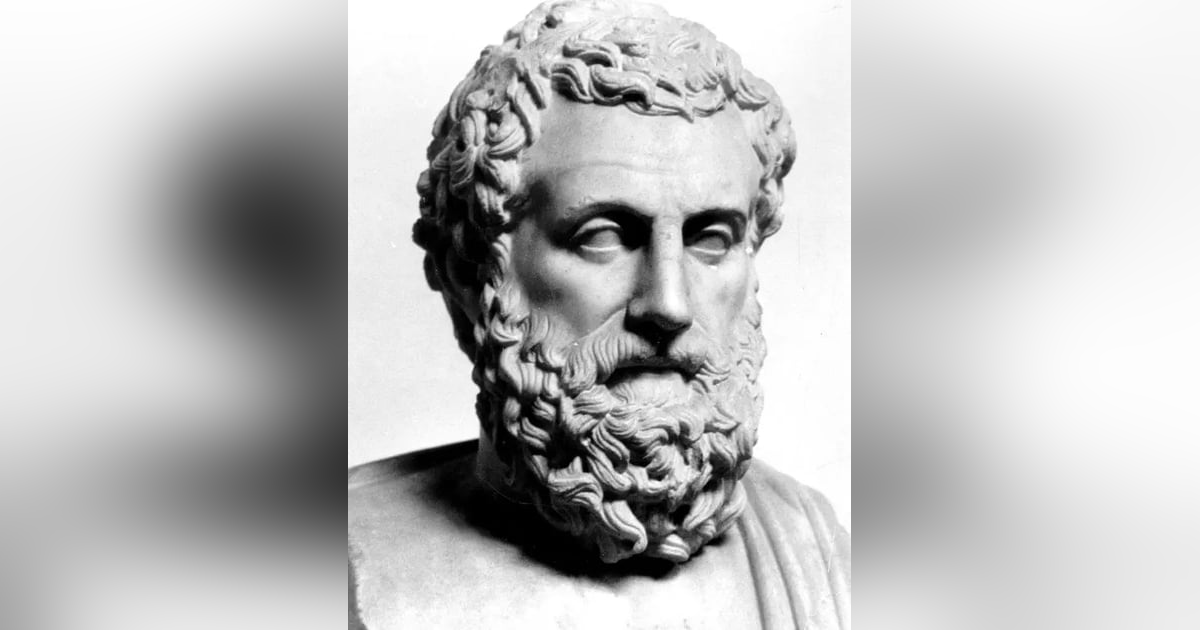
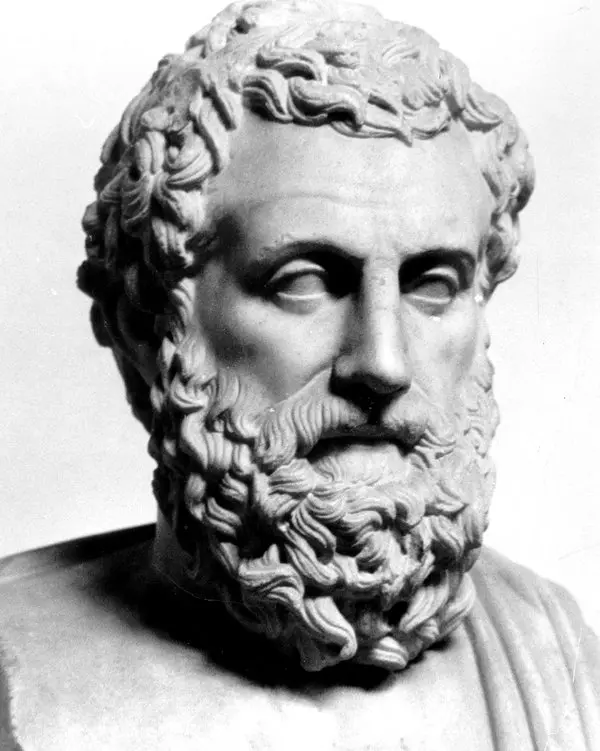


The Aristotelian contribution to Greek Science. Defining first principles. Substance, Accidents and the nature of being.

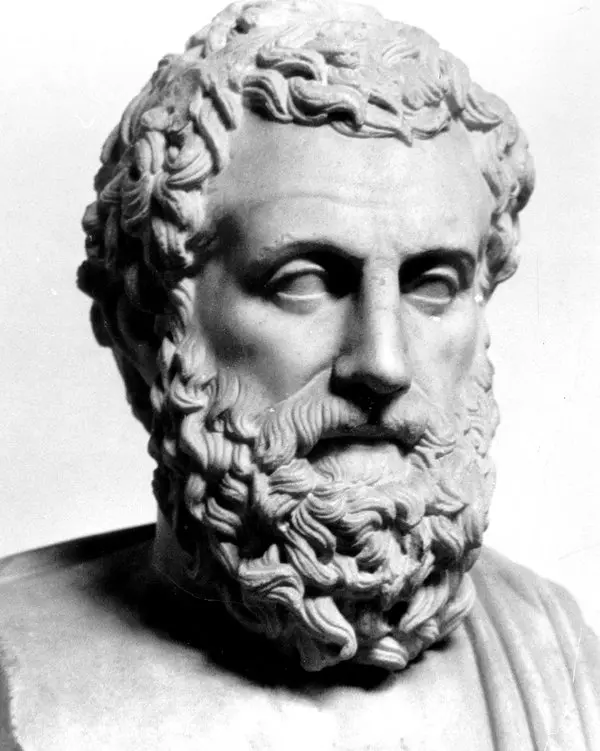
RECOMMENDED READS - Click Image for Link:
II.35 - Greek Science II: Aristotle
(Music)
-A man investigating principles cannot argue with one who denies their existence.-
-a quote from the Physics of Aristotle
(Music)
Hello and welcome to the Western Traditions podcast. This is the 35th episode of the Greek Sun, a series of podcasts about ancient Greek history. Today’s episode returns to the topic of Greek Science, and also introduces the figure of Aristotle, a student of Plato’s Academy.
In previous episodes, I made allusions to how philosophy and science were essentially the same in the ancient world. In fact, philosophy really encompassed all modes of what we would really just call higher learning: literature, science, history, mathematics and so on.
In this and the following episodes of the podcast I will demonstrate how science and philosophy and other subjects of study were all considered in some way together in this time period but were already beginning to branch off in different directions.
Now, Aristotle, in terms of his impact on history, was probably the most significant thinker of all time.
I know that is a pretty powerful statement and some of you might immediately disagree, but ongoing episodes will demonstrate that, like him or not, no one had a bigger influence on Western Thought, from his own time through the end of the Middle Ages, anyway, and he continues to have academic descendants in our own time. While there are obviously many important thinkers and scientists in our own time, none of them has yet had the eon-spanning influence that Aristotle, for better or worse, had on the West for over a thousand years.
Before we begin the next segment, please remember to check out the website, if you’re not already there. You can support this podcast in a number of ways. You can like, share and subscribe on whatever platform you listen to. And don’t forget to check out my YouTube channel, which you can just find under the name Western Traditions Podcast.
You can also buy merchandise at the website or support my work directly through paypal or patreon. Patreon supporters have access to a weekly newsletter about podcast news, behind the scenes, work and upcoming episodes. Patreon supporters can also ask questions that I will answer in future newsletters.
(Music)
The life of Aristotle marks a turning point in western history in more ways than one. Right away, we should note that he is the first figure we study about whom we know certain facts. Even through the time of Socrates and Plato, such models of rationalism, even through their time we are still dealing with legends, in some respect. When we read Herodotus several episodes ago, we were no longer reading something semi-mythological, like the Odyssey, but we were still reading of ghosts and visions. Exact locations were roughly guessed at and as for birthdates of the major players in the Persian War, no one was really sure.
By the time of Thucydides and Plato, legends have started to fade from historical writing, but things are still kind of fuzzy. Socrates himself, while I feel certain he existed, Socrates himself is semi-mythical, the details of his life are almost completely unknown. The life of his disciple Plato is a little more filled out, but still remains mysterious in many regards.
With Aristotle, on the other hand hand, we have more data about the man. We know the years of his birth and death, we know where he was born, where he lived, with whom he was associated, and so on. No doubt, there are many things we would love to discover about the man, for instance, details about his own studies and the lectures that he later gave as he matured as a philosopher at the Academy in Athens, and the content of all the work he published in in his lifetime. things which may be forever lost to us in the maelstrom of history.
Compared to any modern historical figure, very little is known about Aristotle.
But with this ancient philosopher, we are on comparatively much firmer ground, in terms of what we can say about his life.
Aristotle was born in 384 BC in Stagira, a Greek city, founded by Ionian colonists in ages past, in the northern stretches of mainland Greece, on the eastern coast of Chalcidice. If you look at a map, Chalcidice is that odd-looking peninsula on the northwest shores of the Aegean Sea, the one with the three promontories extending out into the waters. Xerxes had cut a canal through one of these promontories while transporting his fleet to do battle with the Spartans and the Athenians a century before.
As a teenager, Aristotle joined Plato’s academy in Athens. By then, Plato had acquired quite a following and taught the doctrines of Socrates to many Greeks who traveled from far away to listen to his words. Aristotle remained at the academy for some 20 years, devoting himself to his studies.
Around the time of Plato’s death, Aristotle left the academy and became the personal tutor for the son of the King of Macedonia, Phillip II. The name of this son of Phillip, this prince that Aristotle was teaching? You remember him as Alexander the Great. That’s right, though he probably had no idea at the time, Aristotle would be instrumental in forming the mind of the young man who would soon lead a Greek army to conquer the entire near East and usher in what we now call the Hellenistic period.
By the end of his life, Aristotle’s former pupil Alexander had conquered much of the civilized world. And Aristotle had lectured a great deal and acquired many disciples. Through the ages since, those disciples and their followers have continued to preserve a number of books whose supposed author is Aristotle, whom Thomas Aquinas simply calls “The Philosopher”, and whom Muslim medieval scholars referred to as “The First Teacher”.
While Aristotle did publish works for the general public during his life, it is not believed that any of them survived. This may surprise you if you are already a little familiar with Aristotle, because you may know the names of some of his more famous books, such as the Metaphysics or the Ethics.
But, through a strange happenstance of history, we believe that most, if not all, of the work that Aristotle wrote for the public has been lost, and the works that we possess today are simply the compilations of his lecture notes and the recollections of his students. As sad as this loss is, this kind of makes sense, because the prose in the surviving works is not exactly great, this is not fun writing to read. Yet you hear ancient writers, such as Cicero, the Roman philosopher, writer and statesman, you hear him referring to the writing of Aristotle as “a river of gold”. That is probably because Cicero, living more than 2,000 years ago, still had access to the published work of the great philosopher.
What we are left with today, though, is probably just a lot of things slapped together and not prepared for public consumption.
Now, as we progress through history with this podcast, through the Roman period and into the Middle Ages and beyond, you will come to see how incredibly impactful the works and the thought of Aristotle were not only for the West but also for the Islamic world. And it is amazing because it is only the philosopher’s notes and the recollections of some of his lectures, compiled into the surviving works that we have today, which are responsible for this massive influence on Western thought. How might things have been different if the entirety of his works had survived the ravages of time?
Nevertheless, we have what we have. Aristotle himself was living and teaching in Athens in 323 BC when his former student and supremely powerful patron, Alexander the Great, died in Babylon.
Now, Alexander had subjugated Athens and the rest of Greece before heading off to conquer the civilized world and, Athenians being Athenians, as soon as their overlord was dead, they were back to their political wiles, they were ready to throw off the Macedonian yoke. While they were at it, Imperial sycophants like Aristotle were suddenly no longer in favor.
Like Socrates nearly 80 years before, after a change of power in government, Aristotle was charged with impiety. He was threatened with death, just like Socrates, as well. The endangered philosopher fled the city instead of waiting around for a trial. He explained that he did not want to let Athens sin against philosophy a second time.
However, the next year Aristotle died on the island of Euboea, off the coast of Attica, and with his death the history of Classical Greece essentially came to a close. The Hellenistic period, in which greek culture would pour out into the surrounding would as if from a cup overbrimming with wine, the Hellenistic period, was already beginning
(Music)
I will begin our study of Aristotle’s work with the Organon, a compilation of six treatises which Aristotle wrote about the topic of Logic.
Now, Logic may seem like a weird topic to begin a podcast about Greek science. But, as I have stressed before, in the beginning, virtually all learning was encompassed by Philosophy. By this, I mean that the majority of the “subject areas” , as we call them that we study in places like high school or in college, the majority of these academic subjects were all part of the philosopher’s focus. Notice that they are called academic subjects, and that Plato founded an academy. So, we call these subjects academic, for the most part, because they were the sorts of things which came under the philosopher’s focus at the academy.
This origin of so much knowledge under the umbrella of Philosophy is oddly supported by a now well-known, online gimmick associated with Wikipedia, the Internet encyclopedia. If you search any subject online and go to the Wikipedia article on that subject, and I mean any subject, it could literally be the name of a movie star, if you then click on the first link in the Wikipedia article, and continue to click on the first link of every subsequent article, this link-clicking will eventually bring you to the Wikipedia article on Philosophy. This is true over 95% of the time, anyway. Everything leads back to philosophy, because philosophy is not just a lot of arguing about the meaning of life, but it is the source of all desire for learning about anything, really.
Now, at the academy in Athens, the aspiring philosophers did not learn things like carpentry or masonry, which were the areas of learning pertinent to commoners or slaves, but instead they focused on what we would call “book-learning”, and they became “book smart.” Now, today we might appreciate a more balanced approach, and emphasize the value of trades such as plumbing or construction or even professions like engineering or finance, but the philosophers were interested almost entirely in thinking and in thinking about thought itself. That’s worth repeating: thinking about thought itself.
And Logic is the rightful beginning of study for really any of the academic subjects. Aristotle’s logical essays help us to define and agree on first principles,
In other words, to find out just what it is we are talking about before we begin to elaborate on it.
The first essay in this collection, the Organon, is called Categories. This text defines terms of supreme importance, especially in the study of philosophy, such as substance, quality, quantity, simple, composite and more.
Here in this tract we get down to the basement of reality, the bedrock of logic. Aristotle clarifies certain things that you might already assume to be true, but when you study this book, you will be surprised by what you can learn about things that you already know. Again, worth repeating: you can learn a great deal about things that you already know. Like how you know them, why they are true, and so on.
As you dig into the Categories, and into other logical treatises by Aristotle, you might feel a little bit like you are getting a grammar lesson. And, to some extent, you are. That is because grammar is essentially logical. There are a handful of set rules and classifications in any language’s grammar, and they define reality for that language.
It is a great shame, and a great downfall of our culture, that grammar is so rarely taught anymore to youth, or to anyone, for that matter. Because to engage with grammar is to learn logic, and learn how to perform logically. The intelligibility of a sentence is dependent entirely on its adherence to a certain type of logic, and to learn grammar is to learn how to think. There is a famous saying, that if you cannot write, you cannot think. That is why the curriculum that I have built around the western traditions is so reliant on writing as a primary form of academic performance. The student that can write intelligently about a subject has mastered that subject.
Without a foundation in grammar and logic, it is hardly even possible to argue your way through any idea. You can only make assertions and insist that they are true.
In this essay, Categories, Aristotle focuses on the meaning of certain terms which will be used throughout his work, and in the work of many future philosophers. These terms are: Substance, quantity, quality, relation, place, time, position, state, action and affection. If you play that back, and think about those terms, you can see not only how they may play roles in philosophical discussion but they are at the heart of grammar, of the parts of speech: telling us about action, about description, about location, and so on.
If you spend extra time on any of these portions of Aristotle’s categories, you should definitely look at his definition of substance. Substance is a massively important idea in philosophy. It will come up again in this episode when we look at Aristotle’s scientific treatise known as Physics.
On Interpretation is the second work on logic in the Organon, and here you will directly hear about the parts of speech: Nouns and verbs and adjectives. Remember that I said there is a lot of grammar instruction in Aristotle’s logic.
Now, like with the Categories, these are things that you may feel like you already know, and, in truth, you can tell that Aristotle truly was building his student’s knowledge from the ground up, making absolutely sure that the later philosophical discussions to be had were made on solid foundations. But, just like all of these elementary documents, I think that if you read them you might find that you knew less than you think about these primal matters of thought.
The next two works in the Organon, the Prior Analytics and the Posterior Analytics, are probably the most read today. In any college class on Aristotle the text will often include, along with other more famous works, these books, or at least the Posterior Analytics.
But in the Prior Analytics, we learn about syllogisms, that famous teaching tool of Aristotle.
Classically presented, a syllogism is composed of three lines of connecting and mutually supporting thoughts. A famous example of a syllogism is the following:
Every man is an animal.
Peter is a man.
Therefore Peter is an Animal.
This is deceptively simple, though, and reading the Logic of Aristotle requires painstaking study. Just listen to this one, short paragraph from the Prior Analytics, and understand that Aristotle’s work is page after page, book after book, of thought this dense.
(Read selection on page 40).
Each little segment of that paragraph must be thought through carefully. This is like lifting weights in the gym but with your mind. It is easy to find yourself mentally exhausted just trying to understand a single page of Aristotle’s Logic, not because he is complex, but because he insists on taking apart thought and measuring it out and studying it in the smallest portions possible and ensuring that each sentence that he speaks is packed with meaning and 100% correct. There is no sloppiness here.
Finally, with all this preparation behind you, you can advance to the last two books in the Organon, the Topics and the Sophistical Refutations. Here, in these volumes, one learns how to argue and how to detect fallacies in argument, among other things. These works were invaluable, for generation after generation, in preparing the minds of the young elite who would grow up to rule their respective societies in the West.
(Music)
But this episode is about Greek science and Aristotle did make important contributions to what we would more properly call science today. Previously in this podcast series, I produced an episode about the work of Hippocrates, who was a Greek physician. Much of ancient science was devoted to medicine, obviously, because that was the most potentially useful to human beings, finding cures for what ailed them.
Now, obviously, also, with the pyramids and the beautiful buildings of Ancient Athens in mind, we know that engineering was also an extremely important science for the ancients. Yet we will find none of it here in Aristotle’s work, nor did we hear about it in relation to Plato’s Academy or anything that Socrates ever said, even though Socrates did delve into physical and mathematical ideas with some of his dialogues..
But we must remember that, for Aristotle and his peers, virtually any type of work involving physical labor, which construction would require, or tanning leather or making shoes, playing the flute or even designing architecture, virtually any such work was mostly considered the realm of slaves and commoners, so the men of higher learning in the Academy, whose walls must have required a great deal of learning and knowledge to build, the men discussing science in these buildings possibly would have had no idea how to construct the very edifice which housed them.
You might begin to understand now why comedians like Aristophanes were able to ridicule the philosophers with such success. They truly had their heads up in the clouds, while the rest of society was trying to eek out a living from the land and the sea and with the trades that they plied with their very hands.
But, anyway, medicine, which Hippocrates studied, is really a branch of Biology, focused on human biology. And Aristotle studied animal biology and wrote quite a bit about it. His biological treatises are titled according to the interesting division of thought that Aristotle, and apparently the ancient Greeks in general, applied to animal science. His treatises on biology are called the History of Animals, On the Parts of Animals, On the Motion of Animals, On the Gait of Animals, and On the Generation of Animals.
Yes, there’s a book about Animal motion and then an entirely separate book focusing on animals’ gaits. It sounds unusual, but it makes sense because all animals move but only some have gaits, that is, only some have legs. A worm does not have a gait, nor does a fish.
It is worth reading the texts just to learn how Aristotle approached topics from angles that we might not consider as important today. Furthermore, he uses many philosophical terms in his descriptions here and it is quite revealing of how his philosophy colored his scientific study.
For instance, he opens the History of Animals with this statement:
“Of the parts of animals, some are simple.”
Now, that word simple, is also incredibly important in philosophy, as is the opposing term with which it is often paired, composite.
So, something simple is one, it has no parts. When you venture farther into philosophy, and study things like Being itself, as we will here in a little bit, or get on to the topic of God, this word simple will return.
Moreso, the use of terms such as this, like simple and composite, and many other terms which Aristotle defines, these terms also sort of help us to pin down the ideas that we study. For example, if God is simple, and he must be according to most philosophic strains of thought, then certain attributes can be applied to him, and certain others cannot. Once you describe something as simple, as composite, as cold, as hot, as white, as red, or describe its essence in some way, you also limit it, in another way.
But there is genuine biological study and valuable scientific learning here in these treatises. Aristotle introduces us, for example, to the concepts of viviparity and oviparity. That is, animals which bear young alive and animals which bear their young in eggs, concepts which are still central to biology today.
Furthermore, there is lengthy and minute description of each physical and behavioral detail about each animal. And he goes through, in this encyclopedia of animals, just about every animal that he must have ever seen or heard of in the Mediterranean region, including different types of birds and owls, snakes, crustaceans, and more, This is a long, dense book. Aristotle classifies these creatures according to different characteristics: quadrupeds, bipeds, animals that crawl, that walk, that fly, animals with and without fur, and so on.
You come across many curious passages in these pages, such as the following:
-Of animals which change their position, some move with the whole body at once, for example, jumping animals, others move first one part and then the other. -
Now, this may seem like a school child trying to talk about animals, but you have to remember that Aristotle, and all the scientists of his time, relied entirely on observation. There was no scientific method, and there were no real instruments of study, such as the microscope. Genetics had not been discovered. So, we must be forgiving if the biological treatises seem a little useless as biology texts. We want to hear about genetics, about biochemistry, about behavioral studies with decades of thorough observation behind them.
But Aristotle, was largely working off his own observations and those he had learned from others. No one was out in the woods, living off a university grant, ten-years in the wild with a specific species of animal and composing scientific studies and collaborating with others doing the same. That kind of intense and fruitful study of the animal world just wasn’t even possible until the last couple centuries.
However, when I say that Aristotle relied on observation, this included dissection, and there is definitely a fascinating amount of detail about the organs of animals, even though Aristotle could not always be sure what certain organs did, because there was no chemistry back then, no knowledge of atoms, molecules, proteins etc.
There are a number of other scientific and pseudo-scientific works in the Aristotelian corpus of writing. Works on meteorology, on aging, on sleep, on the soul and even on dreams and prophesying through dreams. As you must expect with ancient texts on science, there are things here that a modern person, even minimally educated, will consider to be crossing the line between science and religion.
But these texts often cross another line, which I’ve mentioned before, that line between what we today consider strictly scientific and that which we consider strictly philosophical.
A good example of this is Aristotle’s Physics.
(Music)
Aristotle’s Physics is not what you might expect from the title. This is not a science textbook in which you will learn equations like e=mc-squared or that force equals mass times acceleration. As I said before, the ancient Greek approach to science begins in philosophy, in logic, in thinking about causes and effects, and, of course, in establishing our first principles.
As Aristotle says in the opening of this book,
“We do not think that we know a thing until we are acquainted with its first principles.”
However, in general, it is good practice in any field to do this, to define terms at the beginning of a text or a course, and so this is not that unusual. What first-time readers might find a bit more shocking is the way that Aristotle spends so much time in the beginning of this physics book on the topic of Being.
Now, English is not a great language to translate this concept into, this concept of Being. Possibly because it is also a noun in English, such as “he is a human being”, and because we also use the word as a verb and we use it casually, like when we say, “I like being with you.” Here the word being is suggesting some sort of physical proximity.
But, understand, when we talk about Aristotle and the “concept” of Being, we are talking about the grand subject of existence. And you might say, now, well, why don’t we just say existence instead of being when we translate the Greek word used here.
Well, its not that simple. The Greek word used here, in this text and many others, and which is sometimes translated as being, is the word Ousia, (spell it). And this is a word over which religious struggles will be waged in centuries to come, when Christianity is just beginning to stand on its own two feet and theologians are trying to explain the Holy Trinity. There will be much more on that in the Roman and the Medieval series.
Anyway, this word, Ousia, it doesn’t simply mean exist. Online, you might see it translated, by a non-philosophical source, as something like property, but that will confuse the English reader as well because when they say that they don’t mean property like a piece of land, but rather the property that something or something might have, a characteristic. Like a white horse has the property of whiteness.
But this is actually quite off because, in philosophical parlance, ousia refers not to an adjective, not to a characteristic, but to a thing itself.
Ousia speaks rather to the essence of something, its true being, having nothing to do with what it looks like or how it feels or sounds. This is not an easy idea to get across, especially in modern times, when we spend so little time thinking about our being, but are rather more caught up in the externals of our existence. I suddenly have a great deal of sympathy for philosophy professors trying to get this across to their students.
Now, I actually experienced something of this misunderstanding about the term “being” while growing up as an English-speaking Catholic. In the new order of the mass, which was developed in the 1960s, the Catholic mass that I grew up with, there was a portion of the Nicene creed, which is a litany of shared Christian beliefs, in which we all recited together in the church that Jesus was
“begotten, not made, one in being with the Father.”
The translators were trying to come up with up with a way to translate this concept into English. Recall, that all Christian ideas are really best understood in either Greek or Latin, since these are the two primary languages in which its primary theological ideas were first stated. So, the translators of the mass were trying to say, in English, what the original mass in Latin was trying to say here.
Now, in Latin, the term used in the text of the creed is consubstantia, or sharing the same substance. Substantia was the word that the Latins used to translate this Greek term, Ousia, the same one that Aristotle is using here in discussing Being.
Now, myself, as a young man, hearing that Jesus was “one in being” with the father, I just got the idea that Jesus and the Father hung out together. I’m not kidding. Whatever concept that the translators were trying to get across to me was completely lost.
What the Creed actually says, in the original Greek, is that the Son is “homoousian tow Patri”. Homo means same in ancient greek, so “homousian tow patri” means that he has the same ousia as the father. That they share the same being, the same essence, or, as the Latins decided to call it, the same substance. To risk further inaccuracy, and possibly confuse you even more, one might say that the father and son are made of the same stuff. Except that, per Christian beliefs, neither one of them was ever “made”. But that’s a theological discussion for an episode in later series.
Another example comes to mind. Imagine that you are on the beach and you walk out into the ocean. You have a cup in each hand. You dip the cups into the ocean and hold them up. The quantities of ocean water in the two cups are separate, they are distinct, but, they are also equal in a way, because they are of the same substance.
But, these concepts of being and essence and substance and ousia are far beyond my capacity to teach you. I can only, I hope, spark interest in a very fundamental concept, without which we really cannot venture into philosophy or even into science.
You see, often, when we study science today, there is a great focus on mechanical things: how things happen, causes, physical laws, such as Gravity or the forces which hold atoms together, or states of matter, gas, liquid, solid, plasma. We study science in order to know how to devise and make better computers, build bigger rockets, cure illnesses.
And these are not bad purposes to have.
But the ancient Greeks, they were interested in a much more fundamental question. How is any of this here? And I don’t mean the Creation story. Saying that God created the universe or Zeus did it or that it was always here does not answer this question. In fact, this is a question that both atheists and the religious can together seek answers to.
Because I’m not asking you to tell me the events that led up to all this, to this universe around us. When I ask, How is any of this here, I want to know how we exist. Again, not asking the underlying physical mechanics of our existence, hearts pumping blood or sperm and egg coming together in the womb, or even the events that led up to the appearance of the universe, I’m not referring to the big bang, or anything, but rather I’m referring to the very nature of our being, our existence.
Again, this is almost impossible to explain adequately, in English anyway. I don’t fluently speak or understand ancient Greek, so perhaps the question came across more intelligibly when Aristotle asked it.
But, come away from this understanding that the philosophers wanted to know, before anything else, before wanting to know why fire is hot or why water runs downhill, they wanted to understand this concept, our very being, our Ousia.
Of course, Aristotle is also interested in the way that things came into being as well. He not only gives his own opinions on the matter but also relates the parameters of the argument and the opinions of others.
For instance, consider the following passage:
(Read selection on p. 267)
So, while continuing to address the concept of being, or substance, or ousia, Aristotle also delves into the origins of things, the sequence of events that led to their appearance in the universe. There is another fundamental question here, and a conundrum for thinkers of any time.
In order for something to come to be, to come into existence, there must either be something prior to that from which it was made, or it must have come from nothing. But, our reason tells us, it is impossible for something to simply appear, to come from nothing. And yet, if some piece of matter was generated from something that existed prior to it, then that earlier something must have come from something else too. Eventually, you either have to go back to something originally appearing from nothing, or being made from nothing, or you have to accept that there has always been some eternally existing substratum, accept, then, that the matter making up everything which exists has always existed.
Eventually, this study will take Aristotle to develop an idea about a theory we now often call the Prime Mover theory, or the unmoved mover, referring to that being, again, confusing to use that world in this regard, that being who must have originated all existence, and this One being must be something immaterial, per Aristotle’s argument, it must exist without parts, without size, be completely immaterial. Recall my earlier comment about the importance of simplicity, of something being simple, having no parts.
Understanding all of this not only requires great interest and great intellect, but, as you can imagine, it also requires a through preparation in the first principles, in the definitions of terms, of understanding important philosophical words, such as substance, or like the term Accident, which we haven’t discussed yet.
Relax, this one is a little easier to grasp.
In philosophic terms, an accident is not something that happens inadvertently, or causes some damage, like a car accident or, “I accidentally dropped the plate and broke it.” No, an accident is sort of like an adjective that can be applied to a substance or essence, but which does not change that thing essentially. An example, a man has the essence of a man, there is a certain substance of being a man. I don’t mean to speak here about what masculinity is or something like that, I mean simply the essence of a human being, the substance which he shares with all other people. But a specific man might be tall, or fat, or black or white. These things, these descriptors, are accidents. They do not change the underlying substance of the things that we are talking about - in this case, a man. A short man, a black man, a skinny man, they all have different accidents, but all possess the same substance of being a man.
But I can’t sum up Aristotle’s Physics here, or even elaborate sufficiently on its themes. I mentioned how the work of Aristotle is dense. You can take each sentence and derive meaning from it, think about it, turn it over in your mind for hours or days. People spend their careers trying to understand and then explain these things. The best thing that you can do is pick up a copy of Aristotle and dig into it yourself.
In my Curriculum series, the twelfth series in this podcast, I have published some tools that you might find helpful if you go down this route and study Aristotle on your own.
(Music)
In the scientific treatises of Aristotle, we do find some purely scientific passages, even if we do not always agree with their conclusions. However, much of the text is mixed in with theories and ideas about matters which we are more comfortable calling philosophy these days.
In the coming episodes about Aristotle, we will look more closely at some of his more well-known contributions t o true philosophy, such as his Ethics and his Metaphysics, as well as his ideas about literature, politics and more.
But, until then, I thank you for listening to the Western Traditions podcast.
(Music)