Episode 1 - The General Prologue


The introduction to the podcast and to the history of Western Civilization.
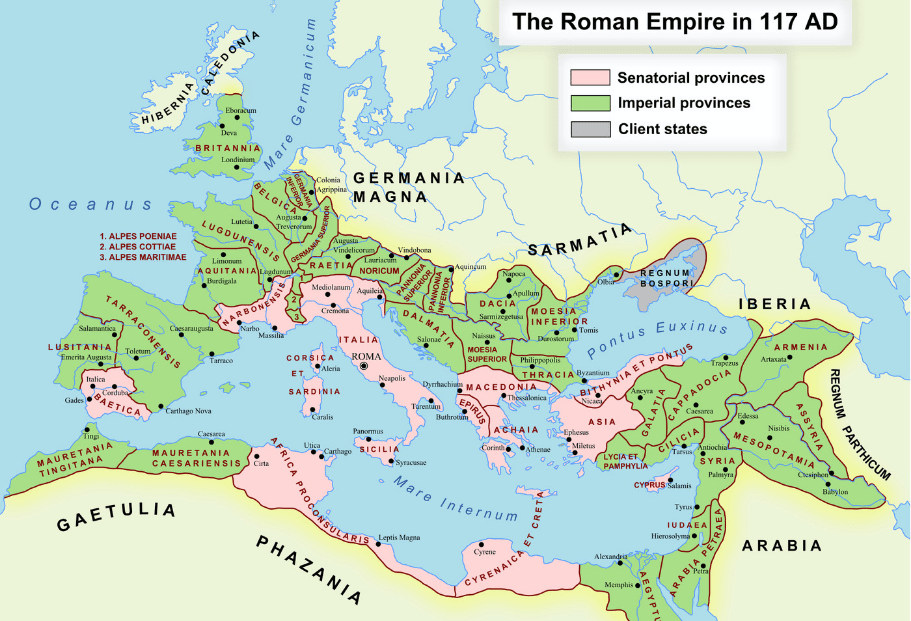
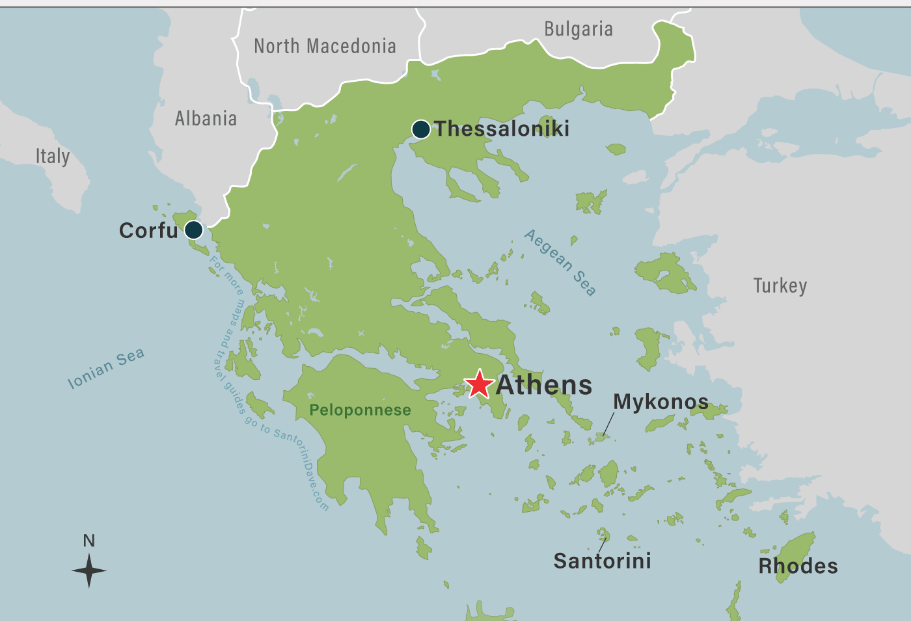
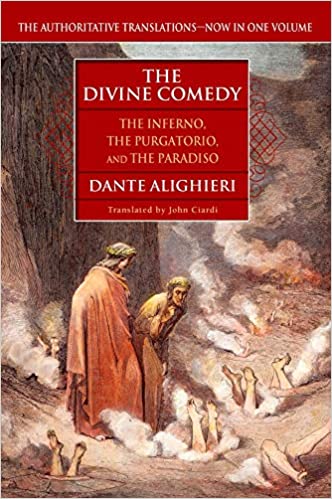
RECOMMENDED READS - Click Image for Link:
(Music)
Hello and welcome to the Western Traditions podcast, a podcast about Western History.
The story of our Western Traditions is long. Where and when they began is debatable. Some
people think that western history begins with Classical Greece. Around 500 years before the
birth of Christ, the Greeks fought against the Persians in the great battles of Marathon,
Thermopylae, Salamis and Mycale. Many scholars see the Greek victories in these battles as
the crucial moments in which the West was truly distinguished from the East.
Others mark the birth of Western thought in Plato’s dialogues. These philosophical essays were
published a century after those great battles against the Persians. They demonstrated, among
other things, the independence of Western thinking.
These developments in classical Greece, the battles for independence and the rise of
philosophical thought, were then inherited by the Romans centuries later and eventually
passed on down to us.
But ancient Egypt was also quite important for the classical Greeks and the Romans.
Herodotus was the Greek author of the oldest history text in the world. He reports that
Egyptian priests told him that they possessed the most ancient civilization in the world. And
later historians also believed this to be true for many centuries.
Greek literature and myth does show that ancient Egypt greatly influenced Greek culture, so
you could say that Western history begins with ancient Egypt. In fact, right up until the 19th
century actually, this was an accepted viewpoint. History instruction in the West often began
with Egypt.
In the 19th century, though, archaeologists discovered the ruins of another civilization that
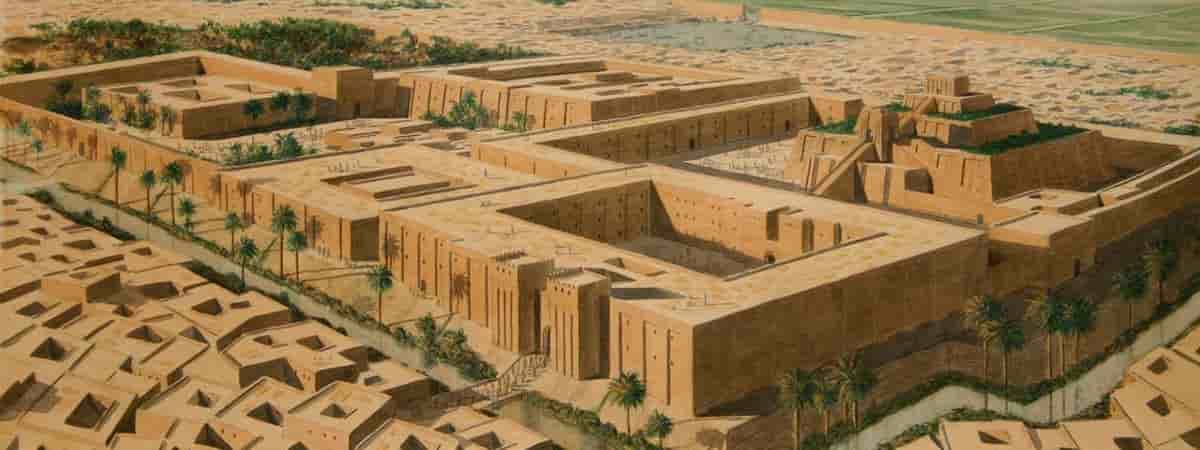
existed before the pharaohs came to rule over the Nile river in Egypt. The cities of Sumer,
scattered along the banks of the Tigris and Euphrates rivers in Mesopotamia, were founded at
least a thousand years before any kingdom existed in Egypt.
And in the ruins, archaeologists discovered clay tablets marked with a strange form of writing
that used lines and shapes that were completely indecipherable at first. This kind of writing is
known as cuneiform. The story about how those tablets were decoded will be related in a
future episode.
Once the cuneiform was deciphered, scholars realized that most of the tablets contained
routine information about commercial and political issues important to the cities of Sumer.
However, there were some cuneiform tablets that told stories about the gods of the Sumerians,
about the Creation of the world, and about a great king of the Sumerians named Gilgamesh.
Once, we thought that the Iliad and the Odyssey were the earliest epic poems. They are both
famous Greek stories allegedly authored by the poet Homer. Now, though, this Sumerian Epic
of Gilgamesh has been established as the first known example of an epic poem, in which the
travails and the triumphs of gods and men are recorded.
Additionally, the Epic of Gilgamesh included a story about a Great Flood that was similar to the
story of Noah in the Bible. So similar was the story, in fact, that it is hard not to consider this
ancient tale to be part of our Western Traditions.But the roots of our Western Traditions go even deeper into the past than the ancient cities of
Mesopotamia.
The Bible is also a part of our Western Traditions. The Christian Bible, Old and New
Tetsaments, has always been one of the Great Books of the Western World. For many
centuries, a young person’s academic instruction always included the history of ancient Egypt,
Greece and Rome as well as passages from the Bible. In fact, you could say that the Bible, and
Christianity, are core elements of Western culture.
While this may seem obvious, it is also strange on some level. As we progress through these
podcasts, you will see that the stories in the Bible are quite old and a few of them are probably
even older than Egypt. The Bible is essentially a product of an eastern religion. The Hebrews
that composed and preserved the texts of the Bible came originally from the Mesopotamian
basin. Like the stories in the Epic of Gilgamesh and other Babylonian documents, biblical
stories are based on the cultural and religious ideas of the ancient Near East.
But we associate the West with Europe. We assume a European foundation or origin for
Western ideas. Yet perhaps the most important Western ideas are found in the Bible, and the
Bible has nothing to do with Europe. It rarely even mentions things European, outside of the
rare remark it makes here and there about people living in far off lands. For example, in the
story of Jonah, the prophet who was swallowed by a whale, the writer makes mention of the
city of Tarshish. This city was most likely in ancient Spain. However, these occasional remarks
about Europe are as far as the Bible goes in relating to European matters.
The Bible does not even present to us a cultural milieu anything like that found in Greek
mythology, which is another core element of Western culture. When the Romans encountered
the Greeks, even though their religious outlook was markedly different, they were easily able to
incorporate Greek themes into their spirituality. This was due to their sharing a common Indo-
European linguistic and cultural patrimony.
But the Hebrew writers of the biblical texts were not Indo-Europeans. They were Semites from
Mesopotamia. Yet from them we have received in the West our guiding religion, Christianity,
and the themes which have moved nations to both war and peace for thousands of years.
This ancient text, the Bible, sustains and interacts with the entirety of our Western Traditions.
It is true that the ancient Greeks and Romans knew virtually nothing about Hebrew culture or
religion. But later Western writers, such as Dante, author of the medieval classic the Divine
Comedy, successfully intertwined Greek mythology with the stories of the Old and New
testaments. Works like Dante’s and those of many other Western authors, such as
Shakespeare, demonstrate just how vital the tales of the Greek and Roman gods remained
during the Middle Ages and after.
This entanglement of earlier pagan traditions with Christian scripture in the great books of the
Western World is undeniable. One cannot understand a Shakespearean play without being
familiar with the Bible. And, simultaneously, one cannot understand a Shakespearean play
without having a decent knowledge of Greek or Roman mythology.
Christian men of learning in the West relied for many centuries on the scientific and
mathematical knowledge passed down to them by the pagan Greeks and Romans. But the
most famous men of science, art and philosophy, up until the last century or so, were all
steeped in religious knowledge as well.For example, Isaac Newton, renowned scientist, mathematician and hero to many a modern
atheist, was a devout Christian who wrote more books about theology than he did about math
or science. Gregor Mendel, father of the science of genetics, was an Augustinian monk. The
man who developed the Big Bang Theory in the early 20th century was a Catholic priest from
Belgium, named George Lemaitre.
It is clear, then, that the roots of the Western Tradition are quite deep, and quite widespread.
They encompass and somehow intertwine the ancient cultural heritages of the ancient Near
East, the mythologies and philosophies of the Greeks and Romans and the scientific
discoveries of both Medieval and modern Europeans.
(Music)
Before you I spread out a map. Its edges are tattered. Some portions are yellowed with time.
Loving hands have gently unrolled this map, have pressed the corners flat to see the extreme
regions depicted. Meandering lines trace the geographic frontiers and the coastlines of the
Near East, of Europe, and of the Americas.
There are no political borders on this map. It is not a map of a specific time period, though
certain cities of noteworthy age or significance dot the blank space between rivers, mountains
and ocean shores.
Jericho, Babylon, Jerusalem, Athens, Rome, Paris, Madrid, London, Washington.
See the geography laid out before us.
The rivers Tigris and Euphrates wind their way between the ancient cities of ancient Sumer
before uniting at the shores of the Persian Gulf. Buried somewhere here, according to the
ancients, is the garden of Eden.
The Nile River courses steadily north from the mountains of East Africa, passing the ancient
pyramids of Egypt, their locations noted on your map with simple, inverted triangles that do no
justice to their size or the power of their presence. Finally, this great river empties into the
Eastern Mediterranean.
Crete sits amid the waters of this Mediterranean Sea. The lost kingdom here was recipient of
knowledge from Egypt but also from other sources on the shores of that wine-dark sea. Here
the genesis of Greek culture took place.
Lost Mycenae, buried in the soil of ancient Greece, gives us the tale of the Trojan War, and the
bloodline of mighty Agamemnon. Not far away, Sparta and Athens endure today, just as their
soldiers endured 25 centuries ago against the Persian army and navy, sparking the fire that
would blaze forth from this seemingly insignificant peninsula and warm the hearts and minds of
a hundred generations in Europe and elsewhere.
The flame of this fire, the spirit of the Men of the West, burns in the stubborn desire for
independence among the Greek city-states, in the writings of Herodotus and Sophocles, in the
philosophy of Socrates and along the blade of the sword of Alexander the Great.
This fire will burn also in the hearths of Roman homes, from which sturdy, valiant men will go
forth to conquer the known world and unite its people under an umbrella latticed with roads
and laws.As Rome passes into history, the Church will rise amid its ruins and sustain its legacy through
the Middle Ages in scattered castles and burgeoning towns that Charlemagne will unite both
by the power of the sword and of faith.
Those towns will become the powerful cities of the early modern period, where men of genius
will be born and produce new scientific knowledge that will challenge the preconceptions of
age past. Columbus and others will carry this fire thousands of miles overseas to the New
World in ships made by hand from mere lumber.
The fire will also burn North, and bring dominion to London, which will become a nexus for
power and wealth as the years pass and approach the present. Finally, the British Empire will
fade, and the locus of Western Civilization will shift across the Atlantic Ocean to the United
States, where even now decline is underway, and the trajectory of our Western Traditions seeks
a new location, presently unknown.
(Music)
Many people today focus their studies, or their children’s studies, on the Great Books of the
Western World. The Great Books are a collection of the greatest written works of Western
civilization, beginning with the Iliad and ending with the works of certain early 20th century
authors. These books also form a significant foundation for this podcast, although the
episodes are not in any way limited to their scope.
But why do we walk this road? Why follow the map? Why go to meet with Aristotle, with
Charlemagne, with Columbus? Why study history at all? And why study Western History with
such attention?
Why do so many people and their families immerse themselves in in the richness of this
heritage? Some may do this simply to maintain a connection between the past and the
present, to retain a sort of communion with all those who have come before us.
Others do this for more pragmatic reasons. The vast sum of knowledge possessed in the West
today has grown incrementally over the last centuries. Learning through the great books allows
one to acquire knowledge as the ancients did, standing on the shoulders of the great men who
came before them.
But this approach also allows us to learn from their mistakes, to understand how
preconceptions can cloud your approach to problems.
Finally, there is no doubt that the journey through the history of the West is exciting, especially
when compared to the drab experiences most students have in the average school
environment. At best they learn history from sanitized snippets of the great books. Often they
do not hear of the great books at all. Instead, their teachers serve them predigested bits of
information, summarized in the dull paragraphs of a textbook.
The Western Traditions podcast aims to provide the listener with much more thorough
explorations of these great books and the lives of the men and women who wrote them. But
this will be more than a tour through a library.
Here you will build a vision of the human past in your mind. As the podcast progresses, the
complex tapestry of battles and truces, marriages and love affairs, speeches and prayers,
briths and deaths, will weave itself into a coherent picture of events that will lead from the most
distant past to our present day and to you yourself.You have inherited this history.
(Music)
There will be twelve separate series of episode produced for this podcast.
The first eight series will focus on a particular period of history and the culture associated with
it. These episodes will progress chronologically for the most part, along a sort of historical
spine that extends from the beginning of the world to our contemporary time.
The first series is called The Ancient World. It describes events from the Creation of the
Universe through Biblical times in the Near East, up to the rise of the Persian Empire.
The second series is called the Greek Sun. Here begins the truly distinct history of the West.
Greek culture reaches an apex after defending itself from the Persian Empire.
The Third series is called the Roman Empire. It begins with Roman origins in the mythological
past and extends all the way to the decline of Roman culture in the 3rd century after Christ.
The Middle Ages are the subject of the fourth series, which begins with the rise of the Roman
Emperor Constantine and continues until the fall of Constantinople in AD 1453.
The fifth series is called the Early Modern Period, a segment of history that begins in the late
15th century with the discovery of the Americas and ends around the time of the Seven Years’
War between France and England in the 18th century.
The period from about 1750 until the year 1914 is sometimes called the Long Nineteenth
Century. This sixth series will explore the cultural, political and technical unity of that era.
The seventh series tells the story of the short 20th century, beginning with World War I, which
radically changed the political and cultural landscape of the entire world, and ends with the fall
of the Soviet Union in 1991.
Then, the eighth series will explore our contemporary world, from the advent of the Internet on
through the beginning of the 21st century.
Four additional series of podcasts provide insights into current events, the history of the Native
Americans, analysis of the Bible, and the last series shows you how to apply these podcasts
and the Great Books as curriculums for both children and adults.
Until next time, then, I thank you for listening to the Western Traditions Podcast.